You're ready to get the business official. The offer is clear. The pricing is set. You've picked a name, started the LLC paperwork, and maybe even opened the form for your bank account. Then one field stops everything: NAICS code.
For personal trainers, that box causes more confusion than it should. The problem isn't that the code is hard to find. The problem is that there usually isn't just one obvious answer. A trainer working independently, a trainer renting space inside a gym, and a gym owner selling memberships plus training can all look similar on the surface while fitting different classifications on paper.
That matters more than most owners think. The naics code for personal trainer affects how banks, insurers, procurement systems, and market databases categorize your business. Choose the wrong code and you can end up benchmarked against the wrong kind of company, filling out forms that don't match your actual operation, or answering awkward questions later.
That One Box Stopping Your Business Registration
A lot of trainers hit the same wall at the same moment. They're fine with branding, scheduling, and client programming. Then a form asks for an industry code, and suddenly a simple registration feels technical.
I've seen this happen most often with trainers who know exactly what service they sell but haven't yet defined the business model in administrative terms. They think, “I'm a personal trainer, so there must be one code for personal training.” In practice, the form is asking a different question. It wants to know what kind of establishment you operate.
That's why this field shows up everywhere. LLC registration. Banking. Licensing. Insurance applications. Vendor setups. It's one of those small details that follows the business for years.
A NAICS code doesn't describe your passion. It describes how your business operates.
If you're still setting up the company, it helps to pair this decision with the other startup basics. For example, if you're comparing cross-border registration steps or dealing with Canadian paperwork, this guide to Canadian business number requirements gives useful context on how classification and registration details fit together.
The same goes for your launch checklist. If you're still building the business from the ground up, this walkthrough on starting a personal training business is worth reviewing before you file anything permanent.
The real issue behind the confusion
The mistake isn't usually carelessness. It's over-simplification.
A trainer might:
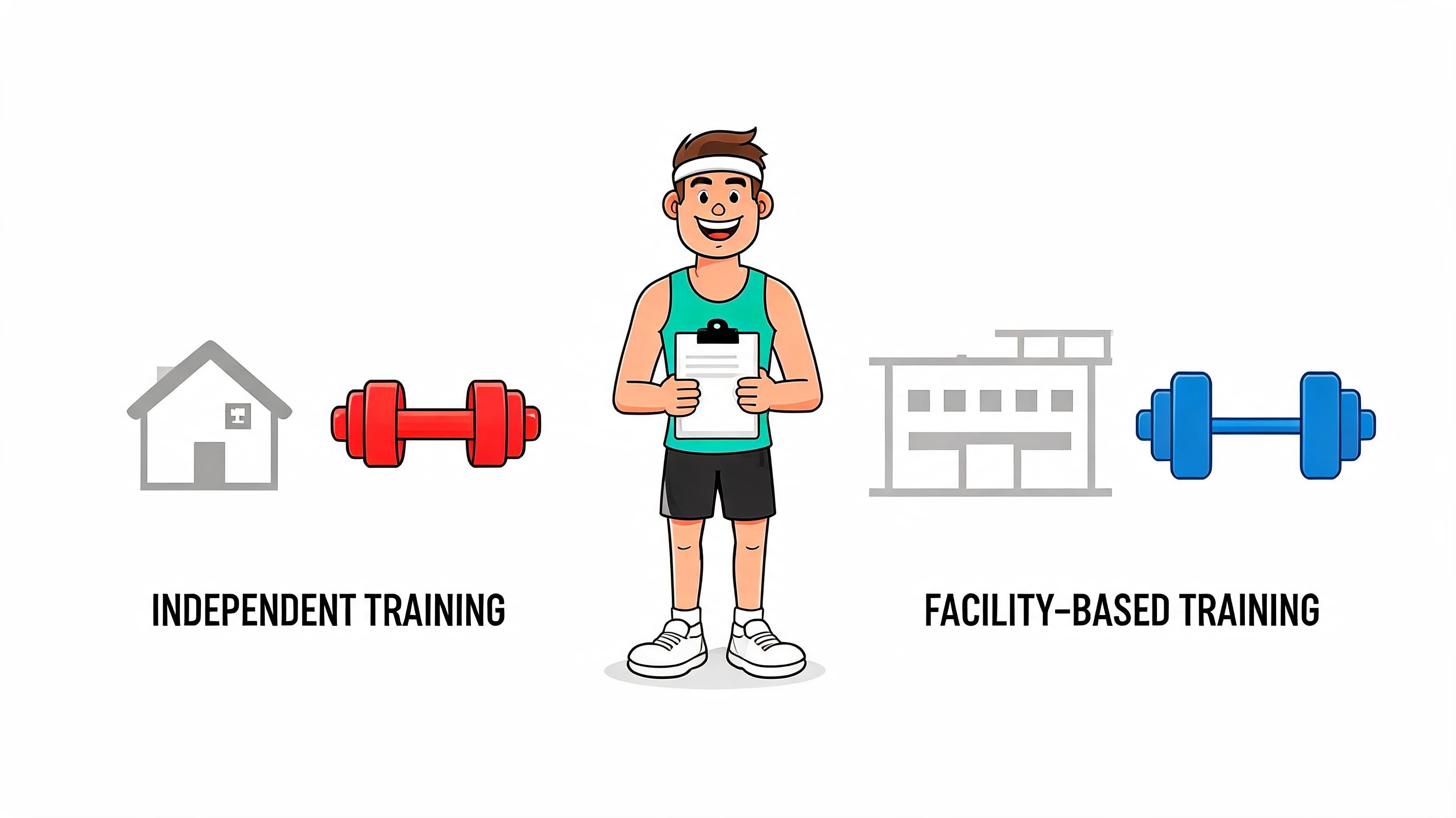
- Train clients one-on-one independently in homes, parks, or rented studio space
- Work inside a fitness facility where training is part of a broader membership business
- Run a hybrid model with both private coaching and facility access
Those models don't always land in the same place. If you treat them as identical, the paperwork starts drifting away from reality.
What Exactly Is a NAICS Code Anyway
A NAICS code is the classification system North American governments use to sort businesses by primary activity. Think of it as a ZIP code for your business category. It tells agencies and commercial databases where your company belongs.
Historically, the NAICS system was launched in 1997 as a joint framework created by the U.S. Economic Classification Policy Committee, Statistics Canada, and Mexico's Instituto Nacional de Estadística y Geografía to improve business-statistics comparability across North America, according to the official Census NAICS overview.

How the code works
NAICS uses a hierarchy. The digits get more specific as you move down.
Here is the practical way to look at this:
| Level | What it tells you |
|---|---|
| Broad digits | The big sector your business belongs to |
| Middle digits | The narrower industry group |
| Full code | The specific business activity closest to your operation |
That's useful because the code isn't random. It reflects how the establishment produces and sells its service. A gym with memberships, equipment, and classes gets classified differently from a solo trainer selling individualized sessions, even though both are involved in fitness.
Why owners should care
Most trainers first see NAICS as a paperwork nuisance. It's better to treat it as a business description tool.
Use it to answer one question clearly: What do you primarily get paid for?
If your business earns money mainly by delivering personal coaching as a standalone service, the classification tends to follow the service. If your business earns money mainly by operating a facility, selling access, and layering training into that environment, the classification tends to follow the facility.
Practical rule: Choose the code that matches your primary revenue activity, not the title on your business card.
That distinction keeps your registrations, loan applications, and insurance paperwork aligned. It also reduces the chance that another party reads your company as something you're not.
The Two Main NAICS Codes for Personal Trainers
Most of the confusion comes from the fact that there are two main answers, not one.
The first is 812990, titled “All Other Personal Services.” In U.S. NAICS usage, a personal trainer is typically classified under 812990 when the service is offered independently, and authoritative NAICS crosswalks explicitly index “personal fitness training services” under that code for standalone personal-training businesses, as shown in the Ask Kodiak NAICS classification entry.

The second is 713940, titled “Fitness and Recreational Sports Centers.” That code is commonly associated with trainers operating inside a broader fitness facility model. It reflects the business of running the center itself, not just coaching sessions.
What 812990 usually means
This code usually makes sense when the business is built around the trainer as the service provider.
Common examples include:
- Mobile training businesses that travel to the client
- Solo trainers renting space but keeping their own book of business
- Private coaching brands selling custom programs and direct sessions
The core idea is straightforward. The client is buying your service directly.
What 713940 usually means
This code usually fits when the establishment operates as a facility first.
That means the business may offer:
- Membership access
- Equipment use
- Group classes
- Training as one service line among several
In that setup, personal training exists inside the larger gym business. The trainer may be central to the customer experience, but the establishment itself is still a fitness center.
If you run the place, sell access to the place, and training happens inside that larger offer, you're usually not describing a standalone training business anymore.
The distinction owners miss
Many owners choose a code by job title. That's where they go wrong.
“Personal trainer” is a role. NAICS classifies the establishment. If the establishment is a solo service business, 812990 is often the better fit. If the establishment is a gym or fitness center, 713940 usually describes the operation more accurately.
That one difference clears up most of the confusion.
Choosing the Right Code for Your Business Model
When owners ask me which code they should use, I don't start with the workout service. I start with the business model. That's what determines the classification boundary.
The key principle is this: the NAICS classification boundary is determined by an establishment's primary activity. If a business primarily sells one-on-one exercise programming, it aligns with 812990. If it primarily operates a facility with memberships and equipment, it trends toward 713940, as described in this NAICS boundary reference for personal trainers and fitness facilities.

Start with the revenue question
Don't ask, “What do I do?” Ask, “What am I primarily selling?”
Use this quick decision filter:
| Business reality | Usual direction |
|---|---|
| You sell direct personal coaching as the main offer | 812990 |
| You sell gym access, memberships, and facility use | 713940 |
| You do both, but most revenue comes from facility operations | 713940 |
| You do both, but most revenue comes from coaching services | 812990 |
That sounds simple, but it forces the right conversation. A lot of hybrid operators say they “do both equally” when their books clearly show one side driving the business.
Three common scenarios
Solo trainer, no facility
You train clients in their homes, outdoors, or in rented space. Clients hire you directly, pay you directly, and follow your schedule. That usually points toward 812990.
Trainer inside someone else's gym
If you're an independent contractor using a gym floor but your real business is still private coaching sold under your own brand, the classification usually follows the coaching business, not the building you stand in.
Gym owner with trainers on staff
If you own or operate the facility, collect membership revenue, maintain equipment, and use training as part of the total offer, that usually leans toward 713940.
Your physical location matters less than your primary commercial activity.
What to do with a hybrid model
Hybrid businesses create hesitation because the owner can justify either code emotionally. That's not the right standard.
Use a tighter test:
- Review your top revenue stream
- Check what clients think they're buying
- Read your business description on applications
- Match the code to the main operation, not the side offering
If your forms say “fitness studio” but the business functions like private coaching, clean that up. If your website pushes memberships, classes, and facility access, don't classify the company like a solo service provider just because you also train clients.
For operators expanding small-group coaching into a stronger service line, this guide on personal training small groups is useful because it helps clarify whether you're still selling coaching or drifting into a fuller facility model.
Why Your NAICS Code Choice Is a Big Deal
This choice affects more than the registration form. It shapes how other parties evaluate your company.
Banks, insurers, government systems, and market-data vendors all rely on industry classification to group businesses. If your code doesn't match what you do, you create friction. Sometimes that friction is small. Sometimes it shows up when you apply for coverage, seek financing, or try to compare your numbers with the wrong peer set.

It changes how your business gets interpreted
Here's what the code influences in practice:
- Insurance underwriting. A facility-based business and a solo coaching business don't present the same operational profile.
- Loan and account review. Lenders and financial institutions categorize risk partly by industry type.
- Benchmarking. Industry comparisons only help when you're grouped with businesses that operate like yours.
- Procurement and vendor setup. Databases often sort suppliers by code before a human ever reads the company description.
If you need coverage guidance that fits the way trainers work, this article on general liability insurance for personal trainers is a practical companion to the classification issue.
The code ties directly to real industry data
This isn't abstract classification theory. The code connects to actual labor and wage reporting.
The U.S. Bureau of Labor Statistics publishes occupational wage estimates for NAICS 713940, and its May 2023 dataset shows 490 athletic trainers in one occupation category with a mean annual wage of $66,130, along with an annual mean wage of $71,440 for healthcare support occupations in the same industry table, according to the BLS wage data for NAICS 713940.
That's the practical point. Once a business is placed into a code, it gets pulled into economic datasets, peer comparisons, and industry assumptions attached to that code.
The wrong NAICS code won't make your business illegal by itself, but it can make your paperwork tell the wrong story.
What usually doesn't work
Owners get into trouble when they choose a code for convenience.
Weak reasoning looks like this:
- “My friend used this one.”
- “The form accepted it, so it must be right.”
- “I train people in a gym, so I picked the gym code.”
- “I hope this code makes me look bigger.”
That approach usually creates downstream cleanup. Better to classify the business accurately now than explain the mismatch later.
Putting It All Together and Keeping It Clean
Once you know your primary activity, the form gets easier. The best move is to make your business description and your NAICS code say the same thing.
Use copy like this:
Simple descriptions you can adapt
Independent trainer model
“Providing personalized fitness training and coaching services to individual clients.”Gym or studio operator model
“Operating a fitness facility offering memberships, equipment access, group exercise, and personal training services.”Hybrid model leaning service-first
“Providing direct personal fitness training services, including one-on-one and small-group coaching.”Hybrid model leaning facility-first
“Operating a fitness and recreational sports center with personal training as part of facility services.”
If a clerk, lender, or insurer reads that sentence, they should immediately understand the same business your code is describing.
A short final checklist
Before you submit anything, confirm these points:
- Your main revenue source matches the code
- Your website language matches the business description
- Your insurance application uses the same operational story
- Your contractor or employee setup doesn't contradict the classification
Clean operations matter too. Personal training is hands-on, high-touch, and equipment-heavy. Wipe down benches, mats, handles, cables, and shared accessories between sessions. Pay extra attention to anything clients grip repeatedly, especially in small-group settings where turnover is fast.
For a simple supply option, consider Wipes.com Disinfectant Wipes. They're a practical fit for quickly sanitizing free weights, machine touchpoints, and training tools so the business stays professional, safe, and ready for the next session.
If you want more operator-focused guidance on growing training revenue, tightening retention, and building a stronger membership sales process, visit Gym Membership Tips.
Leave a Reply