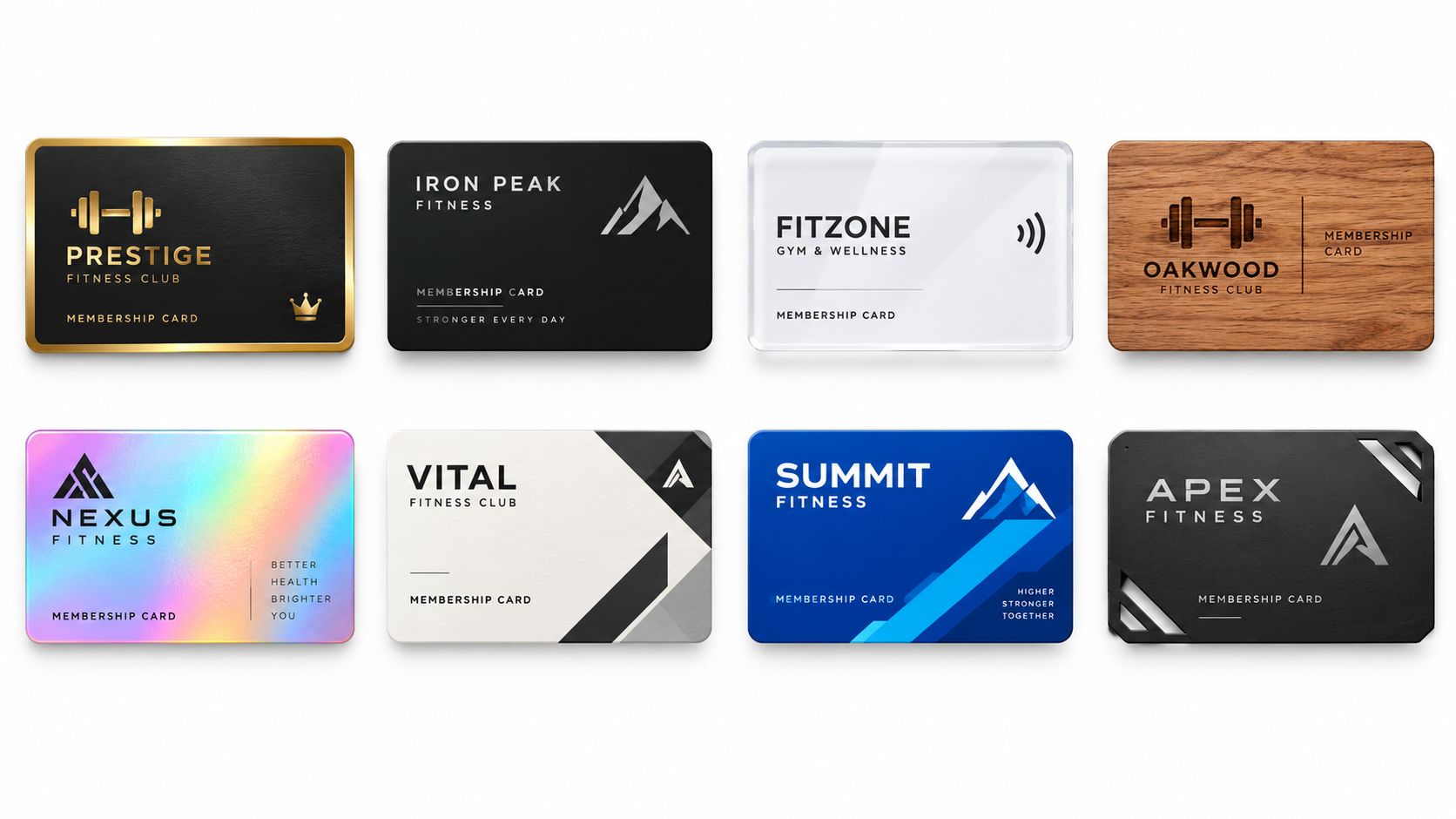
A new member walks up to the busiest check-in point of the day, card in hand. That card has to do more than grant entry. It should reflect the gym's brand, work reliably when the lobby is crowded, communicate the member's access level, and provide the right balance of security and convenience. It also needs to survive locker-room moisture, repeated handling, and regular contact with shared readers.
These membership card design ideas cover eight practical directions, from classic PVC cards and RFID access to smartphone passes, photo identification, sustainable materials, digital badges, and multifunction payment systems. The best choice depends on your existing readers, membership tiers, audience expectations, budget, and production requirements. Cleaning matters too. A well-designed card can still create friction if shared readers are visibly dirty or difficult to use, so build sanitizing into the check-in routine from launch.
If your gym also uses physical cards for promotions or referral campaigns, you can connect them with exclusive perks for frequent orders to give members another reason to keep the card accessible.
1. Classic Plastic PVC Cards with Magnetic Stripe Technology
PVC cards remain a practical choice when a gym already has magnetic readers and established membership software. The design is familiar to staff and members, and the card can support check-in, account lookup, and selected point-of-sale functions without forcing an immediate infrastructure overhaul. For a local gym with straightforward membership plans, that compatibility often matters more than novelty.
A strong physical design keeps the front uncluttered. Place the logo where it can be recognized quickly, add the member's name or ID in readable type, and reserve the back for operational information such as a support contact, emergency contact guidance, or a concise instruction for lost cards. High-quality printing helps the card retain its professional appearance, while lamination can protect printed details from moisture and handling.
Practical rule: Design for the swipe, not just the photograph. Keep the magnetic stripe unobstructed and make sure staff can identify the member ID without turning the card into a wall of fine print.
A card system modeled for a 24 Hour Fitness location or a Gold's Gym franchise would usually prioritize consistency across locations and compatibility with existing readers. A boutique gym with a basic membership program may prefer the same format because it's easy to explain and replace.
Magnetic stripes have a limitation. Repeated swiping creates more physical contact than tap-based access, and damaged stripes can lead to failed check-ins. Keep a small replacement process at the front desk, clean the reader according to its manufacturer's instructions, and avoid saturating the card itself with liquid. Use a dry, soft cloth for routine card cleaning, especially when the surface includes laminated printing.
2. RFID-Enabled Contactless Access Cards
RFID cards change the check-in gesture from swipe to tap. A member presents the card near the reader, which reduces physical wear and can make busy arrival periods feel more organized. The card contains a chip and antenna that communicate wirelessly with the access system, so the design must account for both the visible surface and the reader's technical requirements.

A premium RFID card can use a matte finish, restrained typography, and a subtle contactless symbol. Don't cover the entire surface with unnecessary metallic effects until the supplier confirms that the material won't interfere with performance. During a transition, dual-interface cards can preserve access for members who still need a magnetic reader while the facility upgrades its infrastructure.
A system designed for an Equinox-style luxury fitness center, an Orangetheory Fitness location, or a modern boutique studio might connect RFID access with attendance records, app-based tracking, or class participation. Those connections are useful, but they also create more points for staff to troubleshoot. Train the front desk team to handle a failed read, an inactive membership, a misplaced card, and a reader outage without making the member repeat the same explanation.
Add clear signage at the correct tap location. Members shouldn't have to wave a card across an entire door to find the reader. For a broader operational view, review this guide to a gym check-in system.
Keep RFID cards visibly clean with a soft, lightly dampened cloth when needed. Clean the reader housing as part of the front-desk routine, but don't spray liquid directly into the device. A contactless system reduces physical wear, not the need for sensible hygiene around shared touchpoints.
3. NFC-Integrated Smartphone Digital Membership Cards
A smartphone pass can remove the physical-card problem for members who already carry their phones. With NFC access, a member taps the device at a compatible reader, while a digital wallet or gym app can also display identity details, membership status, class information, payment options, and renewal prompts. The most effective pass keeps the entry action simple rather than burying access behind several app screens.

A wallet-native pass is especially useful because it can be available without requiring a member to remember a separate login. One industry guide reports 15% to 20% completion for app-based signup versus 80% to 90% for Apple Wallet onboarding, an implied 4 to 5 times adoption advantage for a lower-friction flow. That industry guidance supports a pass with minimal fields, a visible call to action, and immediate add-to-wallet placement.
Don't make digital-only access the first and only option. Phones run out of power, apps fail, and some members prefer a physical credential. Offer a printed card, member ID lookup, or QR-code fallback while the system matures. A digital pass should also update when membership status changes, without changing the stable member ID used by staff and access controls.
A design prepared for an F45 Training location or a tech-focused boutique studio can include loyalty rewards, class milestones, or account reminders without overwhelming the access screen. Make the core identity information prominent. Guidance on membership software for gyms can help operators connect the pass with the wider account system. You can also explain the difference between cellular and NFC gate access when evaluating entry infrastructure.
Clean phone screens with a product suitable for electronics. Don't apply liquid to the phone or pass. Clean shared NFC readers gently and keep a staff fallback available for members whose devices can't complete the tap.
4. Tiered Design Cards with Color-Coded Membership Levels
A tiered card should answer a staff question instantly: what access does this member have? Use color, material, or finish to distinguish basic, premium, VIP, employee, family, or guest credentials. The visual cue can speed up recognition and make a higher membership level feel more tangible, but it shouldn't replace the system's actual permission rules.
Color alone creates avoidable problems. Members with color-vision deficiencies may not distinguish red from green or one similar tier from another, and staff shouldn't have to memorize subtle shade differences under dim lobby lighting. Pair each color with a written tier name, a clear icon, or a short access label. Keep the visual system restrained, using no more than 2 to 3 primary colors as recommended in the design guidance for business card color psychology.
Design the privilege into words, not just pigment. “Platinum, all-access” is more useful than a color swatch that only the designer understands.
For example, a corporate fitness facility might use separate layouts for employee, family, and guest access. A luxury hotel fitness center could use different finishes for standard and premium guests. An Equinox-style Gold, Platinum, and Diamond system can feel distinctive, but only if the front desk team has a current benefit reference and the backend rules match the printed promise.
Place the tier name where staff can see it without exposing unnecessary personal data. Put benefit notes, support instructions, or a replacement policy on the back. When someone upgrades, make sure the old credential is deactivated and the new status is reflected across readers, software, and any digital counterpart.
For cleaning, use a soft cloth on printed or specialty finishes and keep color-coded cards away from harsh chemicals that could fade the tier cue. Clean shared readers separately, using a suitable surface product and following the equipment manufacturer's instructions.
5. Photo ID Membership Cards with Biometric Features
A photo card creates a direct connection between the credential and the person presenting it. That can help private clubs, corporate gyms, and high-end personal training studios reduce casual credential sharing while helping staff recognize members more naturally. The card should feel welcoming, not like a security badge from a restricted facility.
Use a consistent photo process. A small photo booth or controlled smartphone workflow can produce more uniform images than asking members to upload whatever photograph they have available. Keep the face large enough for a staff member to compare quickly, but don't crowd the card with unrelated information. A protected laminate overlay can help preserve the image through repeated handling.
Biometric verification adds a much higher responsibility. Fingerprint or facial recognition systems require clear privacy notices, controlled data access, secure storage, retention rules, and a non-biometric alternative for members who can't or won't use the feature. The card design should never imply that biometric collection is casual or automatic. Explain what the gym collects, why it collects it, and how a member can request help.
A private country club might use photo ID for guest control, while a corporate wellness center could use it to separate employee and visitor access. A high-end personal training studio may value the recognition benefit more than advanced biometrics. In each case, train staff to verify discreetly and avoid announcing personal information across the lobby.
Keep the photo surface clean with a dry or lightly damp cloth. Don't use abrasive products on protective overlays. If the facility uses a shared camera or fingerprint reader, clean that equipment with a compatible product and allow it to dry before the next person uses it.
6. Eco-Friendly Biodegradable and Sustainable Membership Cards
Sustainable cards make the material itself part of the brand story. Options can include recycled plastic, renewable-resource materials such as PLA, recycled ocean plastics, or wood-based composites. The right choice depends on the required durability, printing process, reader compatibility, disposal route, and the supplier's documented credentials.
A sustainable card isn't automatically the best environmental choice if the gym replaces it frequently because the material warps, fades, or fails in a humid locker-room environment. Ask the manufacturer how the card performs around moisture, repeated bending, magnetic readers, RFID equipment, and cleaning products. Verify certification claims instead of relying on a vague “eco” label.
The back of the card can explain the material and give disposal guidance, but keep the message concise. A digital alternative may be the better fit for members who don't need a physical credential. If the gym offers both, explain when each option works and what happens when a member loses or replaces a card.
A boutique wellness studio could use a natural, tactile finish, while a CrossFit gym might pair recycled material with a bold, durable graphic. Life Time's sustainability initiatives can serve as a reference point for the kind of environmental positioning larger fitness brands may want to communicate, without copying the visual language of another operator.
Cleaning requires extra caution because biodegradable or textured surfaces may react differently to moisture and chemicals. Use a manufacturer-approved method, don't soak the card, and test any EPA-registered disinfecting wipes on a sample before applying them to a full batch. For shared readers and counters, use commercial disinfecting wipes that are appropriate for the equipment, then follow the product label and allow the surface to dry.
7. Minimalist Smart Cards with Embedded Digital Badges
Minimalism works when the card has a clear job. Use generous space, one strong typeface system, a controlled accent color, and only the identity and access details members or staff need. A small embedded chip can support access while a linked digital profile displays achievements, class milestones, or community badges on the member's phone.
The badge layer should add motivation without turning the membership card into a social feed. A member might earn a badge for a membership anniversary, a completed challenge, or participation in a studio event. Let the member decide whether to share it publicly. Privacy controls should be easy to find, and staff shouldn't need access to social information to verify entry.
A lifestyle-focused studio can use a card that looks good in a wallet photo or social post, while a community-led brand can connect badges with attendance and member recognition. A Peloton-style digital community offers a useful model for achievement-oriented engagement, and a boutique studio might create shareable badge graphics for class milestones. The design should remain legible when reduced to a small physical card or wallet screen.
A badge is a reward layer, not a substitute for reliable access. If the reader fails, a beautiful achievement system won't solve the check-in problem.
Keep the physical card clean with a dry cloth, especially if it has a soft-touch or matte coating. For the shared scanner, use a compatible surface cleaner rather than rubbing the card and reader together. If a badge or profile includes a photo, name, or membership level, apply the same privacy discipline used for photo ID cards.
8. Hybrid Multi-Function Cards with Integrated Amenity Access and Payment Systems
A hybrid card can combine access, locker entry, guest handling, vending purchases, class enrollment, and personal training payments in one credential. It may support magnetic stripe, RFID, and chip-based readers, but that convenience comes with a more demanding backend. Every function needs its own permission, failure procedure, audit trail, and fraud-control rule.
Start with the member journey rather than the technology list. A premium hotel fitness center might connect the gym credential with room access. A corporate wellness center may link it to employee benefits, while an upscale country club could use it for facility entry, food and beverage purchases, guest management, and amenity reservations.

The trade-off is operational complexity. Staff need clear training for lost cards, disputed charges, failed payments, expired memberships, and access conflicts. Members need a short explanation of what the card can do, where it works, and what to do when a transaction fails. Backend systems also need regular updates and testing, because a small integration error can affect both entry and revenue.
For implementation planning, compare the card functions against your current best gym management software. Don't add a feature just because the card can support it. Every additional function increases the number of systems that must stay synchronized.
Check readers, payment terminals, and locker interfaces on a defined schedule. Use gym equipment cleaning wipes or another product approved for electronics and hard surfaces, never spray directly into a terminal, and keep the card itself away from excess moisture. A gym wipe dispenser near the check-in and payment area makes the cleaning step visible and easier for staff to repeat.
8-Option Membership Card Design Comparison
| Item | Implementation complexity | Resource requirements | Expected outcomes | Ideal use cases | Key advantages |
|---|---|---|---|---|---|
| Classic Plastic PVC Cards with Magnetic Stripe Technology | Low, simple encoding and printing | Low-cost PVC cards, mag-stripe encoder, printing service | Reliable check-ins, low per-unit cost, higher replacement rate | Basic gyms, large chains with existing mag-stripe systems | Proven compatibility, cost-effective at scale |
| RFID-Enabled Contactless Access Cards | Medium, reader installation and system integration | RFID cards, contactless readers, software integration, staff training | Faster entry, reduced wear, improved security and attendance data | High-traffic gyms, premium centers, boutique studios | Contactless convenience, durability, analytics |
| NFC-Integrated Smartphone Digital Membership Cards | High, app and wallet integration, secure backend | Mobile app, NFC-capable readers, cloud services, cybersecurity | Frictionless entry, reduced plastic, higher member engagement | Tech-forward gyms, mobile-first memberships | No physical card, personalized notifications, sustainability |
| Tiered Design Cards with Color-Coded Membership Levels | Low–Medium, multiple designs and inventory | Multiple card variants, printing setup, inventory management | Clear tier recognition, easier staff handling, upsell opportunities | Gyms with tiered pricing, premium membership programs | Visual hierarchy, perceived value, supports upselling |
| Photo ID Membership Cards with Biometric Features | High, photo capture and biometric systems | Photo stations, biometric readers, secure data storage, privacy policies | Strong identity verification, reduced fraud, personalized service | Corporate/private clubs, high-security facilities | Prevents card sharing, enhances security and member recognition |
| Eco-Friendly Biodegradable and Sustainable Membership Cards | Low–Medium, sourcing alternative materials | Biodegradable/recycled materials, specialized suppliers, slightly higher cost | Lower environmental impact, positive brand image | Eco-conscious gyms, studios targeting younger demographics | Sustainability messaging, appeals to green-minded members |
| Minimalist Smart Cards with Embedded Digital Badges | Medium–High, digital badge platform and sync | Embedded tech, badge generation platform, design and dev resources | Premium brand perception, social sharing, community engagement | Lifestyle studios, digital-first brands, community-driven gyms | Social proof, elevated design, drives member sharing |
| Hybrid Multi-Function Cards with Integrated Amenity Access and Payment Systems | Very high, multi-technology & payment integration | Multi-tech cards (mag, RFID, chip), payment gateway, robust backend, training | Unified access/payment, added revenue streams, detailed usage analytics | Hotels, corporate wellness, upscale country clubs | All-in-one convenience, operational efficiency, monetization opportunities |
Turn a Card Concept Into a Reliable Member Touchpoint
Choosing among these membership card design ideas starts with an infrastructure audit. List every reader currently in use, including magnetic, RFID, NFC, QR, locker, payment, and staff lookup systems. Confirm which membership software controls each permission, how quickly status changes propagate, and what happens when the network, reader, phone, or card fails.
Next, define the member experience in plain language. Should a new member receive a physical credential immediately? Can a returning member enter with a wallet pass? Does a premium tier need a photo, a special finish, or a clearly labeled benefit set? Decide how much information staff need at a glance and how much information should remain inside the account system.
Then choose the material and access technology together. PVC may be the sensible option for an existing magnetic setup. RFID can reduce swipe wear and support contactless entry. NFC and wallet passes can reduce dependence on physical cards, but they still need a fallback. Sustainable materials can strengthen brand positioning, yet they must withstand the actual humidity, handling, printing, and reader conditions in your facility.
Test before launch. Print samples in every finish, check small text under bright and low lobby lighting, test colors for contrast, and run cards through the actual readers. Try the replacement process with an expired membership, an upgrade, a lost card, a damaged stripe, and a phone with no usable battery. Staff should know what to do without improvising in front of a queue.
Your card should look like it belongs to the gym, not like a disconnected vendor template. Match the finish, colors, typography, imagery, and tier cues to the broader brand. A minimalist boutique studio and a high-volume community gym may need different visual languages, even when they use the same RFID technology.
Cleaning is part of the touchpoint. Keep cards and readers visibly clean, but don't treat every surface with the same chemical. For shared counters and hard equipment, use suitable gym wipes, sanitizing wipes, or disinfecting wipes according to the product directions. The CDC advises that shared gym equipment should be cleaned after each use and allowed to dry before the next person uses it, with disinfecting supplies available for patrons to clean before and after exercise (CDC gym equipment guidance). It also advises using EPA-registered products and following the equipment manufacturer's instructions so cleaning doesn't damage the surface (CDC athletic-facility guidance).
Don't saturate printed, laminated, biodegradable, or electronic surfaces. Where high-touch check-in equipment needs regular attention, install a gym wipe dispenser and assign responsibility for replenishment and inspection. For high-volume facilities, bulk gym wipes or fitness center wipes may simplify supply management, but the product still needs to be compatible with the surface and used as directed.
Choose one concept, test it with real staff and members, and document the fallback process before ordering a full production run. If you need help connecting card decisions with member acquisition and retention, explore the practical resources from Gym Membership Tips, then turn the selected design into a clear launch plan for your front desk team.
Leave a Reply