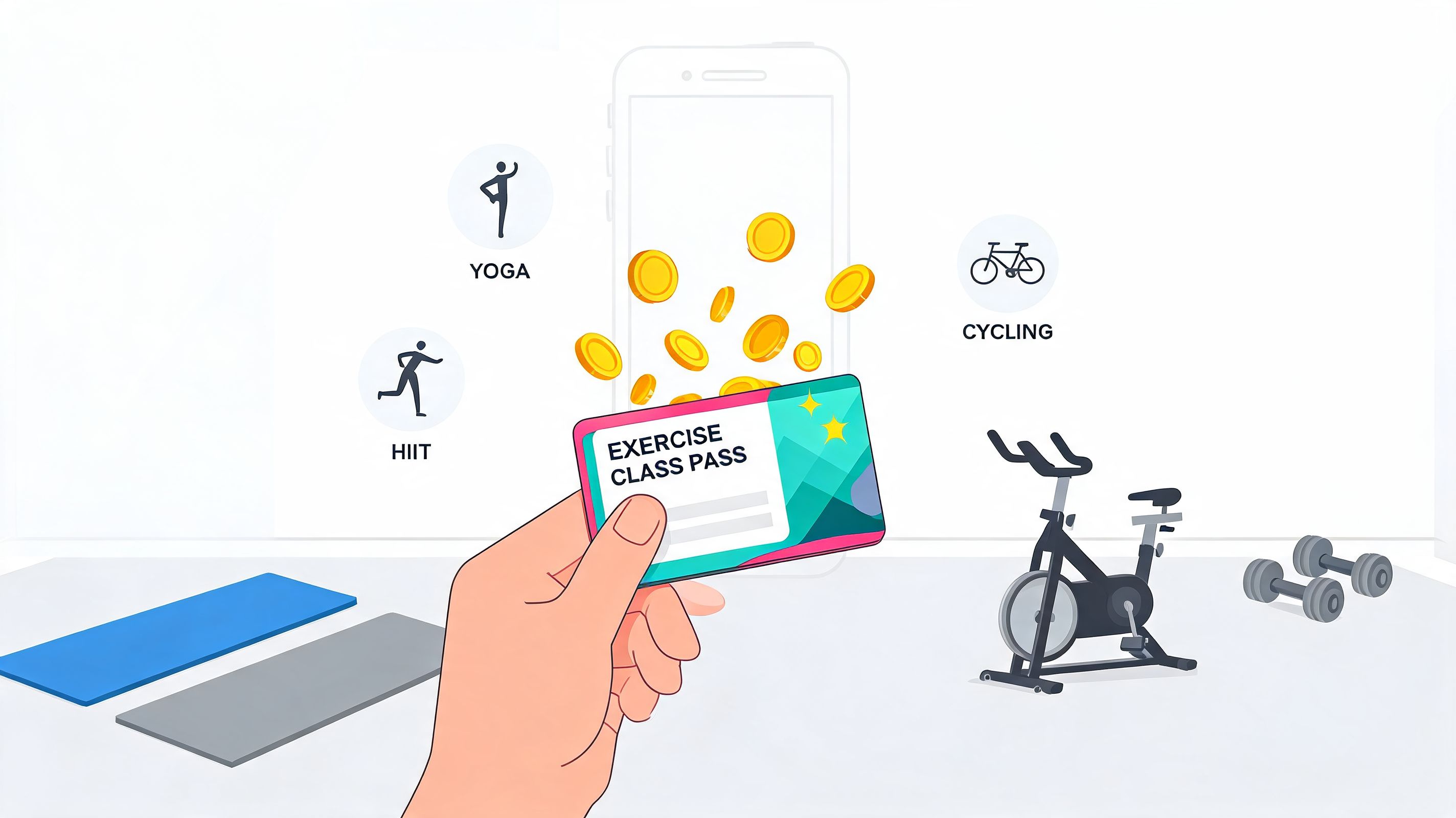
You know the feeling. Tuesday evening is one of your best teaching windows, the coach is on point, the room looks great, and six spots still go empty. Those aren't just unused reservations. They're perishable inventory that disappears the moment class starts.
That's where an exercise class pass becomes useful, but only if you treat it like a business system instead of a quick discount. A pass can fill soft spots in the schedule, introduce your brand to people who won't commit on day one, and create a clean path into higher-value memberships. It can also train customers to wait for deals, clog your best time slots, and frustrate your front desk if the setup is sloppy.
The difference comes down to design. The best pass programs protect core membership revenue, make redemption easy, and give staff clear rules for who gets what, when, and why. That's the ecosystem most owners skip. They build the offer, but not the operating model around it.
Turn Empty Class Spots Into New Revenue
The first mistake I see is treating empty spots as a marketing problem only. They're also a yield management problem. If a class is already scheduled, coached, heated, cleaned, and staffed, every unused spot is inventory you can't sell later.
That doesn't mean you should slash prices across the board. It means you should create a controlled way to monetize excess capacity without weakening your full membership offer.
Start with unused inventory, not your best classes
A smart exercise class pass begins with three filters:
Classes that already run well operationally
Don't attach a pass to chaotic classes, inconsistent instructors, or formats with setup issues. New buyers forgive limited access. They don't forgive a bad first experience.Time slots that need help
Mid-morning, late evening, and shoulder-hour classes often benefit most. Save your strongest premium slots for members unless demand is soft enough to justify broader access.Formats with broad appeal
Pick classes that are easy to try without a long onboarding process. If a first-timer needs ten minutes of equipment education before warm-up, that class is better as a member product than a pass product.
The market for flexible access is real. Global fitness reservations rose by 36% year over year in 2025, according to the 2025 ClassPass Look Back Report. That matters because it shows demand hasn't disappeared. Consumers still want options, and they'll pay for convenience when the offer feels simple and low risk.
Reframe the offer
Don't position a pass as “cheap classes.” Position it as structured access.
Practical rule: Sell access to selected inventory, not unrestricted access to your entire schedule.
That distinction protects your business. A pass should help you acquire new people and smooth out underused capacity. It shouldn't become a substitute for the membership you want to sell.
A good way to pressure-test your model is to compare it to broader flexible-fitness platforms and see where your studio can win on experience, coaching, and conversion. If you want a sense of how those models differ, review these apps like ClassPass and note what they offer that your own direct pass can do better.
What works and what fails
What works
- Limited eligibility: Restrict pass use to selected classes, instructors, or windows.
- Simple rules: Buyers should understand expiration, booking limits, and no-show terms before purchase.
- Fast upgrade path: Make it obvious how to move from pass holder to member.
What fails
- Open access to everything: That's how owners cannibalize premium memberships.
- Permanent intro pricing: A pass should create momentum, not become your default product.
- Manual tracking: If staff has to remember exceptions from memory, errors pile up fast.
An exercise class pass works best when it fills gaps your membership model doesn't cover. It's not there to replace the core offer. It's there to turn dead spots into revenue and new names into repeat buyers.
Designing Your Perfect Exercise Class Pass
Most studios don't need ten pass products. They need two or three that serve very different jobs. One should bring in new people. One should reactivate cold leads or former members. One can spotlight a category you want to grow.
If you offer everything to everyone, the catalog gets confusing and staff starts improvising. Keep the lineup tight.
Use demand to shape the offer
Class selection matters. Pilates was the most-booked workout globally in 2024 for the second year in a row, while strength training and yoga also ranked in the top five, according to the 2024 ClassPass Look Back Report. If your studio teaches any of those categories, you already have a strong starting point for a marketable exercise class pass.
That doesn't mean every pass should feature those formats. It means broad-demand categories usually make the strongest front-door offer because customers already understand them.
Exercise Class Pass Model Comparison
| Pass Type | Best For | Pricing Model | Key Benefit |
|---|---|---|---|
| 5-Class Punch Card | New locals testing your studio | Fixed bundle | Low commitment and easy to understand |
| 30-Day Intro Pass | Leads comparing you to nearby studios | Time-limited access | Builds routine fast |
| Specialty Series Pass | Niche buyers who want a clear result | Fixed bundle tied to one format | Attracts focused, higher-intent customers |
| Off-Peak Class Pass | Price-sensitive buyers with flexible schedules | Lower-priced access to selected times | Fills weak slots without touching prime inventory |
| Reactivation Pass | Former members and old trial leads | Small bundle with short expiration | Creates urgency without a deep discount |
Three pass structures I'd use first
5-Class Punch Card
This is the cleanest product for many studios. Buyers understand it instantly, and staff can explain it in one sentence.
Use it when:
- your classes vary in quality by format and you want to limit access
- your sales process needs a simple “yes”
- your audience includes busy professionals who don't want another recurring bill yet
Risk: buyers spread those visits out too long and never build a habit. Fix that with a clear expiration and a scripted upgrade offer after the second or third visit.
30-Day Intro Pass
This is stronger when your classes create momentum through repetition. Yoga, Pilates, and strength-based group formats often benefit here because a customer feels progress quickly with frequent attendance.
This pass is less about revenue on the first transaction and more about habit formation. If your coaching team knows how to greet, check in, and follow up, this can outperform a punch card on conversion quality.
The best intro pass doesn't promise unlimited access to your whole business. It gives enough access for a customer to feel your method and your community.
Specialty Series Pass
This one is underused. A specialty pass works well when your studio has a signature category like reformer Pilates, beginner strength, recovery yoga, or a foundations series.
It attracts people looking for a specific result, not just a deal. Those buyers are often easier to convert because their purchase intent is sharper from day one.
Keep the catalog narrow
A pass menu should answer one question fast. “Which option fits me?” If buyers have to compare too many variables, they delay the purchase or ask staff to decide for them.
Keep these design rules in place:
- One front-door offer: Your main acquisition pass should be obvious.
- One second-chance offer: Use this for former members or old leads.
- One strategic niche offer: Tie it to a format you want to grow.
That's enough for most operators. More options usually create more friction, not more revenue.
Pricing Your Pass for Profitability Not Problems
Pricing is where good ideas go sideways. Owners build an exercise class pass to fill empty spots, then price it so low that existing members start downgrading. Revenue looks busy but weak. Attendance goes up. Margin doesn't.
Your pass has to support the business model, not compete with it.

Price around value, not fear
A lot of owners price passes from anxiety. They assume the customer needs a dramatic discount to say yes. Usually, what the customer needs is a clear reason to try you with low commitment.
The benchmark I use is simple.
Golden rule: A pass holder should still pay more per class than a committed member.
If they don't, you're training loyal customers to move downmarket.
Borrow the logic of dynamic pricing
Large platforms use variable pricing because not all classes have equal value. ClassPass describes its SmartTools system as dynamically adjusting class credit prices based on historical booking data, popularity, and time of day, and that principle is useful even if you're running a single location through standard booking software. The underlying explanation appears in Mindbody's overview of how ClassPass works for businesses.
You don't need an enterprise algorithm to apply the idea. You need discipline.
Give higher-value inventory tighter terms
Prime-time strength class with your best coach? That should have stricter pass access, premium redemption rules, or no pass eligibility at all.
Low-demand lunchtime yoga? That's where a pass can do real work.
Use these questions:
- Is this class regularly close to full?
- Would a member be frustrated if pass holders took these spots?
- Does this format require extra setup, coaching time, or equipment wear?
- Is this slot currently underperforming enough to justify wider access?
Three pricing structures that usually hold up
Fixed bundle pricing
This is best when you want predictability. A 5-class or 10-class product is easy to explain and easy to account for.
It works well for:
- boutique studios
- launch offers
- specialty formats
Time-based intro pricing
A short intro pass is stronger when habit formation matters more than per-visit margin in the first month.
Use it only when you have:
- a follow-up sequence ready
- clear attendance triggers
- a membership close built into the client journey
Off-peak value pricing
This is the least appreciated option. Instead of discounting everything, price selected low-demand inventory more aggressively and protect your premium windows.
If you're refining your wider offer stack, it helps to compare your pass pricing against the rest of your products. This guide to comparing gym membership prices is a useful reference point for spotting internal pricing conflicts.
Add value instead of cutting deeper
A pass doesn't have to win on discount alone. Add-ons often preserve margin better than lower prices do.
Consider:
- Reserved onboarding: the first visit includes a quick equipment walkthrough
- Recovery perk: access to a stretch or mobility class
- Retail tie-in: branded bottle, towel, or smoothie credit
- Priority experience: early booking on selected classes
The customer feels they bought something premium. You avoid looking like the cheapest option in town.
Seamless Tech and Redemption Workflows
A pass can be well designed and still fail at the front desk. I've seen studios lose conversions because the buyer couldn't book from their phone, the confirmation email was vague, or staff had to click through three screens to verify eligibility.
Friction kills first visits. First visits drive conversion.

The customer journey should feel obvious
A clean exercise class pass workflow looks like this:
Customer buys online
The offer page explains what's included, what's excluded, expiration, and no-show rules.Customer receives instant confirmation
The email should tell them the next step, not just confirm payment.Customer books class from the same device
Don't make them hunt for a schedule page or create unnecessary steps.Front desk sees pass status immediately
Staff should know whether the client is eligible before the client arrives.Check-in takes seconds
QR code, app check-in, or name lookup. Pick one primary workflow and train to it.
What to configure in your system
Whether you use Mindbody, Acuity, or another booking platform, the setup needs clean logic. Don't rely on staff memory.
Build these controls into the software:
- Eligibility rules: which classes, times, or instructors accept the pass
- Expiration settings: make them automatic
- Usage caps: if the pass has visit limits, the system should enforce them
- Waitlist behavior: define whether pass holders can join and how spots clear
- No-show policy: automate the consequence
If you're evaluating tools, start with software built for recurring bookings and access control. This roundup of scheduling software for gyms can help narrow the stack before you start configuring products.
Staff scripting matters as much as software
The best systems still break when staff improvise. Give your team exact language for common situations.
Use scripts like:
- At purchase: “This pass gives you access to these classes. Your best next step is to book your first session right now.”
- At first check-in: “After today's class, I'll show you the best way to continue if you want to keep your routine going.”
- At restricted classes: “That class is reserved for members, but this pass works on these sessions.”
A good workflow protects the customer from confusion and protects the staff from making policy decisions on the fly.
Support the sale with better content
A lot of pass buyers need to see the experience before they commit. Short walkthroughs, instructor previews, and booking demos remove uncertainty fast. If your team doesn't have in-house production capacity, tools that help you create studio-quality videos with LunaBloom can make launch content easier to produce and keep visually consistent across web, email, and social.
Common workflow mistakes
- Too many account steps: every extra form field reduces completion
- Hidden restrictions: buyers get angry when limits appear after purchase
- Weak email confirmation: if the next step isn't clear, people delay the first booking
- Manual exception handling: once staff starts overriding rules, reporting becomes messy
A pass should feel easier than membership at the point of entry. If it feels harder, your tech stack is getting in the way of revenue.
Your Marketing and Sales Playbook
Most exercise class pass launches underperform for one simple reason. The offer exists, but the campaign doesn't. A pass isn't self-selling. You need a reason, an audience, and a message that fits where that buyer is in the decision cycle.
The strongest campaigns don't shout “discount.” They sell outcome, environment, and momentum.

Lead with what people actually want
Your copy should reflect why people choose in-person group fitness in the first place. Data cited by D Magazine reports that 80% of people exercise harder in group settings than alone, and 67% cite better equipment as a primary reason for attending in person, which gives you two strong message angles for your pass launch in one source: group motivation and equipment access.
That means your ads, emails, and landing pages should say things like:
- train harder with a coach and a room full of momentum
- get access to equipment you don't have at home
- try the studio without committing to full membership yet
Three campaigns I'd run first
The reactivation play
Your former members already know the brand. Don't send them a generic newsletter. Send a targeted offer with a short expiration and one clear call to action.
Example email angle:
You don't need to jump back into a full plan. Start with a short class pack, get back into the room, and rebuild your routine this week.
This works because the buyer doesn't need brand education. They need a lower-friction return path.
The new mover play
People new to the area often want flexible access before they choose a permanent gym. A localized ad campaign or welcome-to-the-neighborhood partnership works well here.
Your message should emphasize:
- easy first booking
- supportive coaching
- no long-term contract required to start
The member add-on play
Not every pass buyer is an outsider. Some of your open-gym members avoid classes because they feel intimidated or don't want another recurring commitment. A small class pass can bridge that gap.
Pitch it as a low-pressure add-on:
- try a few coached sessions
- keep your normal routine
- upgrade later if group training clicks
Channel execution
Different channels need different creative.
- Email: best for reactivation and upsell. Keep the offer direct and the booking link obvious.
- Instagram and Facebook: best for local discovery, especially when you show the room, the coach, and the equipment.
- SMS: strongest for last-chance reminders and first-booking nudges.
- Landing page: keep it narrow. One pass, one audience, one action.
If you're improving the purchase path itself, e-commerce thinking helps more than many fitness owners realize. Tactics from retail conversion work well on pass pages too, especially around offer clarity and checkout flow. This guide to advanced e-commerce strategies for 2026 is useful for tightening those fundamentals.
Sales follow-up wins the conversion
A pass buyer is not a member yet. Treat them like a warm lead with attendance data.
Use a simple sales cadence:
- after first visit, send a thank-you and recommend the next class
- after second or third visit, make the membership comparison clear
- before pass expiration, offer an upgrade path that credits part of the pass toward membership if that fits your model
Don't ask pass holders if they “want to join.” Show them the next logical level of access based on what they already used.
That's how passes become a feeder product instead of a side product.
Set Your Rules and Measure What Matters
An exercise class pass needs guardrails. Without them, you get the exact outcome owners worry about. Frequent users cherry-pick classes, occupy premium inventory, and never convert.
That concern is legitimate. Industry reports suggest only 20% to 30% of ClassPass users convert naturally, which is why strategic terms, expiration dates, and upgrade paths matter, as noted in the source material linked from ClassPass.
Terms that protect your core business
Your rules should be visible before purchase, not buried in a receipt.
Include:
- Expiration date: short enough to create use, not hoarding
- Eligible classes: specify which sessions are included
- Booking cap: if needed, limit how many reservations can be held at once
- Late cancel and no-show policy: mirror the seriousness of your membership rules
- Non-transferability: avoid account sharing and front desk arguments
- Upgrade path: spell out whether pass holders can apply part of their purchase toward membership
Studios get into trouble when they assume customers will self-sort fairly. Some will. Others will optimize for value every single time. Your policy has to account for both.
The KPI dashboard I actually care about
Don't judge a pass program by sales volume alone. You need operational and conversion metrics.
Track these consistently:
Sell-through by pass type
Which offers get purchased, and by which audience segments.Utilization rate
Are buyers booking and attending, or just sitting in your system.Time to first visit
The faster a buyer attends, the better their chance of forming a routine.Upgrade rate to membership
This is the score that matters most if the pass is an acquisition tool.Average revenue per pass holder
Include add-ons, retail, and eventual membership revenue where relevant.Inventory impact
Look at whether pass users are filling weak classes or crowding prime sessions.
If pass users mostly attend classes that would have filled anyway, your program isn't expanding revenue. It's redistributing it.
Don't ignore cleanliness in the conversion equation
A pass buyer notices details that members stop seeing. Sticky mats, dusty corners, smudged mirrors, and sweaty equipment make the whole business feel less premium. Cleanliness isn't just operations. It's sales support.
Keep high-touch surfaces on a visible cleaning rhythm, restock stations before peak blocks, and make wipe-down expectations part of the class close. For a dependable option, I recommend Wipes.com Disinfectant Wipes for quick, consistent cleaning between classes. They're especially useful when you want the room reset fast without slowing turnover.
A good pass program brings people in. A clean, organized, well-run studio gives them a reason to stay.
If you're refining your sales systems beyond the exercise class pass itself, Gym Membership Tips has more practical guidance for pricing, retention, and gym offer design.
Leave a Reply