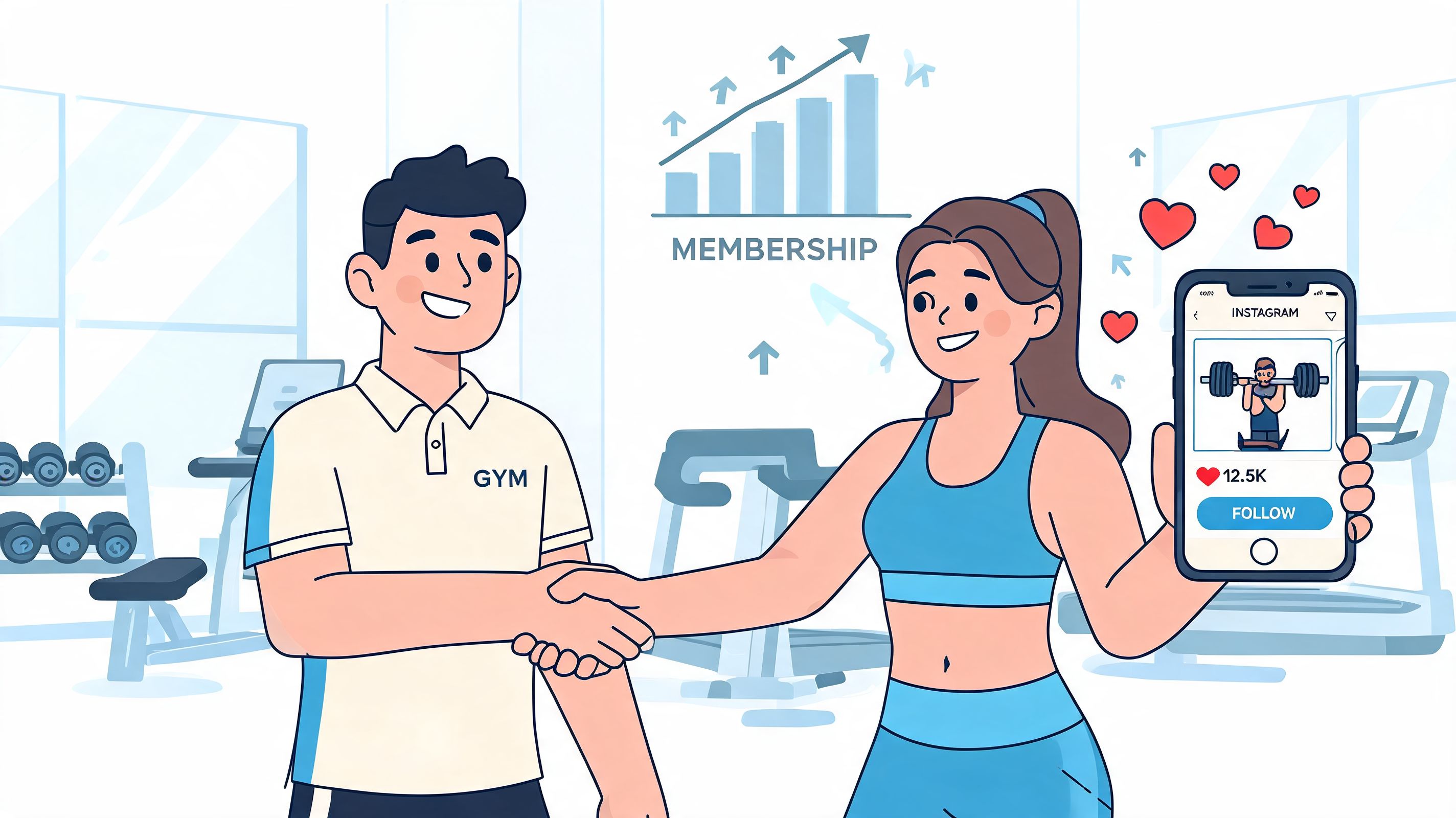
You're probably seeing the same pattern every week. A local trainer, wellness coach, or member with a decent Instagram following posts one reel from a competing gym, and suddenly that gym looks busier, cooler, and more relevant than it did the day before. Meanwhile, your own social feed is active, your facility is solid, and your team delivers real results, but the local buzz still feels uneven.
That gap usually isn't about production quality. It's about borrowed trust.
The best instagram influencers fitness campaigns for gyms don't look like celebrity sponsorships. They look like credible local voices showing people where they train, why they feel comfortable there, and what a first visit feels like. That's what gets prospects off the couch and into a trial session.
Why Instagram Fitness Influencers Are Your Next Growth Channel
Most gym owners assume influencer marketing belongs to national supplement brands and famous athletes. It doesn't. Local gyms can use it better because local gyms have something bigger brands don't have. They have a real physical experience to sell.
That matters because the Instagram fitness market is far broader than the headline names. According to Future Fit's 2025 fitness statistics, only 1.6% of Instagram fitness influencers have more than 1 million followers, while 11.6% have fewer than 15,000 followers. For a gym operator, that's the opening. You don't need a celebrity. You need local relevance, audience trust, and content that gets someone to book a visit.
Why local creators outperform flashy accounts
A neighborhood Pilates instructor with a loyal city-based audience can move more memberships than a giant account with broad but passive reach. People join gyms close to home, close to work, or close to a routine they can keep. That makes local creator partnerships a practical acquisition channel, not a vanity play.
Use creators for three jobs:
- Awareness in your trade area through reels, stories, and tagged visits
- Trust-building by showing real workouts, class energy, and staff personality
- Conversion through trial offers, consult bookings, and membership-specific landing pages
If you're already running paid social, creator content also improves your ad creative pipeline. A lot of gym ads fail because they look like gym ads. Creator-led footage feels like proof, not promotion. If you want better examples of what makes short-form content convert, Moonb's Instagram video ad insights are useful because they show how pacing, hooks, and visual variety change response.
Practical rule: Don't hire for fame. Hire for familiarity. People buy memberships from places they can picture themselves visiting.
What this channel does better than your brand account
Your brand account has a built-in limitation. People expect it to say positive things about your gym. A creator doesn't have that handicap. When they post a class walkthrough, a deadlift session, or a “day in the life” that includes your facility, the endorsement lands differently.
That's why influencer marketing should sit next to your broader social strategy, not outside it. If your team needs a stronger baseline before adding creator partnerships, this guide on social media marketing for gyms is a useful companion.
The gyms winning with instagram influencers fitness aren't chasing one viral hit. They're building a repeatable system of local advocacy.
How to Find Authentic Fitness Influencers for Your Gym
The search usually starts in the wrong place. Owners type hashtags into Instagram, find the biggest account in town, and send a lazy DM. That approach burns time because the best partner for your gym often isn't the loudest creator in your market.
Start with proximity, then move to proof.
Start inside your own member base
Your first influencer list should come from people already training in your facility. They know your environment, they're easier to brief, and their content usually feels more believable because it reflects actual use.
Look for members who already post:
- Workout clips from your floor with tagged locations or trainer mentions
- Class recaps that show community, not just mirror selfies
- Lifestyle content where fitness is part of their identity, not their whole identity
- Comments that signal trust such as followers asking for advice, recommendations, or routine details
This is also where many gyms miss a hidden category of creator. Some members are camera-shy but still produce good content through voiceovers, workout demos, or edit-heavy reels. If you want examples of formats that don't depend on personality-led on-camera delivery, this resource on creating faceless fitness videos can spark ideas for collaborations.
Vet for engagement, not just visibility
The fastest way to waste budget is to confuse follower count with influence. A 2025 analysis of top fitness influencers found very low engagement on some mega-accounts, including Kayla Itsines at 0.05% and Michelle Lewin at 0.29% in Lefty's top fitness influencer ranking covered by Diary Directory. That's the clearest reminder that audience size alone doesn't create response.
Use a simple vetting screen before you reach out.
| Check | What to look for | Why it matters |
|---|---|---|
| Locality | Recent posts in your city, nearby tags, recognizable venues | Memberships are local purchases |
| Comment quality | Actual conversation, not generic fire emojis | Signals real attention |
| Content fit | Training style, tone, and values that match your gym | Reduces brand mismatch |
| Story behavior | Frequent story posting and replies | Good for time-sensitive offers |
| Offer fit | Audience likely to buy beginner-friendly or premium memberships | Aligns creator with your sales model |
If comments look copied, followers seem geographically random, and the content has no connection to your area, skip it.
Build tiers, not one shortlist
Don't make one dream list. Make three working lists.
Member ambassadors
Best for recurring content, low-friction partnerships, and testimonial-style posts.Local micro-creators
Best for neighborhood reach and community-led campaigns.Specialist creators
Good for niches like strength coaching, postpartum fitness, combat sports, or mobility.
That structure gives you options when someone ghosts, overprices, or doesn't fit your audience. If you want a deeper framework for selecting long-term advocates rather than one-off creators, this article on brand ambassador fitness is worth reviewing.
A good creator for your gym should make your facility feel more accessible, not more intimidating.
Structuring Your Influencer Pitch and Pricing
Most outreach fails because it sounds careless. “Hey, wanna collab?” tells the creator you haven't studied their content, don't respect their work, and probably don't have a real plan.
Strong outreach feels specific and commercial at the same time. It shows you know what they do, why they fit your gym, and what outcome you want.

Use a pitch that respects the creator's audience
A peer-reviewed study found that content quality and parasocial relationship were the strongest predictors of whether followers act on exercise advice, and that parasocial relationships had a strong direct effect on exercise intentions (β = 0.597, p < 0.001) in this fitness influencer study published via PMC. For gyms, the takeaway is simple. The more authentic and instructional the creator's content feels, the more likely it is to move someone toward action.
That's why your pitch should invite useful content, not demand a hard sell.
Here's a cold outreach version that works better than generic DMs:
Hi [Name], I run [Gym Name] in [Area]. I liked your recent post about [specific topic or format] because it felt practical and honest, especially the way you explained [specific detail]. We're looking to partner with a small number of local creators whose audience matches our community. I think your style would fit well. If you're open, I'd love to send a simple campaign idea built around a real visit, useful training content, and a tracked offer for your audience.
For an existing member, keep it warmer:
Hi [Name], we've loved seeing how naturally you share your training at [Gym Name]. Your content already reflects the kind of experience we want new members to expect. We're building a small ambassador program for members who create strong fitness content and would love to talk through a partnership that includes clear perks, tracked sign-ups, and room for your own voice.
Pick a compensation model that fits the campaign
Not every creator needs cash-only terms, and not every creator should work on barter.
Use this decision table:
| Model | Best use | Risk | Good fit |
|---|---|---|---|
| Pay per post | Awareness campaigns | Weak conversion accountability | Established creators with strong production |
| Affiliate or commission | Membership sales | Lower creator interest if offer is weak | Conversion-focused creators |
| Free membership barter | Member ambassadors and emerging creators | Can attract freebie seekers | Local creators who already like your gym |
| Hybrid deal | Balanced reach and accountability | Requires cleaner tracking | Most serious local campaigns |
Negotiation points most gyms forget
Owners usually negotiate price and forget the terms that matter.
Focus on these:
- Usage rights so you can reuse reels, stories, and stills in your own ads
- Exclusivity limits so the creator doesn't post your gym and a nearby competitor in the same window
- Content format because a story set, reel, and pinned highlight all serve different jobs
- Offer clarity so every post has one call to action, not three
- Posting window to match launch dates, promos, or class openings
The best deal is rarely the cheapest. It's the one with clear deliverables, usable content, and a direct path to conversion.
If a creator pushes back on scripting, they're often right. Give them boundaries, not a teleprompter. You want their trust with their audience intact.
Your Campaign Brief and Legal Checklist
A creator saying yes is not the finish line. It's where the avoidable mistakes start. Without a clear brief and a basic agreement, campaigns drift fast. Messaging gets sloppy. Disclosures get missed. The content may look polished, but it can still attract the wrong leads or misrepresent your gym.

Build a brief that protects the brand without killing authenticity
A 2023 study discussed in Banner Health's coverage of the dark side of fitness influencers found that nearly two-thirds of popular fitness influencer accounts promoted unhealthy or unrealistic body shapes. That's exactly why gyms need a creative brief. Not to over-control creators, but to prevent your brand from getting tied to bad advice, extreme promises, or body-image messaging that clashes with your actual values.
Your brief should answer six questions.
What are we promoting
A class launch, free trial, membership consult, challenge, or open house.Who is the right prospect
Beginner, parent, strength athlete, young professional, older adult, or class-first member.What message must come through
Community, coaching quality, equipment access, non-intimidating atmosphere, schedule convenience.What should the creator avoid
Unrealistic body claims, unsupervised risky form, fad nutrition advice, before-and-after framing you don't want associated with the gym.What is the call to action
Book a visit, use a code, claim a trial, or message for a consult.What disclosure is required
Clear ad disclosure and transparent partnership language.
Use this simple creative brief template
Campaign name
Keep it easy to identify internally.Primary objective
Membership consults, trial sign-ups, class bookings, or awareness.Audience fit
Describe the people you want, not everybody with a pulse.Deliverables
Spell out the formats and timing in plain English.Mandatory talking points
Keep this short. Three to five points is usually enough.Visual guardrails
Show clean spaces, proper form, welcoming staff, and the area being promoted.Prohibited claims
No guaranteed transformations, no unrealistic timelines, no medical-style claims.Tracking method
Unique code, unique landing page, or both.
A good brief gives the creator room to sound like themselves while making sure the post still sounds like your gym.
Your contract and compliance checklist
You don't need a bloated legal packet for every local collab. You do need basic business hygiene.
Use this checklist before any content goes live:
- Deliverables are listed with formats, count, and due dates
- Payment terms are clear including when the invoice is approved
- Usage rights are defined for reposting, paid ads, website use, and editing
- Exclusivity is addressed if competitor conflicts matter to you
- FTC disclosure is required in a clear and visible way
- Approval process is documented so everyone knows what needs review
- Cancellation terms are included if dates slip or content misses the brief
- Brand safety language is included if the creator posts harmful or misleading fitness content elsewhere
For FTC compliance, keep the practical standard simple. If the creator is being paid, comped, or given perks, disclosure should be obvious and easy to see. Don't hide it in a hashtag pile.
The legal side shouldn't make the partnership feel stiff. It should make it dependable.
Tracking Influencer Performance and Gym Memberships
Likes don't keep the lights on. Story replies don't pay rent. If your gym is investing time, comps, or cash into creator partnerships, you need a direct line from post to prospect to member.
That means attribution first, engagement second.

Set up a basic attribution stack
According to Trend.io's guide to measuring influencer success, the average Instagram engagement rate is around 1.94%, while fitness-specific accounts often run lower, and the actual priority is attribution through unique tracking links and promo codes. That should reset how you judge campaign performance.
A gym-ready setup is simple:
- Unique promo code per creator for trial passes, joining fees, or consult offers
- Dedicated landing page per campaign that matches the creator's message
- UTM-tagged bio link so traffic shows up cleanly in analytics
- CRM source field that staff utilize when leads call or walk in
- Offer-specific front desk script so the sales team knows what the prospect saw
The KPI dashboard I'd actually use
Many fitness creators overcomplicate this process. You don't need a huge reporting stack to start. You need a sheet your staff will update weekly.
Track these fields:
| KPI | Why it matters |
|---|---|
| Landing page visits | Shows whether the creator generated intent |
| Lead form submissions | Measures response before the sale |
| Promo code redemptions | Captures attributed offer uptake |
| Booked visits or consults | Tells you who created real sales opportunities |
| Trial-to-member conversion | Separates curiosity from buying behavior |
| Cost per acquisition | Shows whether the partnership is commercially viable |
Notice what's missing. Follower count. Raw likes. Generic reach screenshots. Those numbers can support context, but they shouldn't decide budget.
If a creator generates fewer leads but more memberships, keep them. If a creator generates buzz but no sales activity, cut them.
What good analysis looks like
Don't compare every creator the same way. Compare them by role.
A member ambassador may produce fewer total leads but better close rates because their audience is local and trusts their recommendation. A larger creator may produce broader awareness but weaker trial quality. That doesn't make one “good” and the other “bad.” It means they belong in different parts of your funnel.
If you want a deeper look at how to track influencer marketing ROI, the attribution framework there is helpful for tightening your reporting process. For a gym-specific view of measurement discipline across channels, this piece on how to measure marketing ROI adds useful context.
The gyms that win with instagram influencers fitness don't just post and hope. They run creator partnerships like a sales channel.
Conclusion: Turning Influence into Lasting Memberships
Instagram creator marketing works for gyms when you treat it like operations, not entertainment. Find creators with local trust. Pitch them professionally. Give them a brief that protects your brand. Put every campaign on a tracking system that ties activity back to memberships.
That discipline changes everything. You stop chasing random exposure and start building a repeatable member acquisition engine.
It also improves lead quality. When creators show your gym transparently, with the right positioning and a realistic offer, the people who walk in already understand what they're joining. That makes your sales conversations easier and your retention effort stronger.
One last point gets overlooked after the marketing win. New members judge your gym fast. They notice front-desk energy, locker room upkeep, and whether equipment feels clean. If creator partnerships are driving more foot traffic, raise your cleaning standard with the same seriousness you bring to your campaign reporting. Wipe down benches, handles, mats, cardio consoles, and high-touch surfaces throughout the day.
For a simple supply option, consider Wipes.com Disinfectant Wipes to keep your facility clean, presentable, and ready for every trial visitor who walks in from your next campaign.
For more practical gym growth tactics, visit Gym Membership Tips.
Leave a Reply