Turn Every Member Moment Into Momentum
A new member joins on Monday. By Wednesday, they still haven't learned the class schedule. The next week, they miss a booking they were excited about. A month later, they click on your personal training page but don't buy. Then renewal season shows up, and your team sends the same generic promotion they sent to everyone else.
That's where most gym email programs break. They treat every contact like they're in the same stage, with the same needs, at the same level of motivation.
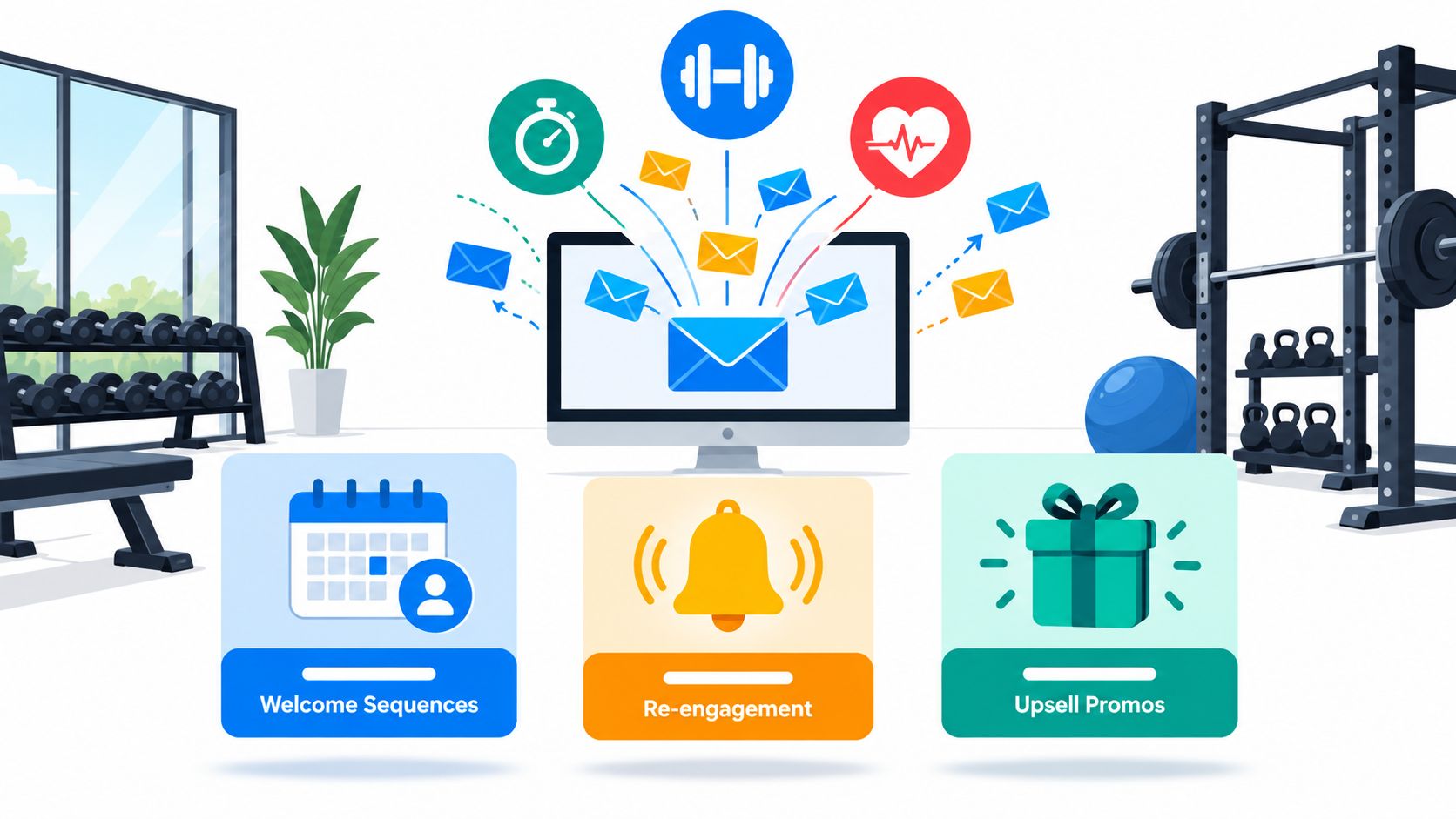
The strongest email marketing campaign ideas for gyms work differently. They respond to moments. A signup gets an onboarding sequence. A missed class gets a gentle recovery nudge. A highly engaged member gets a relevant upgrade offer. A quiet member gets a comeback message that respects where they are instead of shouting “limited time” into the void.
Email is still worth the effort. MailerLite's 2025 benchmark dataset, built from more than 3 million campaigns, reported a global average open rate of 42.35% and a global average click rate of 2.0%, which is a useful reminder that well-built campaigns can still earn attention and action at scale in a direct channel you control (MailerLite email benchmark data).
For each campaign below, use the same planning frame: trigger, audience, sequence, call to action, and follow-up owner. Keep it simple enough to run, but specific enough to feel personal. I'll also tie messaging back to visible facility habits that members notice, including gym wipes at high-touch stations, disinfecting wipes near shared equipment, and bulk gym wipes where traffic is heaviest.
1. Welcome Series The New Member Onboarding Campaign
The first week shapes the member's whole impression of your gym. If your welcome email is only a receipt, you're wasting the moment.

Send the first message within a day of signup. Keep it short. Confirm what they bought, tell them exactly what to do next, and show them one low-friction action such as booking an intro session or downloading the class schedule. If you want a deeper framework, this welcome email sequence guide for gyms is a practical starting point.
A simple first-week cadence
Day 1 should feel human. Use the member's first name, location, and membership type. Day 2 can carry the facility map, parking notes, app instructions, and class schedule. Day 4 should introduce community. Think member stories, coach intros, or your version of what Planet Fitness does with educational member onboarding and what many CrossFit boxes do with WOD and event orientation.
By Day 6 or 7, make the soft ask. Offer a complimentary consultation for personal training or program design, but frame it as support, not a sales ambush.
- Subject line direction: Welcome and next step beats cleverness.
- Personalization fields: First name, home club, preferred training time, joining goal.
- Mobile rule: Assume they'll read it in the parking lot or on the gym floor.
Practical rule: New members don't need everything. They need the next useful thing.
A small detail that helps this sequence feel polished is orientation language around care and cleanliness. Mention where members can find gym equipment wipes or fitness wipes, especially near cardio decks, benches, and stretching zones. That turns maintenance into part of the welcome, not a warning sign taped to a machine.
2. Seasonal Challenge Campaign Goal Oriented Engagement
Challenge campaigns work best when they create momentum, not guilt. If your only seasonal message is “Summer starts now,” you'll motivate a few people and alienate the rest.
Instead, build around participation options. F45 and Orangetheory-style challenge energy works because there's structure, visible progress, and a shared start date. Independent gyms can borrow that model without copying the tone.
Four emails that keep the challenge moving
Start with a launch email about two weeks before kickoff. Name the challenge, explain who it's for, and give members more than one way to win. One track can be attendance-based. Another can focus on consistency, recovery, or strength habits. That keeps competitive members engaged without making everyone else feel behind before they begin.
Then send:
- Weekly progress emails: Share coaching reminders, class suggestions, and habit prompts.
- Mid-challenge spotlight: Feature member stories, not just leaders.
- Final celebration email: Recognize effort, invite the next program, and keep the momentum alive.
One thing I'd avoid is a leaderboard-heavy sequence for a mixed audience. It pushes your most committed members harder, but it can discourage the members who need the campaign most.
Busy challenge periods also need operational copy. Add a quick station-care reminder in confirmation or weekly emails so members know where disinfecting wipes or sanitizing wipes are stocked during peak traffic. Keep it short and practical. “Wipe down shared equipment before and after use” is enough. It supports the experience without hijacking the message.
Members stay engaged when the challenge gives them a clear path to finish, even if they never lead the board.
3. Abandoned Class Booking Recovery Campaign
A member books the 6 p.m. class, skips it, then stops booking for ten days. That moment sits between onboarding and churn. Handle it well and you keep momentum. Ignore it and the next campaign they receive is often re-engagement.
Class-booking recovery works best when it treats the miss as a matching problem. The time was wrong. The format felt intimidating. The instructor was not a fit. The member needed a lower-friction return after a busy week. Your email sequence should help them choose the next step fast.
I usually wait for a pattern, not a single miss. One no-show can be noise. A second missed booking without a cancel is a useful trigger, especially for newer members who have not locked in a routine yet.
Here is the shape of the campaign:
Email 1, sent the same day: Keep the tone calm and practical. Confirm that they can rebook in one click. Offer two or three alternatives based on likely fit, such as a beginner class, a quieter time slot, or the same format with a different coach.
Email 2, sent 2 to 3 days later: Ask one simple question members can answer with a click. “Was the time wrong?” “Was the class too advanced?” “Do you want a coach to recommend a better option?” Those clicks should change the follow-up they get, not disappear into a generic survey.
Staff follow-up: Reserve text or phone outreach for members with repeated no-shows, unused credits, or early signs of drop-off. That keeps the human touch for cases where it matters and avoids turning normal schedule friction into a service issue.
The trade-off is speed versus sensitivity. Send too early and the email feels automated. Wait too long and the member has already drifted out of the habit.
Copy also matters more here than in a standard promo. “Still want to train this week?” outperforms guilt-heavy subject lines in this type of sequence because it keeps the focus on returning, not apologizing. The call to action should point to a specific action and timeframe. Rebook this week is stronger than learn more.
One more detail helps. Reduce uncertainty about the return experience. If your studio keeps fresh workout wipes stocked and wipes for gym equipment easy to find, mention it briefly in the rebooking email or class confirmation. Members who feel awkward after missing a session often respond to small signs that the room is ready, orderly, and easy to step back into.
Recovery campaigns do not exist on their own. They protect the habit-building work you started in onboarding, keep members active enough to consider upsells later, and prevent too many people from slipping into your inactive-member pool.
4. VIP Membership Tier Upsell Campaign
A member hits month three, books prime-time classes every week, and keeps running into waitlists. That is the moment to present a higher tier.
VIP upgrades belong in the middle of the lifecycle. Onboarding builds routine. Engagement campaigns build usage. Then the upsell email steps in once a member is clearly getting enough value to use premium access. Sent earlier, it reads like a cash grab. Sent later, you miss the window where convenience matters most.
The targeting rule is simple. Upgrade offers should go to members who already behave like premium members. Frequent attendance, repeat use of recovery amenities, strong class demand, guest interest, or recurring scheduling friction are better signals than broad demographic guesses. I would also suppress anyone with recent billing issues, low attendance, or a fresh start date.
Instead of a generic sales email, frame the message around one visible improvement in the member's week. Maybe they want earlier booking access so they stop losing spots. Maybe they would use guest passes on weekends. Maybe priority scheduling makes personal training easier to keep consistent. One use case is enough if it matches actual behavior.
A side-by-side comparison still helps, but keep it tight. Current plan, likely-used premium benefits, upgrade path. Skip the full feature dump.
Premium details can support the story if they make daily training easier. A cleaner recovery area, towels always available, a stocked gym wipe dispenser, or dedicated fitness center wipes near specialty equipment can reinforce the sense that the experience is more organized and easier to use. Those details should support the main value proposition, not replace it.
For the offer itself, use restraint. A small joining perk or first-month upgrade incentive can help, especially if your club needs to reduce decision friction without cutting base membership price. Teams that run several local offers at once can borrow ideas from coupon management for retailers to track redemptions and avoid messy front-desk exceptions.
Two subject line directions usually fit this campaign well: benefit-led and behavior-led. "Book your classes earlier with VIP access" is stronger than a vague premium announcement. "You are using the club like a VIP member already" can work too, but only when the usage pattern supports it.
One caution. Do not treat every active member as an upsell candidate.
Some members want simplicity and a predictable monthly rate. Pushing premium too hard can create price resistance that hurts renewal later. The best version of this campaign improves fit for the right segment and leaves everyone else alone.
5. Referral Incentive Campaign Member Powered Growth
Referrals work best right after a positive member moment. Not randomly. Not once a quarter because the calendar said so.
The ideal trigger is a milestone. A great review. A class streak. A completed challenge. A successful first month. That's when members are most likely to bring in a friend because they're already telling the story in real life.
The sequence that keeps referrals from feeling spammy
Start with a simple invitation. Tell members what their friend gets and what they get. Make the share method obvious. Personal link, code, or tap-to-text all beat a vague “forward this email” request. If you need help structuring the reward side, this guide on how to create a gym referral program covers the mechanics.
Then follow with two more messages. One reminder a few days later for members who clicked but didn't share. One celebration email the moment a referral converts.
- Lead with: “Bring someone you'll enjoy training with.”
- Keep the reward clear: Free month, service credit, or training credit.
- Avoid: Sending referral pushes to unhappy or inactive members.
SoulCycle, Planet Fitness, and local CrossFit boxes all benefit from the same dynamic. The member's endorsement matters more than the offer itself. Your email should make sharing easy, not overproduced.
A subtle but useful detail in these emails is reinforcing what the friend will walk into. A clean, well-run floor matters. Mentioning accessible gym equipment cleaning wipes near shared stations supports the quality story members are recommending.
6. Re-engagement Campaign for Inactive Members
Win-back emails should sound like a coach reopening the door, not a front desk blasting promotions at old names in a spreadsheet.
This sequence needs separate paths for cancelled members and members who stopped showing up. Those are different situations, and they deserve different copy.
A low-pressure three stage win-back path
Stage one is acknowledge. “We've missed seeing you” still works if the rest of the email respects their history. Mention a relevant update, a new class block, a new coach, or a better schedule fit. Remember that deliverability matters before copy matters. One benchmark summary noted global inbox placement at 87.2% in 2025, while another measurement set found that only 43.9% of processed emails reached the inbox, which is a strong reminder to clean lists and protect sender reputation before you scale re-engagement sends (Hostinger email deliverability trends).
Stage two is learn. Ask one or two useful questions. Why did they stop coming? What would make returning easier? If you want richer feedback, gate your strongest comeback offer behind a short survey.
Stage three is invite. Offer a low-friction path back. Think month-to-month restart, a comeback class, or a consultation.
A comeback email earns attention when it recognizes the member's reality instead of pretending nothing happened.
Visible facility improvements can help here. If you've upgraded your cleaning setup, say so plainly. For example, if you've added better wipe stations or switched to commercial disinfecting wipes for gym and athletic equipment, that's a real operational signal members can understand when they return.
7. Personal Training Package Promotion Campaign
Training emails often fail because they show packages before they show relevance. Most members don't wake up wanting “8 sessions.” They want a result, a structure, or accountability.
So segment the campaign by behavior and goals. New members who joined with a fat-loss goal need different copy from regular lifters who've plateaued or class members who want technique coaching.

Sell the consultation before the package
Lead with trainers, not bundles. Show the coach's specialty, style, and ideal client. NASM-certified specialists, strength coaches, mobility-focused trainers, and post-rehab support all appeal to different members. If you run a boutique model, pair that with package options after the consultation ask.
Your second email can compare options such as technique-focused sessions, accountability blocks, or longer programs. The point isn't to overwhelm. It's to help the member self-select.
- Best first CTA: Book a consultation.
- Best second CTA: See trainer matches.
- Best follow-up: Non-converter reminder based on the goal they clicked.
A hard sell usually backfires here. If somebody clicked training content but didn't book, wait and follow up with educational proof. A squat clinic invite or recovery guidance often converts better than another “last chance” promo.
In training zones, mention care standards briefly. Members notice whether staff ask people to wipe benches, handles, and touchpoints. A short line about wipes to disinfect gym equipment in coaching areas signals professionalism without turning the email into a cleaning notice.
8. Educational Content Series Fitness Tips and Wellness Tips Campaign
Not every email should ask for money. Some should earn trust so the paid asks land better later.
Many gyms miss an easy retention layer. Members don't only need promotions. They need useful nudges between visits. A recurring education series gives you that touchpoint while supporting classes, coaching, nutrition consults, and recovery services.
Build a rhythm members can recognize
Pick a steady day and stick to it. Tuesday or Wednesday usually fits a gym audience well because it's far enough from weekend noise and early enough to influence the rest of the week. Rotate themes so the series doesn't become repetitive. Training tips one week, nutrition another, then recovery, stress, mobility, and motivation.
If you're growing the audience while you do this, this article on how to build an email list for a gym is useful for connecting content with lead capture.
Use short lessons, not lectures. Beachbody-style modifications, Apple Fitness+ style recovery framing, or an instructor's form cue for a common movement all work because they're instantly useful.
- Useful-first CTA: Try this in tonight's class.
- Service CTA: Book a consult only when the content naturally supports it.
- Format rule: One main idea per email.
Recent benchmark commentary has also made one measurement issue hard to ignore. A 2026 benchmark roundup noted a global average open rate of 43.46%, but also argued that Apple Mail Privacy Protection inflates opens and that click-through rate, which averaged about 2.0% to 2.5%, plus click-to-open rate at 6.81%, gives a better read on content quality after the open (Email marketing benchmarks for 2026).
That matters for educational content. Don't judge it by opens alone. Judge it by clicks into the guide, class booking, consult request, or repeat engagement.
A natural facility-care mention fits here too. For example, a recovery email can note gym towel wipes in stretch areas or sanitizing wipes near mobility tools, as part of an easy post-workout routine.
9. Event and Class Launch Announcement Campaign
New classes and events deserve more than one email. A single announcement gets forgotten. A short sequence builds anticipation, answers objections, and reduces no-shows.
Peloton-style class launches, CrossFit competition pushes, and Equinox wellness-event promotion all follow the same pattern. They make the event feel concrete before the day arrives.
Run a simple teaser to follow-up timeline
The teaser should lead with the benefit, not the logistics. “New mobility lab for lifters” lands better than “Register now.” Once people care, the details matter. Your second email should answer who it's for, what they'll do, what to bring, and how to reserve a spot.
Then send reminders closer to the event. One around a week out. One at forty-eight hours. After the event, send a thank-you, recap media, and the next relevant CTA.
- Teaser angle: What problem does the event solve?
- Registration check: Can members sign up in a few taps?
- Reminder copy: Reduce uncertainty, don't repeat the sales pitch.
A common mistake is using fake urgency. Limited spots only works if the capacity is limited. If the room holds plenty, use interest and relevance instead.
For floor demos, workshops, and launch nights, add a brief pre-event and post-event note about wipes for gym equipment so attendees know how the room will be managed. It keeps the event organized and reassures members who care about shared-use etiquette.
10. Membership Renewal and Contract Update Campaign
Renewal emails shouldn't arrive like a billing surprise. They should feel like the continuation of a relationship the member already values.
Start earlier than most gyms do. If you wait until the final week, the message becomes transactional. If you begin with enough lead time, renewal can reinforce progress, show facility improvements, and open the door to a better-fit plan.

A renewal sequence that reduces friction
Email one should celebrate use and progress. Favorite classes, consistency streaks, or coach milestones all work. Email two should explain renewal terms in plain language. No hidden catches. Email three can present upgrade or family options if they fit the member. The final reminder should make renewal as easy as possible.
There's also a bigger strategic point here. One benchmark summary reported a 43.46% open rate and a 2.09% click-through rate, while another privacy-era perspective argues many marketers still overfocus on opens even though downstream action is the better test of whether the campaign worked (Sender email marketing statistics). For renewals, that's especially true. A celebrated email that doesn't get the renewal click is just a nicely written note.
Renewal copy works best when it answers one quiet member question. “Why should I keep going here?”
Close the sequence with a facility-readiness message that supports confidence. If your club uses EPA registered disinfecting wipes, explain that cleaning follows label directions. The EPA notes that disinfecting-wipe claims apply only when the product is used according to its label, and one EPA label directs users to remove visible soil first and keep the surface visibly wet for 1 minute on hard, nonporous surfaces (EPA disinfecting wipe label guidance). That kind of clarity helps members trust what “clean” means.
10 Email Marketing Campaign Ideas: Side-by-Side Comparison
| Campaign | Implementation complexity | Resource requirements | Expected outcomes | Ideal use cases | Key advantages |
|---|---|---|---|---|---|
| Welcome Series: The New Member Onboarding Campaign | Medium, multi-email sequence with personalization and timing | CRM/email automation, copy/design, facility content, light upkeep | Better early retention, reduced first-month cancellations, faster engagement | New members during first week(s) | Establishes community, educates on amenities, early upsell potential |
| Seasonal Challenge Campaign: Goal-Oriented Engagement | High, tracking, leaderboards, and recurring launches | Challenge platform/tracking, prize budget, social assets, ongoing management | Higher attendance, UGC/social reach, short-term retention boosts | Monthly/quarterly campaigns to re-engage members or drive check-ins | Drives motivation, creates social proof, increases consistent visits |
| Abandoned Class Booking Recovery Campaign | Medium, trigger-based automations with workflow escalation | Booking-system integration, targeted copy, staff follow-up process | Recover unused class revenue, improved class attendance | Members who skip booked classes or hold unused class packs | Low-cost recovery, identifies barriers, personalized re-engagement |
| VIP Membership Tier Upsell Campaign | Medium–High, segmentation and eligibility logic required | Usage/tenure data, benefit comparisons, payment/upgrade flow, creative assets | Increased lifetime value, predictable recurring revenue | High-frequency or long-tenured members | Upsells existing base, improves member satisfaction via premium perks |
| Referral Incentive Campaign: Member-Powered Growth | Medium, tracking and reward fulfillment systems | Referral tracking, rewards budget, shareable links/assets, reporting | Lower acquisition cost, high-quality referred leads | Members likely to advocate (satisfied, social members) | Scales organically, strengthens loyalty, high conversion rates |
| Re-engagement Campaign for Inactive Members | Low–Medium, segmented win-back sequence | Email content, survey tools, incentives, simple segmentation | Reactivated members, feedback on churn causes, modest revenue recovery | Dormant or recently cancelled members (30+ days inactive) | Cost-effective reactivation, gathers actionable feedback |
| Personal Training Package Promotion Campaign | Medium, segmentation, trainer profiles, scheduling integration | Trainer content, booking system, offer structuring, testimonials | Increased per-member spend, better member outcomes, retention lift | Active, goal-oriented members or frequent attendees | Higher ARPU, accountability-driven retention, differentiates services |
| Educational Content Series: Fitness & Wellness Tips Campaign | Medium, ongoing editorial rhythm and content production | Content creators, editorial calendar, multimedia assets, curation | Sustained engagement, authority building, higher open rates over time | Long-term engagement, non-sales relationship building | Builds trust, provides value without hard sell, shareable content |
| Event and Class Launch Announcement Campaign | Medium, multi-stage timeline with registration logistics | Event coordination, registration system, reminder flows, creative | Concentrated attendance spikes, trial of new offerings, social content | New classes, workshops, special events or facility launches | Generates urgency/FOMO, drives sign-ups, tests new programs |
| Membership Renewal and Contract Update Campaign | Medium–High, timing-sensitive, data-driven sequencing | Member usage data, billing tools, personalized messaging, offers | Reduced renewal churn, upsell opportunities, smoother renewals | Members approaching renewal (30–60 days out) | Prevents surprise cancellations, highlights member progress and value |
Build the Sequence, Then Improve It
The easiest way to use these email marketing campaign ideas is not to launch all ten at once. Start with onboarding. It affects every new member and sets the tone for everything that follows. Then add one behavior-triggered recovery sequence, usually missed classes or inactive members, because those campaigns directly support retention. After that, layer in challenge emails, personal training promotion, referrals, event launches, and renewals.
Keep the planning system simple enough that your team will use it. For every campaign, document five things: the trigger, the audience, the offer, the CTA, and the follow-up owner. That last piece matters more than most gyms expect. If nobody owns the text reply, the phone call, the trainer consult, or the renewal rescue, the email becomes a disconnected message instead of part of a working sales system.
Email still deserves a real place in gym marketing. Its roots as a direct-response channel go back to the first widely recognized commercial email campaign in 1978, which is often credited with generating about $13 million in sales for Digital Equipment Corporation from roughly 400 recipients, a milestone that helps explain why targeted email remains central to measurable marketing today (history of email marketing). The mechanics are more advanced now, but the core idea is the same. Send a relevant message to a specific person at the right moment, then make the next step obvious.
As you optimize, review more than opens. Look at deliveries, clicks, bookings, consultations, upgrades, referrals, and renewals. If you want a useful framing for segmentation and timing, this piece on behavioral relevance in email aligns well with how gyms should think about member-stage messaging. The best campaigns usually aren't the flashiest. They're the ones that match intent and remove friction.
Finish the system with the physical experience members see every day. Keep high-touch areas visibly maintained. Stock appropriate gym wipes where members expect them. If you manage a larger floor, place commercial disinfecting wipes or a gym wipe dispenser near cardio zones, strength stations, kiosks, and studio entrances. The practical use case is straightforward too. Some gym-focused products are marketed with fast kill-time claims on label-supported directions, including antibacterial wipes described as killing 99.9% of germs, viruses, and bacteria in 15 seconds, while another product page states SARS-CoV-2 is killed in 30 seconds when used according to label directions (gym-focused antibacterial wipes details).
Members notice that kind of consistency. They notice whether wipes for gym equipment are easy to find, whether staff reinforce good habits, and whether cleaning guidance feels like part of the brand instead of an afterthought. If you already use Gym Membership Tips as a planning resource, that content can fit neatly into the campaign documentation process. The point is to connect the email promise with the in-club experience, so every member moment keeps moving forward.
Leave a Reply