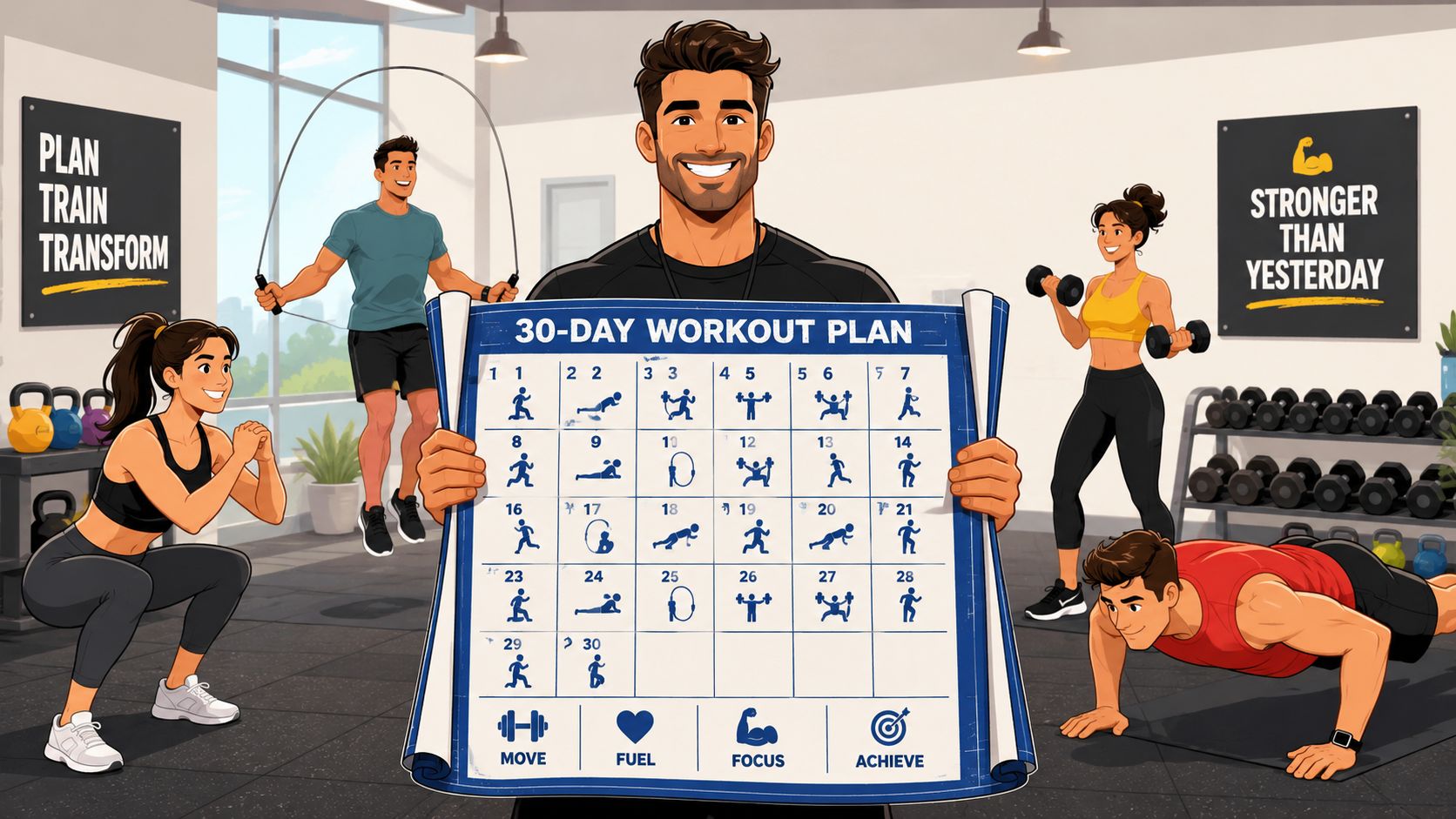
A 30 day fitness challenge sounds like a transformation play, but the data says it's really a completion problem. Average completion sits around 31%, solo attempts fall to 19%, and small-group accountability can lift completion to 51% when the program is built for it, not just advertised for it (challenge completion rates). That changes the job for a gym owner. The win isn't squeezing every drop of effort out of one month, it's designing a short system that people finish, talk about, and carry forward.

The best challenges I've run were never framed as “30 days of pain.” They were framed as a low-friction entry point with a clear next step. That's why the format works as a growth engine, it captures leads, reactivates quiet members, and creates a natural bridge into paid coaching or membership. A challenge is a marketing system that happens to include workouts, not the other way around.
The practical reason to use the format is simple. Thirty days is long enough for people to feel consistency and short enough that they'll say yes without overthinking it. It's also the right kind of commitment for a first interaction, especially when a participant can see an easier path to full training later. If you want a useful parallel on recovery and performance support, enable peak physical output is a helpful resource to keep in mind when you're thinking about how challenge participants sustain effort.
Why a 30 Day Fitness Challenge Works as a Growth Engine
A 30 day fitness challenge works because it gives the gym three jobs in one offer. It brings in new leads with a low-friction ask, gives warm prospects a clear reason to show up, and gives existing members a social reason to re-engage before they disappear.
The common mistake is to sell the challenge as a dramatic body transformation. That promise creates the wrong expectation, and the wrong expectation hurts referrals and post-challenge conversion. The stronger pitch is consistency, accountability, and a clear finish line. In practice, the format works because smaller groups, daily check-ins, and peer support keep people moving when a solo plan usually fades.
What the format does for the funnel
A short challenge lowers the barrier to entry, which matters when someone is comparing your gym with a free workout at home. It also gives you a cleaner first touch point than a generic trial pass. People show up, meet staff, see other members, and start associating your facility with momentum instead of hesitation.
The challenge also positions the next offer before the month is over. That matters because the participant has already shown they will attend, respond to reminders, and handle a simple structure. At that point, you can move them into an intro consult, class pack, coaching upgrade, or membership path with less resistance than you would get from a cold lead.
Practical rule: if the challenge does not create a next conversation, it is just a temporary promo.
That next conversation is where the revenue happens. A good challenge is not only a workout calendar, it is a filter that shows who wants coaching, who wants community, and who is ready for a longer commitment. It also gives the floor staff a reason to talk about recovery, consistency, and how participants can enable peak physical output without overcomplicating the offer. For gym owners, that is the core value of a 30 day fitness challenge, because it exposes behavior you can turn into action.
Setting Goals, KPIs, and the Right Audience
Every challenge should start with a business objective, not a workout list. If the goal is lead capture, the offer, landing page, and follow-up sequence need to be built for sign-ups. If the goal is retention, the message has to feel like community and momentum rather than a hard sell.
The four numbers that matter are sign-ups, completion rate, intro offer redemptions, and net new memberships. Those are the outcomes that tell you whether the challenge attracted attention, kept people engaged, and created business value. Everything else, including likes, shares, and generic “buzz,” is secondary unless it moves one of those four outcomes.
Audience segment changes the offer
A cold lead from Instagram doesn't need the same message as a dormant member who already knows the club. A beginner may need a gentler entry point and more reassurance, while a current member can be invited with a stronger community angle. That's why the same challenge can be priced differently or packaged differently depending on who it's for.
| Audience Segment | Primary Business Goal | Primary KPI | Secondary Metric |
|---|---|---|---|
| Cold leads | Lead capture | Sign-ups | Intro offer redemptions |
| Dormant members | Reactivation | Completion rate | Net new memberships |
| Current members | Retention and community | Completion rate | Attendance lift |
| Beginner prospects | Trust building | Sign-ups | Intro offer redemptions |
A clean one-page brief keeps the team aligned. It should answer who it's for, what success looks like, what the entry offer is, and what happens after day 30. That one page is usually enough to stop the campaign from turning into a loose collection of workouts and social posts.
Designing the 30 Day Workout Calendar

A good calendar respects recovery first. The practical benchmark is 4 to 6 training days per week, at least one full rest day, and roughly 48 hours between hard strength sessions for the same muscle group (science and programming guidance). That setup is boring to some marketers, but it's what keeps people from burning out before the month is over.
Build the month in three waves
Start with a lighter first week. Keep movements simple, coachable, and familiar so people feel capable quickly. In week two, add density or slightly more demanding variations, but keep the total volume recoverable. By week three, introduce the hardest progressions, then finish with a final week that feels achievable enough for a strong finish.
The best challenge is usually the one participants can repeat, not the one that impresses them for three days.
That matters for beginners, older adults, and anyone returning after time off. Beginners need more practice and less intensity. Returners after injury need form cues, low-impact alternatives, and a clear option to scale. Experienced gym-goers can handle harder variations, but they still benefit from the same recovery logic, especially when the same movement pattern shows up across the month.
A useful way to publish the calendar is to label each day with the main pattern and one modification note. For example, squat day can include bodyweight, goblet, or tempo options. Push day can include incline push-ups or dumbbells. If you want a structure reference for member-friendly programming ideas, the article on group fitness challenge ideas is a practical companion piece.
Onboarding and Daily Engagement Sequences
A 30 day fitness challenge starts before day 1. Strong programs open with a short onboarding flow that confirms expectations, assigns accountability partners, and collects baseline measurements or simple self-ratings. When people know what success looks like, they are less likely to vanish after the first hard week.
The completion pattern is predictable. Small-group accountability works better than solo attempts, especially in groups of 5 to 10 participants, and the stretch between days 8 to 14 is usually where attention drops unless your support system is tight. That is the part of the month where completion rates rise or fall based on how well you keep people connected and seen. As noted in a practical guide to customer onboarding best practices, clear expectations and early follow-up do a lot of the heavy lifting.
Daily touchpoints that keep people moving
Use one consistent daily channel. It can be an app, a group chat, or a printed tracker at the front desk, but it needs to be easy to answer. Ask one simple question, such as whether they completed the workout, and one optional question about energy or soreness. The goal is not to flood people with messages. It is to keep the streak visible.
Pair that with a response system. If someone misses a day, send a short nudge from a coach or buddy. If someone posts a streak, acknowledge it publicly without turning every reply into a speech. The best gym teams make progress visible without making the challenge feel performative.
Daily rule: low-friction check-ins beat clever gamification when the room is busy and the staff is stretched.
Use the last day of each week to share a recap, a few member wins, and a preview of what is coming next. Those recaps do more than motivate participants, they create social proof you can reuse when the next cohort opens.
Marketing Copy and Creative Assets That Fill the Challenge
The fastest way to fill a challenge is to make the promise feel easy, specific, and local. Your headline should sound like a real outcome for a real person, not a fitness slogan. “Start strong for 30 days,” “Build consistency without burnout,” and “Join a small-group reset” all work better than grand transformation language because they don't overpromise.
Cold traffic needs proof, warm traffic needs reassurance, and current members need a reason to bring a friend. That means your ad angles should change by channel. Social posts can show real members moving, email can lean into convenience and community, and referral messages can emphasize doing it together.
What to produce before launch
A launch kit doesn't need to be huge, but it does need to be complete. You need a landing page, sign-up confirmation, reminder emails, social story assets, posters, and one short coach-facing briefing so everyone says the same thing on the floor. If you want quick copy inspiration for short-form posts, 8 caption ideas for gym posts is a useful reference point.
The landing page should answer four questions fast. What is it, who is it for, how long does it last, and what happens after sign-up? If that path is unclear, people bounce. If it feels simple, they'll keep reading.
For the offer mechanics, the guide to direct response marketing pairs well with this kind of campaign. In practice, the highest-converting assets usually show actual training spaces, real coaches, and honest language about effort. Nobody needs another polished promise. They need a believable next step.
Converting Challenge Finishers Into Paying Members
Revenue sits after day 30. A challenge that ends cleanly but doesn't offer a next step leaves money on the table and hands your most engaged prospects back to the market. The conversion path should begin while the challenge is still running, not when the final email lands.
There are three common structures. One is a free challenge with a paid membership pitch at the end. Another uses a low entry fee and pairs it with an intro offer that expires when the challenge closes. The third bundles the challenge with a multi-week onboarding program, which makes the most sense when your audience needs more handholding or when the gym is selling coaching rather than just access.
Where the handoff should happen
Book the consult in week two or three, while people still feel momentum. By the final week, they should already know what the next offer is and when it ends. If you wait until after the challenge is over, you're asking them to reset their motivation instead of extending it.
The cleanest conversion flow is simple.
- Week two or three: invite finishers into a consult or tour.
- Final week: present the next program and set a clear expiry.
- Day 30 plus one: follow up with a direct invitation, not a vague “thanks for joining.”
You should also make referral part of the finish line. A finisher who had a good experience is your most credible lead source for the next cohort, especially if the referral ask is tied to a specific reward or social benefit. The challenge should create a loop, not a one-time event.

Staffing, Logistics, and Measuring the Results
A challenge only feels smooth if the back end is disciplined. At minimum, you need coach coverage for the sessions, front-desk support for sign-ins, someone moderating the daily engagement channel, and one person acting as the challenge lead. If nobody owns the process, small problems turn into lost check-ins and missed follow-ups.
Floor space and traffic flow matter too. Peak-hour classes need enough room for safe movement, visible check-in points, and a clear place for new participants to ask questions without interrupting the session. That's also where a clean member experience supports retention.
Hygiene, reporting, and decision rules
Keep disinfecting wipes, gym wipes, and gym equipment wipes stocked near high-touch areas, and use EPA registered disinfecting wipes for equipment cleaning where appropriate. A visible gym wipe dispenser also makes it easier for members to clean up after themselves, which improves trust and reduces friction during busy periods. For operators looking to standardize supplies, wipes for gym equipment is a relevant place to review bulk options alongside routine cleaning needs.
The reporting template should stay simple. Track the four core KPIs, review where drop-off happened, and note what staff observed in the room and in the check-in flow. Then decide whether to repeat the format, tweak the messaging, or replace the offer entirely. If you're also stocking fitness wipes, workout wipes, gym towel wipes, sanitizing wipes, antibacterial wipes, disinfectant wipes, bulk gym wipes, gym equipment cleaning wipes, commercial disinfecting wipes, or yoga mat wipes, keep the presentation easy for members and staff alike.
Clean equipment and clean process send the same message, this is a place people can trust.
For gyms that want the challenge to feel premium, small details matter more than flashy branding. Wipes at the right stations, a clear check-in script, and a crisp end-of-challenge debrief all make the program feel repeatable instead of improvised.
If you're planning your next cohort, use this blueprint to build the offer, the calendar, and the follow-up before you open registration. Gym Membership Tips can help you turn the concept into a working campaign, so publish the challenge, stock the cleaning stations, and start recruiting the first group now.
Leave a Reply