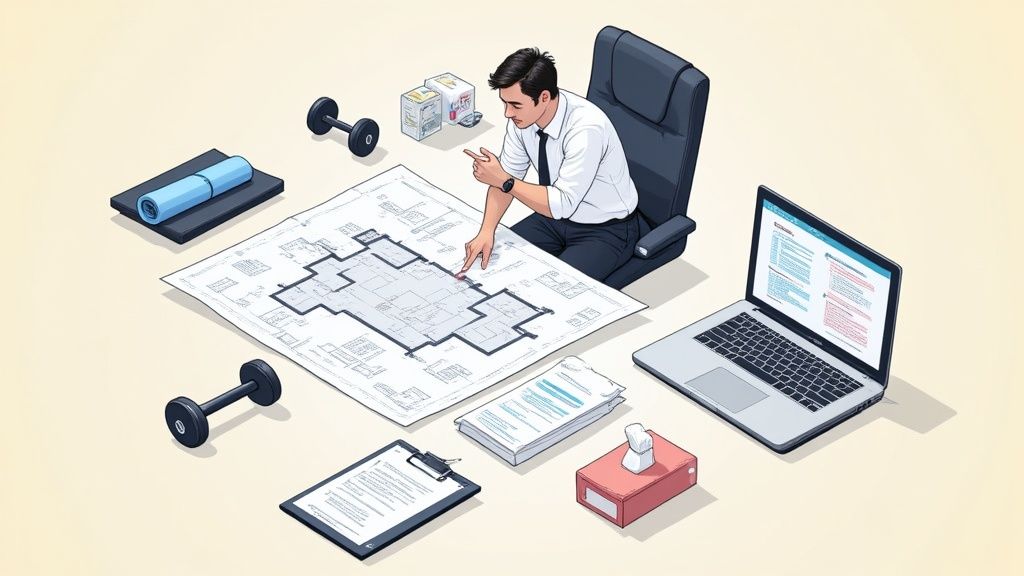
Before you even think about ordering a single dumbbell, the most important heavy lifting you’ll do is crafting your business plan. This isn't just a document for investors; it’s your personal roadmap. It’s the game plan that turns a passion for fitness into a thriving, profitable business that actually lasts.
Craft Your Unbeatable Gym Business Plan
Think of your business plan as the blueprint for your dream gym. This is where you get to define what makes your facility special and create a powerful vision that will guide every single decision you make from here on out. It’s the exciting first step!
And what an exciting time it is. The global fitness industry is absolutely booming, valued at over $90 billion as of 2025 and still growing. Here in the U.S., about 19% of people have a gym membership, but here's the kicker—a huge chunk of them rarely show up. That spells massive opportunity for a gym owner who knows how to engage their community.
Pinpoint Your Ideal Client and Niche
First things first: who are you building this gym for? You absolutely cannot be everything to everyone. Trying to will just make you forgettable. Are you creating a serene sanctuary for yoga enthusiasts, a high-octane playground for CrossFitters, or a welcoming hub for families?
Get specific. I mean really specific. I always tell new owners to create member "personas." For example:
- "Corporate Catherine": She's a 35-year-old professional who needs quick, effective classes she can squeeze in before work or during her lunch break. Stress relief is key for her.
- "New-Dad David": He's 40 and trying to get back in shape, but he needs a gym with childcare and maybe some weekend activities the whole family can enjoy.
- "College-Student Chris": This 22-year-old is all about affordability, late-night hours, and a fun, social atmosphere where they can meet people.
When you know exactly who you're talking to, everything from your marketing to your class schedule becomes a thousand times easier and more effective.
Analyze Your Local Competition
Okay, you know your ideal member. Now, let’s see who you’re up against. It's time to play detective and analyze every other fitness option in your area. Don’t just scroll through their websites; go visit them. Get a day pass. Take a class.
Scope out every gym, studio, and community center within a five-mile radius and pay close attention to:
- Their membership prices and what’s included.
- The condition and variety of their equipment.
- The types of classes they offer and when.
- The general vibe. Does it feel cliquey? Welcoming? Intense?
Your goal here isn't to copy them. It's to find the gaps in the market that you can brilliantly fill. Maybe every gym is a hardcore "iron paradise," leaving a wide-open lane for a boutique studio focused on functional fitness and wellness. Perhaps nobody offers premium amenities like a sauna or a smoothie bar.
Key Takeaway: Your unique advantage is found in what everyone else isn't doing. Find an unmet need in your community and build your entire business around solving it.
Break Down the Financial Essentials
With a clear vision in your head, it's time to get real with the numbers. This can feel like the scariest part, but a detailed budget is your best friend, I promise. You need to map out every potential cost, from the big-ticket items like treadmills and squat racks all the way down to the cost of cleaning supplies and software for the front desk.
This whole process is a journey of discovery. You start with broad research, narrow down your financial needs, and then build your unique brand on that solid foundation.

As the image shows, a powerful brand doesn't just appear out of thin air. It’s born from meticulous market research and careful financial planning. From securing your startup loan to projecting your revenue for the first three years, your financial forecasts need to be rock-solid. Investors and banks need to see that you’ve done your homework and that your gym is a viable business, not just a hobby.
Getting a handle on initial expenses is a critical first step. Below is a table that breaks down some of the most common startup costs you'll need to account for.
Initial Startup Cost Estimation
| Expense Category | Estimated Cost Range (USD) | Key Considerations |
|---|---|---|
| Lease & Renovations | $20,000 – $100,000+ | Includes security deposit, first month's rent, and costs for flooring, paint, locker rooms, and front desk build-out. |
| Fitness Equipment | $50,000 – $250,000+ | New vs. used? Leasing vs. buying? This is often the largest single expense. Don't skimp on quality for key pieces. |
| Legal & Insurance | $3,000 – $8,000 | Business registration (LLC/Corp), liability insurance, legal consultations, and waivers. |
| Software & Technology | $2,000 – $10,000 | Member management software, payment processing, website, and security systems. |
| Initial Marketing | $5,000 – $20,000 | Pre-sale campaigns, grand opening event, signage, digital ads, and initial promotional materials. |
| Working Capital | $15,000 – $50,000 | Cash reserve to cover payroll, utilities, and other operating expenses for the first 3-6 months. |
Remember, these are just estimates. Your actual costs will depend heavily on your location, size, and the specific niche you're targeting. For a deeper dive into building out these numbers, check out our comprehensive guide on creating a fitness center business plan.
Alright, your business plan is solid. Now it's time to bring this thing to life! This is the part where your dream starts to take shape in the real world—we're talking about finding a physical space and tackling all the legal stuff. Honestly, getting this stage right is make-or-break for building a gym that lasts.
Your first big move? Deciding on a business structure. This isn't just a box to check on a form; it has a huge impact on your taxes and, more importantly, your personal liability. Most gym owners I know go with either a Limited Liability Company (LLC) or an S-Corporation.
- LLC (Limited Liability Company): This is the go-to for a reason. It creates a shield between your business and your personal life. If the gym ever gets sued or racks up debt, your house and personal savings are kept safe.
- S-Corp (S-Corporation): An S-Corp gives you that same awesome liability protection but can offer some slick tax benefits. You can pay yourself a formal salary and take owner's draws, which can sometimes reduce your self-employment tax burden.
Do yourself a favor and chat with a lawyer or an accountant here. Spending a little money on professional advice now will save you from massive headaches and potential financial disasters down the road. Trust me on this.
Cutting Through the Red Tape: Licenses, Permits, and Insurance
Once you've officially formed your business, you need to get the green light to operate. I won't lie, this part can be a grind, but it's absolutely non-negotiable if you want to run a legit, respectable gym.
You're going to need a handful of licenses and permits, which can run you around $5,000 right out of the gate. This usually covers things like a general business license, health department permits, and an employer identification number (EIN) if you're hiring. These rules change from city to city, so your first stop should be your local government's website to find their specific checklist.
Next up is insurance—your financial safety net. You'll need a few key policies:
- General Liability Insurance: This is your core protection. It covers you if a member trips over a dumbbell and gets hurt.
- Professional Liability Insurance: Essential if you have trainers. It protects you if a trainer's advice or programming leads to an injury.
- Worker’s Compensation: If you have even one employee, this is a legal must-have.
My Two Cents: Don't cheap out on insurance. A rock-bottom policy might save you a few bucks now, but a truly comprehensive plan that includes coverage for equipment breakdown or business interruption could be the one thing that saves your entire business if disaster strikes.
Finding and Building Your Perfect Space
Okay, now for the really exciting part—finding a home for your gym! Your location can single-handedly determine your success. You need to be looking for a place with great visibility, easy access for members, and—I can't stress this enough—plenty of parking.
Who are you trying to attract? If your ideal member is "Corporate Catherine," you want to be near office parks. If you're going after "New-Dad David," then a spot in a residential area makes way more sense. The average gym in the U.S. is around 3,000 square feet, but don't get hung up on that number. The right size depends entirely on your specific concept.
Once you’ve signed that lease, it's all about the layout. A smart design makes for a fantastic member experience and keeps things running smoothly behind the scenes. I always tell people to think in zones:
- Cardio Zone: Keep your treadmills, ellipticals, and bikes together for a clean look and easy flow.
- Strength Zone: A dedicated area for your free weights, squat racks, and selectorized machines.
- Group Fitness Studio: A wide-open space perfect for yoga, HIIT, or whatever classes you plan to offer.
- Functional Training Area: Think turf, sleds, kettlebells, and battle ropes. This is where the high-energy stuff happens!
The costs for the lease, renovations, and all the legal setup can pile up fast. For a really clear-eyed look at what to expect financially, you’ll get a ton of value from our detailed guide on the complete cost of starting up a gym. A killer layout doesn't just look cool; it manages foot traffic and creates an awesome atmosphere that makes people excited to come back.
Bringing Your Gym to Life: Equipment and Memberships
Alright, this is where the magic really happens. Up until now, you've been dealing with plans and paperwork, but now we get to build the heart and soul of your fitness center. The equipment you choose and the way you price your memberships will define your gym's personality, shape every member's experience, and ultimately drive your success. Let's get into it.

Getting Geared Up: Sourcing Your Equipment
Your equipment isn't just metal and machinery; it's the core promise you make to your members. It's also one of your biggest initial expenses. A good rule of thumb I've always used is to budget around $25 per square foot. So, for a modest 3,000-square-foot space, you’re looking at a $75,000 investment right out of the gate. The real question is: where does that money go?
You've got two main routes here: buying or leasing. There's no single right answer, and I’ve seen successful gyms do both. It really comes down to your capital and your long-term vision.
Thinking About Leasing?
- Easier on the Wallet: Instead of one massive check, you get predictable monthly payments. For a typical gym, this might be $2,000 to $3,000 a month.
- Always Fresh: Leases often come with upgrade options every few years. This keeps your gym looking new and exciting, which members absolutely notice.
- Hands-Off Maintenance: When a treadmill inevitably breaks down (and it will), the leasing company is usually on the hook for repairs. That’s a huge weight off your shoulders.
Or Do You Want to Buy?
- You Own It: Simple as that. Once it’s paid for, it’s an asset on your books. No more monthly payments for that piece of gear.
- Ultimate Freedom: You can pick and choose from any brand you want. Want that specific power rack or a unique functional trainer? No problem.
- The Big Upfront Hit: This is the main obstacle. You’ll need a ton of cash or a specific equipment loan to make it happen.
My Two Cents: Don't fall into the trap of thinking everything has to be brand-new and top-of-the-line from day one. I've seen many new owners get stuck here. A smart hybrid strategy often works best. Buy your bulletproof strength gear—squat racks, benches, dumbbells—because that stuff lasts forever. Then, lease the high-tech cardio machines that get heavy use and have technology that changes every couple of years.
Crafting Your Membership Packages
Now that your gym is full of awesome gear, let's figure out how you’re going to make money. Your membership structure needs to hit that sweet spot: simple enough for someone to grasp in 30 seconds but flexible enough to appeal to different people. If a potential member needs a flowchart to understand your pricing, you’ve already lost them.
A tiered system is classic for a reason—it works. It lets you meet people where they are, from the budget-conscious newbie to the hardcore fitness enthusiast.
Here’s a simple, effective structure I've seen work time and time again:
- The "Just the Basics" Tier: This is your foot in the door. It might offer gym floor access only or have restricted hours (like off-peak times). It's designed to be an easy "yes" for people on a tight budget.
- The "All-In" Premium Tier: This should be your bread and butter—the one you want most people to choose. It includes unlimited 24/7 access, all group fitness classes, and maybe a nice little perk like a free monthly guest pass.
- The VIP Experience: This is your top-shelf offering. It's everything in the premium package plus exclusive benefits like a couple of personal training sessions per month, unlimited guest passes, or access to special amenities like a sauna or recovery lounge.
And don't stop at monthly plans! You need options for people who aren't ready to commit. Always offer day passes for out-of-towners and class packs (like 10 classes for a fixed price) for those who only want to drop in for your legendary yoga or HIIT sessions.
A Clean Gym is a Growing Gym
Okay, one last thing that’s just as important as your squat racks and pricing: cleanliness. I can’t stress this enough. A sparkling clean gym isn't a bonus; it's a non-negotiable. It’s one of the biggest factors in whether a member sticks around or cancels.
From the day you open, you need a rock-solid cleaning protocol. Your team needs daily, weekly, and monthly checklists. But you also need to make it incredibly easy for members to help keep the space clean. This means putting sanitizing stations everywhere.
Place dispensers with quality wipes in all the high-traffic zones—by the dumbbell racks, next to the cardio equipment, and near the functional training area. For a solution that members will actually use, stock your stations with something convenient like Wipes.com Disinfectant Wipes. They're simple to grab, use, and toss. This small investment shows everyone you care about their health, building a foundation of trust and loyalty from their very first workout.
Ignite Your Brand and Launch a Powerful Marketing Blitz
You've planned, budgeted, and kitted out your space. Awesome. But a killer gym is just a room full of iron if nobody knows you exist. Now it's time to make some noise, build some serious buzz, and get people lining up at the door on day one.
This isn't just about throwing a few ads out there. We're talking about building an electric brand that people are genuinely excited to join. It all starts with your identity—your logo, your colors, and your core mission. What do you stand for? Answering that question is the foundation for every single piece of marketing you'll create.
Building Your Digital Foundation
Before you even think about spending money on ads, you need a digital home base. Your first move is to get a professional, easy-to-use website up and running and to lock down your social media handles on Instagram, Facebook, and wherever else your people hang out. Don't wait until you open the doors—start building that community now.
Think of your website as your virtual front door. It has to be clean, simple to navigate, and look great on a phone. It needs to immediately tell people:
- Who you are: What's your story?
- What you offer: Memberships, classes, training, etc.
- Where you are: Your address and a map.
- How to join: Make this button impossible to miss!
At the same time, start using your social channels to show off the behind-the-scenes action. Post videos of the gym being built, introduce your trainers, and share quick fitness tips. You're creating a connection and building anticipation before you've even sold a single membership.
Crafting Your Pre-Launch Attack Plan
The weeks leading up to your grand opening are pure gold. This is your chance to build a groundswell of hype. A multi-channel marketing blitz is how you do it, creating a constant drumbeat of excitement across different platforms. To really make a dent, you should plan on an initial marketing budget of $5,000 to $20,000.
One of the absolute best pre-launch tactics is the founder's rate promotion. This is a can't-miss, deeply discounted membership that's only available for a limited time to your very first members. It creates a powerful sense of urgency and rewards the people who believe in you from the start, helping you secure critical cash flow before you're even officially open.
Pro Tip: Don't just announce your founder's rate on Instagram. The real magic happens when you build a dedicated email list of interested locals. Give them exclusive early access before anyone else. It makes them feel like VIPs and will absolutely skyrocket your sign-up rate.
Combine your founder's rate with targeted digital ads. Use Facebook and Instagram to run ads specifically aimed at people within a 5-10 mile radius of your gym who have shown an interest in fitness, wellness, or similar gyms. It's amazing how a relatively small ad spend can generate hundreds of high-quality leads for your presale. Our detailed article on marketing a gym effectively dives into even more advanced strategies you can roll out from day one.
Owning Your Local Market
Digital is powerful, but don't ever underestimate the impact of good old-fashioned, on-the-ground hustle. Get in touch with local news outlets, community bloggers, and city leaders. Invite them in for a private "hard hat" tour before you open to score some positive press.
Start forging partnerships with nearby businesses that aren't your competitors. Think health food stores, physical therapy clinics, or corporate wellness programs. You can set up a deal to offer their customers an exclusive discount, and they can do the same for your members. It's a fantastic, low-cost way to tap into a ready-made audience.
This is more important than ever. The global health and fitness club market is set to explode from $102 billion in 2024 to a mind-blowing $235 billion by 2034, all thanks to a massive demand for specialized wellness concepts. To grab your piece of that pie, you have to connect with your community on a personal level. You can discover more insights about the fitness industry's explosive growth on Athletech News. This local-first approach is how you build a brand that feels like a true part of the neighborhood.
Assemble Your Dream Team and Build a Winning Culture
Let’s be real for a second. You can have the shiniest, most advanced equipment on the planet and a marketing plan that’s pure genius, but that’s not what creates die-hard fans. The true heart and soul of your gym? It’s your people. Your team is what turns a one-time visitor into a raving advocate who brings all their friends.
Putting together your A-team is genuinely one of the most rewarding parts of this whole venture. You’re not just filling positions; you're hand-picking the passionate, high-energy individuals who will bring your vision to life. These are the people who will create that magnetic, welcoming vibe everyone is searching for.
Attracting and Hiring Top Talent
First things first, let's talk job descriptions. Please, don't just post a boring list of duties. Your job ad is your first handshake—make it a firm one! Let your gym's unique personality shine through. If you’re building a high-octane, results-driven community, let that energy explode off the page. If your focus is on creating a safe, supportive space for beginners, make that crystal clear.
Once you get to the interviews, dig deeper than the typical questions. Yes, certifications and experience are important, but you're really hiring for attitude and a genuine passion for helping others. I always, always recommend adding a practical, hands-on element to the interview.
- For Personal Trainers: Ask them to run you through a quick, mock training session. You'll learn more about their communication style and ability to connect in those 15 minutes than you ever could from a resume.
- For Front-Desk Staff: Throw them a few real-world curveballs. "What do you do when a member is upset because their favorite class was canceled?" or "How would you approach a prospective member who looks completely overwhelmed and intimidated?"
This isn't about tricking them; it's about seeing their personality and problem-solving skills in the wild. It’s the single best way to know if they'll be a great fit for your culture.
Building an Unbeatable Company Culture
A killer culture doesn't just magically appear—you have to architect it from the ground up. It all starts with defining your core values. Are you about community, grit, and crushing goals? Or maybe wellness, balance, and holistic support? Whatever they are, write them down. These values become the compass for every single decision you make.
That culture gets baked in during training. Don’t just show new hires how the software works and point out the emergency exits. Your onboarding needs to be a full immersion into your brand. It's where you teach your way of doing things.
My Two Cents: Your training has to hit three key pillars: the "how-to" of the job, the art of incredible customer service, and an obsession with safety and hygiene. A team that feels empowered and understands the why behind their work is your single greatest weapon for keeping members happy.
This is also where you set an unshakeable standard for cleanliness.
Empowering Your Team with the Right Tools
A happy team is an empowered team. Give them the tools they need to shine and the autonomy to make smart decisions. This means investing in good member management software that gets rid of administrative headaches so they can spend more time on the floor, actually talking to members.
Just as importantly, it means arming them with top-tier cleaning and sanitation supplies. When your staff has easy access to products that work, they can effortlessly uphold the high standards of cleanliness your members deserve. Make hygiene a simple, shared responsibility.
Stock sanitizing stations everywhere with high-quality supplies like Wipes.com Disinfectant Wipes. Making these easily accessible for both your team and your members sends a loud, clear message: you care about their health. It builds trust and reinforces the premium experience you’re selling. A spotless gym, maintained by a team that takes pride in it, is simply non-negotiable.
Craft an Unforgettable Member Experience
Getting people to sign up is the first battle. Keeping them is how you win the war. The real secret to a thriving fitness center isn't just about having the best equipment—it's about creating a place people genuinely want to be. You’re building more than a gym; you're building a community, and that begins the moment a new member walks through your door.

Your onboarding process is your best defense against those notorious first-month cancellations. Don't just hand over a key card and point them toward the treadmills. Guide them! A complimentary facility tour and a quick, friendly rundown of the essential equipment can make all the difference. That single gesture helps melt away the intimidation that keeps so many people from coming back.
From there, it’s all about connection. Your mission is to make your gym their "third place"—the spot they go to after home and work. This is where you get to have some fun.
- Kick off a Fitness Challenge: Think about a 30-day consistency challenge or a team-based transformation contest. A little friendly competition builds incredible energy and camaraderie.
- Host Workshops and Events: Bring in a local nutritionist for a seminar or throw a member appreciation BBQ in the parking lot. These events make your facility a hub of activity, not just a place to sweat.
- Build a Social Spot: Even something as simple as a great coffee station or a comfy lounge area gives people a reason to stick around and chat, turning members into friends.
Elevate The Experience With Smart Tech
Let's be real—convenience is everything. Modern tech isn't just a nice-to-have; it's a fundamental part of a killer member experience. A branded mobile app is a fantastic place to start. Letting members book classes, track their progress, and get gym updates right from their phone puts them in control and keeps your brand top of mind.
Even better, look into tech that integrates with popular wearables. When a member's workout in your gym syncs up perfectly with the health data they track all day, you become an indispensable part of their lifestyle.
A great member experience is the sum of a thousand small, thoughtful details. It’s about making fitness feel less like a chore and more like the best part of their day.
Cleanliness Is Your Greatest Retention Tool
Beyond the fun stuff, one thing is absolutely non-negotiable: a visibly spotless facility. Nothing destroys a member's trust faster than sticky equipment, dusty corners, or gross locker rooms. It sends a loud and clear message that you don't care about their health.
Create a strict cleaning schedule and make sure it’s followed like clockwork. But don't stop there. Empower your members to help keep the space clean. Place sanitizing stations all over the gym, especially near high-traffic zones like the free weights and cardio machines.
Of course, you have to stock those stations with products that actually work. Providing high-quality, easy-to-use Wipes.com Disinfectant Wipes lets members confidently wipe down equipment before and after they use it. This detail might seem small, but it shows a massive commitment to their well-being and is one of the most powerful retention tools in your arsenal.
Here's a look at how different retention tactics stack up against each other.
Member Retention Tactics Comparison
| Tactic | Impact on Retention | Implementation Effort | Example |
|---|---|---|---|
| Community Events | High | Medium | Hosting a monthly member social or a holiday-themed workout. |
| Gamification/Challenges | High | Medium | A 6-week "Biggest Loser" style competition with prizes. |
| Personalized Communication | Medium | Low | Sending an automated "We miss you!" email after 2 weeks of absence. |
| Exceptional Cleanliness | Very High | High (Ongoing) | Visible cleaning staff and readily available disinfectant wipes for members. |
| Loyalty Rewards Program | Medium | Medium | Offering a free month of membership for every 12 consecutive months paid. |
While flashy events are great, never underestimate the power of the fundamentals. A brilliantly clean and welcoming environment is the foundation upon which all other retention efforts are built.
Alright, let's tackle those nagging questions that pop up when you're deep in the trenches of planning your new fitness center. It’s a huge project, and trust me, everyone has these moments of uncertainty. Let’s get you some clarity.
Answering Your Biggest Gym Startup Questions
What Are the Biggest Hidden Costs?
I see this all the time. New owners have their equipment and rent costs nailed down to the dollar, but they get blindsided by two major expenses: pre-launch marketing and the cash needed to survive the first 3-6 months.
You absolutely need a war chest for a strong marketing launch before you even open the doors. Then, you need enough working capital to cover payroll, utilities, and all the other bills while you're still building your membership base. Don't underestimate this!
How Important is Technology, Really?
It’s non-negotiable. Gone are the days of pen-and-paper sign-in sheets. Members now expect a seamless digital experience.
Think about it from their perspective. They want a slick, branded app to book classes, a simple way to manage their accounts, and maybe even integration with their favorite fitness trackers. For you, a solid gym management software system isn't a luxury; it's the command center for your entire operation. It makes life easier for your staff and dramatically improves the member experience, which is everything when it comes to keeping them around.
Here's a pro-tip that costs next to nothing but pays off big: nail your new member onboarding. A fantastic first impression is one of the easiest ways to boost retention from day one. Offering a free personal training session and a friendly tour makes people feel welcome and valued, making them far more likely to stick around.
Finally, a simple but powerful point: cleanliness sells. A spotless gym with easy-to-find cleaning supplies shows you care. Placing stations stocked with quality Wipes.com Disinfectant Wipes throughout your facility is a small investment that sends a huge message about your commitment to your members' health. It’s an easy win that people notice.
Leave a Reply