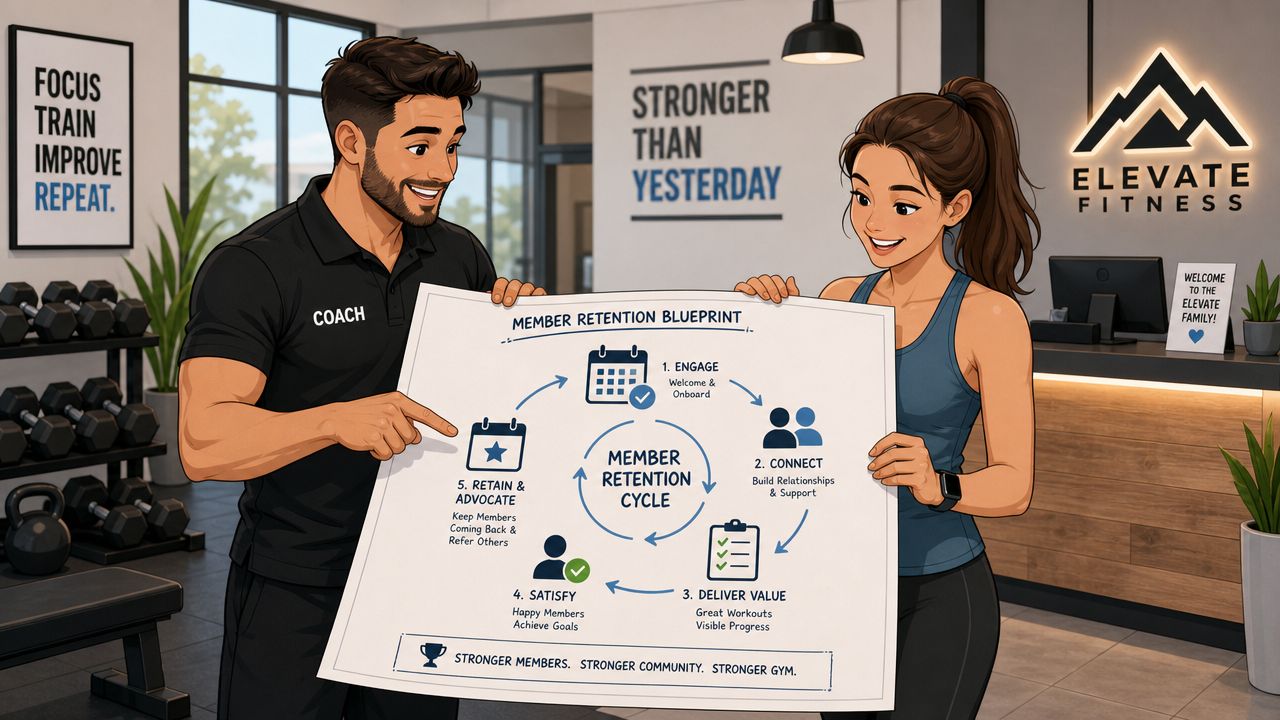
You know the pattern. A new member joins with real enthusiasm, comes in hard for a week or two, then starts missing sessions. After that, the check-ins get sporadic. Then they disappear, but the cancellation rarely tells you the full story.
Most gyms don't have a lead problem. They have a follow-through problem. A generic reminder email and a front-desk smile won't hold members long enough to form habits, build relationships, and feel that your gym is part of their routine.
Why Your Gym Needs More Than Just a Welcome Email
A welcome email is fine. It isn't a retention system.
Gyms lose members for reasons that are physical, social, and behavioral. People don't just buy access to equipment. They buy momentum, confidence, accountability, and a place where they feel comfortable showing up again tomorrow. If your process stops after the sale, members are left to create that momentum on their own. Many won't.
The financial case for fixing this is hard to ignore. A 5% increase in customer retention can result in a 25% uplift in profit, and acquiring a new customer typically costs five times more than retaining an existing one, according to VWO's retention statistics roundup. For a gym owner, that means a small drop in churn can matter more than another marketing campaign.
Generic communication misses the real drop-off points
The first mistake I see is treating retention like messaging instead of operations. Owners write better emails, add an app notification, maybe offer a promo, and expect behavior to change. But members stay when the gym gives them structure.
That structure starts with onboarding, scheduling, check-ins, staff accountability, and visible progress. If your intake process is loose, your retention will be loose too. If you need a stronger first-touch process, this client onboarding process template is a useful reference point.
Practical rule: If a new member can join your gym and go their first two weeks without a meaningful human interaction, your retention system has a hole in it.
A template beats random effort
A real customer retention strategy template gives your team repeatable actions. It tells staff what happens on day one, what happens when attendance slips, how milestones get recognized, and what happens after cancellation.
That matters because retention doesn't usually break in one dramatic moment. It breaks in small misses. No intro session booked. No follow-up after missed visits. No acknowledgement when someone hits a milestone. No recovery process when a member goes quiet.
Busy gyms need a system that catches those moments early and responds the same way every time.
The Foundation of Retention Member Segmentation
A member who joined three days ago should not get the same follow-up as someone who has missed nine straight visits. Yet that is how many gyms communicate. Everyone sits in the same bucket until they either become a regular or submit a cancellation.
That approach misses the drivers of gym retention. People stay or leave based on habit strength, confidence on the floor, social connection, visible progress, and how quickly your staff notices a drop in routine.

Start with behavior, not demographics
Age can help with programming. It rarely helps with retention decisions.
Attendance frequency, class booking patterns, PT usage, check-in gaps, and response to outreach tell you far more about who needs attention now. In a gym, retention usually breaks when a habit gets interrupted, a member loses confidence, or they stop feeling known by the staff. Those signals show up in behavior first.
Keep the model simple enough for your team to use every day. A basic gym CRM, a spreadsheet, or even tagged member notes can work if the categories are clear. Other service businesses use the same operating logic. Tools like tutoring CRM software track active users by engagement stage because stage-based follow-up is easier to run than one generic message for everyone. Gyms need the same discipline.
The five member segments that matter
Use these five segments as the default structure for your retention plan. They fit the way gyms work because they account for physical routine, social belonging, and post-cancellation recovery, not just account status.
New members
They are still trying to build a repeatable routine. Some are excited and consistent. Others are intimidated by equipment, unsure where to start, or embarrassed to ask for help. This group needs fast guidance, early wins, and direct human contact before uncertainty turns into avoidance.Engaged regulars
These members have a working habit. They check in, attend classes, or train on a reliable schedule. The risk here is complacency. If progress stalls or life gets busy, a regular can slide into inconsistent attendance without saying a word.High-value or loyal members
These are long-term members, community builders, referral sources, and people who buy extra services. They should not be treated as “safe” and ignored. Recognition, access, and relationship depth keep them invested and make referrals more likely.At-risk members
This is the segment that deserves the fastest response. Look for fewer visits, cancelled bookings, missed PT sessions, or a member who used to chat with staff and now comes in less or not at all. You do not need a complicated scoring system. You need clear triggers and a same-week follow-up rule.Churned members
Generic retention guides often stop at cancellation. That is a mistake for gyms. Former members already know your facility, your coaches, and your training style. Some left because of schedule changes, injury, cost pressure, relocation, or a broken routine, not because they disliked the gym. A win-back segment lets you re-enter the conversation with the right offer at the right time.
Segment by member behavior and stage, then match each group to a specific staff action.
Keep the rules easy for staff to apply
If a coach, salesperson, or front desk lead cannot identify the segment in under ten seconds, the system will fail in practice.
Set plain rules. New member: joined in the last 30 days. At-risk: no visit in 7 to 14 days after a steady pattern. Loyal: active long-term, high attendance, referral activity, or add-on services. Churned: cancelled but still eligible for follow-up. The exact thresholds can change by gym model, but the labels need to stay obvious.
I also recommend assigning an owner to each segment. Front desk can handle missed-visit alerts. Coaches can handle progress check-ins. Sales or membership staff can manage cancellations and win-back outreach. Clear ownership prevents the usual problem where everyone assumes someone else followed up.
If you want a sharper framework for setting those rules, this guide to customer segmentation methods for service businesses is a useful operational reference.
Your Editable Gym Retention Campaign Timeline
A good retention plan follows the member journey. It doesn't wait for a cancellation request.
The strongest gym systems I've seen work because they define touchpoints in advance. Staff aren't guessing when to reach out. The schedule is already built.

Stage one builds habit fast
The first month decides whether a new member feels lost or anchored. A proven approach includes personalized onboarding with structured workout intros, milestone celebrations such as “25 classes attended,” and proactive outreach that invites members to bring a friend, based on shared operator experience in this Gym Owner Network discussion.
That practical onboarding model is stronger than a generic gym tour. It includes:
- A one-page starter card with two 30-minute machine circuits
- A stretch and core routine that feels manageable for beginners
- A free-weights introduction so the member isn't avoiding half the floor
- A cardio benchmark that gives the member a visible starting point
- Front-desk greeting by name so the gym feels social, not anonymous
Those details matter because habit formation isn't abstract. Members need to know what to do the next time they walk in.
Stage two turns attendance into identity
Once the member is moving past the first few visits, your job changes. Now you're reinforcing belonging.
Milestone celebrations work well. Birthdays, job promotions, class counts, consistency streaks, and training progress are all usable triggers. Staff should also reach out before those moments and invite the member to bring a friend or family member for free. That creates social proof in a way that doesn't feel forced.
Recognition works best when it's specific. “Great work on 25 classes” lands better than “Thanks for being a member.”
Stage three catches disengagement before cancellation
At-risk campaigns should be triggered, not improvised. If attendance drops, a task should appear automatically. If class participation fades, someone should contact the member with context.
Your CRM or gym app should track attendance frequency, favorite classes, and milestones so staff can respond personally. The strongest outreach doesn't ask, “Why haven't you come in?” It says, “You were doing great in Tuesday HIIT. Want me to hold you a spot this week?”
Here's a sample campaign schedule you can adapt.
| Campaign | Target Segment | Timeline | Key Action |
|---|---|---|---|
| Welcome and Workout Intro | New members | First month | Book intro, issue starter card, greet by name |
| Momentum and Milestones | Engaged regulars | Ongoing | Celebrate progress, invite friend visits, note achievements |
| Re-engagement Outreach | At-risk members | Triggered by visible disengagement | Personal message, class recommendation, coach follow-up |
| Loyalty and Advocacy | Loyal members | Ongoing | Priority recognition, referral asks, community involvement |
| Win-back Sequence | Churned members | After cancellation | Exit feedback, tailored reactivation offer, future follow-up |
Stage four handles offboarding like a professional process
Most generic guides stop at active members. That's one reason they fail gyms.
Offboarding matters because some people leave even when they like the gym. Work shifts, burnout, schedule conflicts, budget pressure, and stalled results all create churn. A smart customer retention strategy template includes an exit interview, notes the reason for leaving, and sets a future win-back reminder.
Don't make cancellation punitive. If leaving your gym feels frustrating, you've killed the chance of a return.
Stage five creates a return path
Win-back isn't begging. It's respectful re-entry.
When someone leaves, send a short message that acknowledges their time, leaves the door open, and stores useful details in your CRM. Later, reconnect with an offer that matches their original friction point. If scheduling was the issue, suggest a more flexible plan. If motivation dropped, suggest a reset session with a coach. If they felt disconnected, invite them back for a community event or class.
That final piece is where gym-specific retention beats generic subscription advice. Fitness isn't just a billing relationship. It's a habit relationship.
Copy and Paste Scripts for Email and SMS
The biggest problem with retention messaging isn't tone. It's timing and relevance. Staff send messages too late, or they send something so generic that the member ignores it.
Use short, direct scripts tied to behavior.

Welcome email for a new member
Subject: Welcome to [Gym Name]
Hi [First Name],
Great to have you with us. Your first step is simple. Stop by the front desk and we'll get you set up with your starter workout card, a quick equipment intro, and a plan for your first visits. If you want, we can also help you choose the best class or training time based on your schedule.
See you soon,
[Staff Name]
This works because it reduces uncertainty. It gives the member a clear next action instead of a vague “welcome aboard.”
At-risk SMS after a drop in attendance
Text:
Hey [First Name], we've missed seeing you at [Gym Name]. You were building good momentum. If your routine got off track, reply here and I'll help you pick an easy session or class to jump back into this week.
[Staff Name]
Short beats clever. Personal beats polished.
Milestone celebration email
Subject: Nice work, [First Name]
Hi [First Name],
You just hit a great milestone at [Gym Name], and we wanted to say well done. Consistency like that matters. If you want to keep the momentum going, bring a friend in with you this week and we'll help them get comfortable too.
[Staff Name]
Win-back email after cancellation
This message needs care. Pressure makes it worse.
Subject: You're always welcome back at [Gym Name]
Hi [First Name],
Thanks for being part of the gym. If the timing wasn't right, that happens. If you'd like to come back later, reply and we'll help you find an option that fits better, including a more flexible plan if needed.
Wishing you the best,
[Staff Name]
According to Sogolytics on fitness center retention, loyalty programs can reduce churn by up to 25%, while flexible options and incentivized re-signing discounts can improve retention by 18-22%. The part many gyms miss is the warning in the same guidance: rigid cancellation policies push attrition up. That means your win-back language should sound open-handed, not defensive.
If a member leaves, preserve the relationship. Don't try to win the argument.
Simple automation rules to build into your system
You don't need fancy logic. You need dependable triggers.
- If a member joins: send the welcome email and assign an intro task to staff.
- If attendance drops: send the re-engagement SMS and create a follow-up reminder.
- If a milestone is reached: send a celebration message and prompt a friend invitation.
- If a cancellation happens: trigger exit feedback, note the reason, and schedule a future win-back message.
If your team needs stronger message frameworks for follow-up, these sales follow-up email templates are useful for tightening tone and consistency.
How to Measure Your Retention Success
A gym owner looks at the month-end report, sees 18 new joins, and assumes things are fine. Then they realize 16 members also left, average visit frequency dropped, and three longtime members moved to cheaper plans. Headcount alone hides the problem.
Retention needs a scorecard built for gyms, not a generic sales report.

Track the retention metric that isolates loyalty
Customer Retention Rate (CRR) is the cleanest starting point because it shows how well you kept the members you already had. The formula is [(Customers at End of Period – New Customers Acquired) ÷ Customers at Start of Period] × 100, as explained in Zendesk's guide to customer retention.
For gym operators, this matters because strong sales can cover weak retention for a while. A busy promo month can make membership totals look healthy even while your core base is slipping. CRR strips out new joins and forces you to answer the core question: are existing members building the habit, staying connected, and renewing?
Add revenue churn to catch downgrades and soft losses
Membership count is only part of the picture. Gyms also lose value through freezes, plan downgrades, class-pack reductions, and members who stay active on paper but spend less over time.
Use the customer-based approach outlined by CustomerGauge's retention metrics guide: subtract current period revenue from previous period revenue, divide by previous period revenue, and multiply by 100, while excluding revenue from new customers. That keeps the measurement focused on your current member base.
This is especially useful in fitness because habit loss often shows up before cancellation. A member who drops from four visits a week to one visit, then pauses PT, is already on the way out. Revenue churn helps you spot that slide earlier than a cancellation report does.
Review numbers monthly, and pair them with behavior signals
A practical retention review should happen every month. Quarterly is too slow for most gyms because attendance patterns and motivation can change fast.
Track these four points together:
- CRR: Shows whether existing members are staying.
- Revenue churn: Shows whether retained members are spending less.
- Segment movement: Shows whether new members become regulars or drift into an at-risk group.
- Cancellation reasons: Shows which problems keep repeating, such as schedule fit, price pressure, intimidation, injury, or poor onboarding.
Add one more gym-specific layer. Watch visit frequency in each member segment. If retention looks stable but first-90-day attendance is falling, future churn is already building. That is the kind of pattern generic retention templates miss.
Numbers show where the problem sits. Staff notes, attendance history, and cancellation feedback show why it happened.
Broad benchmarks can still help with context. As noted earlier, average retention across major industries sits around the low 70% range. Use that as background only. Gym retention is shaped by routine, results, confidence, convenience, and community, so your best benchmark is your own trend by segment, tenure, and cancellation reason.
The strongest gyms also measure what happens after a member leaves. Track win-back rate, time to rejoin, and which cancellation reasons return most often. If former members come back after a schedule change, offer shift, or motivation dip, your retention system is doing more than reducing churn. It is preserving relationships until the timing works again.
Building a Gym Culture That Keeps Members
Retention systems fail when the gym culture works against them. A clean template on paper won't save a gym where nobody greets members, coaches ignore small wins, and the facility feels neglected.
The front desk should act like a community desk, not a check-in scanner. Coaches should know who needs encouragement, who needs structure, and who needs a simple “good to see you back.” Members remember that far longer than a discount email.
Cleanliness also drives retention more than many owners admit. Members notice dusty cardio consoles, damp-smelling turf, and empty wipe stations immediately. If you want people to trust your facility, make hygiene visible. Stock gym wipes near high-touch zones, keep a gym wipe dispenser filled, and make wipes for gym equipment part of the normal workout flow. For mats and mobility areas, yoga mat wipes or sanitizing wipes help reinforce that your space is cared for.
For operators buying at scale, bulk gym wipes and commercial disinfecting wipes are practical, not cosmetic. If you're reviewing supply options, Wipes.com disinfecting wipes for fitness facilities are worth a look, especially if you want dependable replenishment for member-facing stations. If your team is focused on compliance and visible hygiene standards, EPA registered disinfecting wipes, gym equipment cleaning wipes, or antibacterial wipes can make sense depending on your setup.
Keep the system simple:
- Train staff to greet by name so members feel recognized.
- Celebrate visible progress so consistency feels rewarding.
- Make cleaning obvious with stocked disinfecting wipes and clear expectations around shared equipment.
- Leave cancellation respectful so former members can return without friction.
A gym people trust is a gym they come back to.
If you want more practical templates for selling, onboarding, and keeping members longer, visit Gym Membership Tips. And don't overlook the basics at the facility level. Keep wipe stations full, rotate cleaning checks through the day, use fitness wipes or workout wipes in high-traffic zones, and assign staff to inspect cardio handles, benches, mats, and locker touchpoints before members have to notice.
Leave a Reply