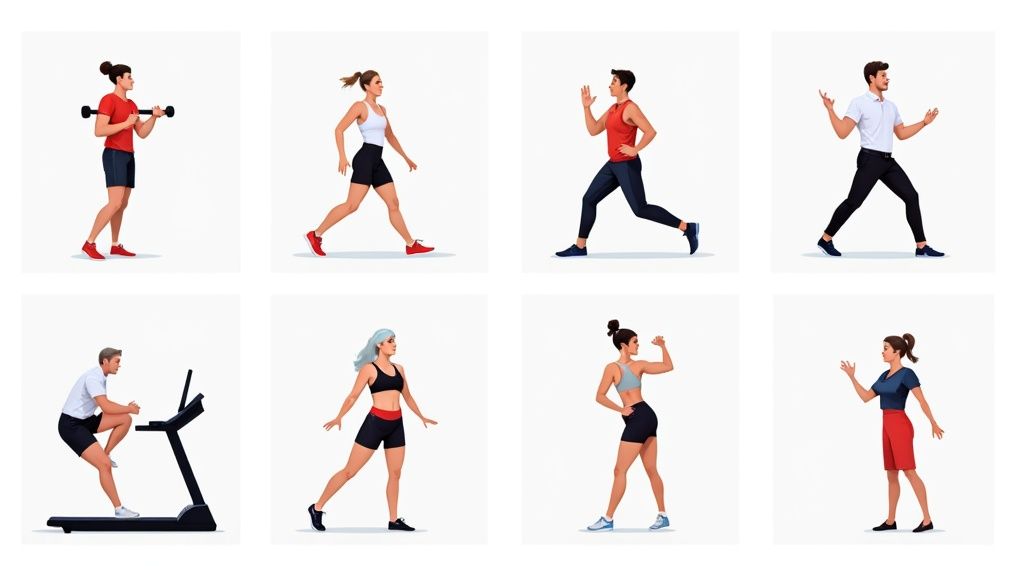
Welcome to the ultimate guide for skyrocketing your gym's membership numbers! In today's competitive fitness landscape, a one-size-fits-all approach to marketing just won't cut it. The secret to attracting and retaining loyal, long-term members lies in understanding them on a much deeper level.
That’s where the power of customer segmentation methods comes in. By dividing your potential and current members into distinct groups based on shared characteristics, you can tailor everything from your messaging and special offers to your class schedules and equipment. This strategy allows you to speak directly to what motivates each person, making them feel seen, understood, and valued.
This isn't just about abstract marketing theory; it's a practical roadmap for building a thriving community of engaged, happy members who stick around. In this comprehensive roundup, we'll break down eight game-changing customer segmentation methods specifically for gym owners. Each section is packed with actionable tips and real-world examples to help you implement these strategies immediately.
Get ready to transform your outreach, boost retention, and unlock unprecedented growth for your fitness business. We'll even cover how a clean, safe environment is a key part of the member experience, something that every segment appreciates. Let's dive in
1. Demographic Segmentation
Let’s kick things off with a classic, foundational strategy: demographic segmentation. This is one of the most straightforward yet powerful customer segmentation methods you can use. It involves dividing your market into smaller groups based on observable, statistical traits like age, gender, income, occupation, and family status. For a gym, this data is gold because it helps you understand the who behind your membership roster.
Think about it: the fitness needs of a 22-year-old college student are vastly different from those of a 45-year-old corporate executive or a 35-year-old new parent. Demographic segmentation allows you to stop shouting into the void and start having meaningful conversations with each group.
How to Apply It in Your Gym
Ready to put this into action? It’s easier than you think. Start by looking at your current member data.
- Age-Based Classes: Create targeted programs like a "Senior Strength & Stability" class for members 65+ or a "Gen Z HIIT" session with high-energy music and a competitive vibe.
- Income-Level Tiers: Offer different membership tiers. A basic, no-frills plan can attract students and those on a budget, while a premium "Executive" membership with perks like personal training sessions, towel service, and exclusive access can appeal to higher-income professionals.
- Gender-Specific Marketing: Promote women-only yoga retreats or men-focused "powerlifting fundamentals" workshops. This creates a comfortable, targeted environment that boosts participation.
Actionable Tip: Combine and Conquer
The real magic happens when you combine demographic data with other insights. For example, don't just target "women aged 25-40." Instead, target "women aged 25-40 who are new mothers" with a post-natal fitness program that includes on-site childcare. This layered approach creates hyper-relevant offers that are almost impossible to ignore.
To ensure every segment feels welcome, prioritize a clean and sanitary gym. Regularly sanitizing equipment after targeted group classes shows all your members you care about their health and safety. Using high-quality products like Wipes.com Disinfectant Wipes makes this process quick and effective, ensuring every demographic feels safe and valued.
2. Psychographic Segmentation
If demographic segmentation tells you who your members are, psychographic segmentation tells you why they do what they do. This powerful approach moves beyond basic stats to group people based on their psychological attributes: their values, lifestyles, interests, attitudes, and personality traits. For a gym, understanding this inner world is the key to building a true community, not just a customer base.
Think about the difference between someone who sees fitness as a competitive sport versus someone who uses it for stress relief and mental clarity. They might be the same age and income level, but their motivations are worlds apart. Psychographic segmentation helps you connect with members on a deeper, more personal level by aligning your gym's offerings with their core values.
How to Apply It in Your Gym
Ready to dive into the minds of your members? It’s all about listening and observing.
- Wellness-Seeker Sanctuary: Target members who value mindfulness and stress reduction. Create a "Zen Zone" with yoga, meditation classes, and aromatherapy. Market it as a peaceful escape from daily chaos, focusing on mental health benefits.
- The Competitor's Arena: Appeal to the high-achievers who are driven by goals and results. Host monthly fitness challenges, leaderboard competitions, and specialized workshops like "Master Your Deadlift." This group thrives on performance and recognition.
- The Social Butterfly Hub: For those who see the gym as a social outlet, create a community-focused environment. Organize group hikes, member mixers, and team-based fitness events. Highlight the fun, social aspects of your gym in your marketing.
Actionable Tip: Listen to Their Digital Voice
Gathering psychographic data can be as simple as paying attention to social media. Monitor the hashtags, pages, and influencers your members follow to understand their interests and lifestyles. Are they into sustainable living, high-intensity training, or family activities? This information is a goldmine for tailoring your messaging. Dive deeper into this strategy with our guide to social media marketing for gyms.
A space that supports mental and physical wellness must be impeccably clean. Ensure your "Zen Zone" and other dedicated areas are spotless and inviting. A quick wipe-down of yoga mats and meditation spaces between sessions shows you respect the environment you've created for every psychographic segment.
3. Behavioral Segmentation
If demographic data tells you who your members are, behavioral data tells you what they do. This is the core of behavioral segmentation, a dynamic and incredibly insightful method that groups customers based on their actions and interactions with your gym. It focuses on tangible patterns like class attendance, facility usage, membership tenure, and purchase history.
Unlike static traits, behavior is a direct indicator of engagement and intent. Are they die-hard morning spinners or occasional weekend weightlifters? Do they buy protein shakes after every workout? This customer segmentation method helps you predict future needs and tailor your communication with pinpoint accuracy, turning observations into opportunities.
How to Apply It in Your Gym
Your gym management software is a goldmine for behavioral data. Start digging into check-in logs, class sign-ups, and point-of-sale records to uncover powerful patterns.
- Usage Frequency: Segment members into groups like "High-Frequency Users" (15+ visits/month), "Consistent Users" (5-14 visits/month), and "At-Risk Members" (less than 4 visits/month). Send an exclusive class invite to your high-frequency group and a "We Miss You!" re-engagement offer to the at-risk segment.
- Benefit-Sought Groups: Identify members who exclusively attend yoga and pilates classes versus those who only use the free weights. Create targeted newsletters featuring a "Pose of the Week" for the yoga group and a "New Plate-Loaded Machine" announcement for the weightlifters.
- Loyalty-Based Tiers: Reward your long-term members. Create a "Founders' Club" for anyone with a membership of over five years, offering perks like a free personal training session or branded merchandise. This acknowledges their loyalty and encourages others to stick around.
Actionable Tip: Automate Your Engagement
Use your data to set up automated triggers. For example, if a member hasn't checked in for 30 days, an automated email can be sent with a special offer or a link to book a free session with a trainer. This proactive approach helps you address churn before it happens.
A clean environment is crucial for retaining your most active and engaged members. Make it easy for everyone to wipe down machines before and after use by placing accessible Wipes.com Disinfectant Wipes stations throughout your facility. This small detail supports the positive behavior of your most dedicated members.
4. Geographic Segmentation
Next up is one of the most practical and effective customer segmentation methods: geographic segmentation. This strategy is all about location, location, location! It involves grouping your potential members based on where they live, work, or spend their time, from their country and city right down to their specific neighborhood or zip code. For a physical business like a gym, understanding your local geography is absolutely critical.
Why does it matter? The convenience of your gym's location is often the number one factor for a potential member. People in a dense urban area have different transportation habits and schedules than those in a quiet suburb. Geographic segmentation helps you tailor your marketing and services to the hyper-local realities of your community.
How to Apply It in Your Gym
Putting this into action means thinking locally and acting strategically. Your goal is to become the go-to fitness hub for your immediate area.
- Neighborhood-Specific Offers: Run targeted ad campaigns on social media aimed at specific zip codes within a 5-mile radius of your gym. You could offer a "Neighbor Discount" to people living in the closest apartment complexes.
- Corporate Wellness Programs: Identify major offices and businesses nearby. Reach out with a corporate partnership proposal, offering discounted memberships to their employees. This taps into the "work" location of hundreds of potential clients.
- Climate-Based Services: If your gym is in a cold-weather region, promote your indoor classes, sauna, and heated pool as the perfect escape during winter. In a sunny, warm climate, you might focus on training programs for outdoor sports like running or cycling.
Actionable Tip: Map Your Members
Use your membership software to plot your current members' home addresses on a map. You'll likely see clusters forming in certain neighborhoods. This visual data is pure gold. Focus your next flyer drop, local event sponsorship, or digital ad spend on these "hot zones" to attract more people just like your best members.
Remember, a key part of making your gym the local favorite is maintaining a visibly clean environment. Members who feel their local gym is well-cared-for are more likely to stay loyal. Regularly wiping down machines and high-traffic areas shows respect for the community you serve and reinforces your position as a top-tier local business.
5. Value-Based Segmentation
Let's talk about prioritizing your efforts for maximum impact. Value-based segmentation is a powerful strategy that shifts the focus from who your members are to how much economic value they bring to your gym. It involves grouping customers based on their financial contribution, measured by metrics like Customer Lifetime Value (CLV), average monthly spend, and overall profitability.
This method isn’t about playing favorites; it's about smart resource allocation. By identifying your most valuable members, you can invest more in retaining them, while also developing strategies to nurture lower-tier members into becoming high-value patrons. This is one of the most strategic customer segmentation methods for sustainable growth.
How to Apply It in Your Gym
Ready to reward your top performers and inspire others? Here’s how to implement value-based segmentation in your fitness facility.
- Create VIP Tiers: Establish clear tiers like "Platinum," "Gold," and "Silver" members. Platinum members, those with the highest CLV, could receive exclusive perks like complimentary personal training sessions, early class booking, or branded merchandise.
- Offer Exclusive Add-Ons: Identify members who consistently spend on extras like smoothies, workshops, or apparel. Create a loyalty program for them with special discounts or a "buy 10, get one free" offer at your juice bar.
- Targeted Upsell Campaigns: For members in your middle tier, create marketing campaigns that showcase the benefits of your premium services. Offer a one-time upgrade pass or a discount on their first personal training package to encourage them to increase their spend.
Actionable Tip: Nurture Your Champions
Your most valuable members are often your biggest advocates. Leverage their loyalty by creating an exclusive referral program just for them. Offer a significant reward, like a free month of membership for every two friends they refer. This not only retains them but also attracts new, high-quality leads. You can explore a variety of client referral program ideas to build the perfect system for your top-tier clients.
Finally, show your VIPs you appreciate them by maintaining an impeccably clean and premium environment. Prioritizing the sanitation of equipment in exclusive training zones or locker rooms reinforces the value they receive. Using top-tier supplies like Wipes.com Disinfectant Wipes demonstrates a commitment to excellence that high-value members expect and deserve.
6. Needs-Based Segmentation
Let’s dive into a method that gets right to the heart of the matter: needs-based segmentation. This powerful strategy groups customers not by who they are, but by why they’re here. It focuses on the specific problems they’re trying to solve or the benefits they’re hoping to gain from your gym. For a fitness facility, this is a game-changer because it moves beyond assumptions and targets the core motivations driving memberships.
Think about the different "jobs" your members hire your gym to do. One person needs to de-stress after a chaotic workday, another wants to build muscle for a competition, and a third is looking for a social community to stay active with. Needs-based segmentation allows you to stop selling "gym access" and start offering targeted solutions to these distinct needs.
How to Apply It in Your Gym
Ready to address what your members truly want? Start by listening and observing. Surveys and casual conversations are your best tools.
- Benefit-Oriented Packages: Create memberships based on outcomes. Offer a "Weight Loss Transformation" package that bundles a nutrition consultation, personal training, and group cardio classes. A "Performance Athlete" package could include access to specialized equipment, sports-specific coaching, and recovery tools.
- Problem-Solving Workshops: Host workshops that solve common problems. A "Back Pain Relief" seminar could focus on core strengthening and flexibility, while a "Beginner's Confidence" course could offer a guided introduction to gym equipment and etiquette.
- Community-Focused Events: For members whose primary need is social connection, organize group hikes, member mixers, or team-based fitness challenges. This reinforces the community aspect of your gym, turning it into more than just a place to work out.
Actionable Tip: Use the "Jobs to Be Done" Framework
Go a step further by adopting the "Jobs to Be Done" (JTBD) framework. Instead of asking what features members want, ask what "job" they are "hiring" your gym to do. A member isn't just buying a treadmill session; they're "hiring" it to clear their head after work or to train for their first 5K. Framing needs this way uncovers deeper motivations and helps you build irresistible offerings.
Remember, a universal need for every member is a clean and hygienic environment. When you run specialized workshops, ensure the space and equipment are thoroughly sanitized afterward. Using effective products like Wipes.com Disinfectant Wipes reassures every segment that their health and safety are your top priority.
7. Technographic Segmentation
Let's dive into a cutting-edge strategy that's becoming increasingly vital in our digital world: technographic segmentation. This modern approach groups customers based on the technology they use, from the fitness apps on their phones to the smartwatches on their wrists. For a gym, understanding your members' tech habits opens up a new frontier for personalized engagement and marketing.
Think about it: a member who religiously tracks workouts with a Garmin watch and MyFitnessPal has different motivations and expectations than someone who prefers unplugged, meditative yoga sessions. Technographic segmentation helps you understand the how behind their fitness journey, allowing you to meet them where they are technologically.
How to Apply It in Your Gym
Ready to get technical? This is all about leveraging the digital tools your members already love.
- App Integration Promotions: Offer a free month or a discount to members who sync their favorite fitness apps (like Strava or Apple Health) with your gym's member portal. This gives you valuable data and enhances their experience.
- Wearable-Specific Challenges: Launch a "Smartwatch Step Challenge" or a "Heart Rate Zone" competition. This gamifies the fitness experience for your tech-savvy members and encourages consistent gym visits.
- Targeted Digital Content: Segment your email list based on app usage. Send members who use calorie-tracking apps your new healthy meal-prep guide, while those who use meditation apps get updates about your upcoming mindfulness workshops.
Actionable Tip: Build a Tech-Friendly Environment
The most powerful way to leverage technographic data is to make your facility a haven for tech users. For example, if you see a high adoption of specific workout-tracking apps among your members, consider integrating your class schedule or booking system directly with that app. This creates a seamless, high-value experience that tech-forward members will rave about.
More tech often means more high-touch surfaces. Ensure that equipment with digital screens, self-service kiosks, and other tech hubs are kept clean. Placing dispensers with Wipes.com Disinfectant Wipes nearby encourages members to wipe down surfaces before and after use, promoting a healthy and modern gym environment.
8. Lifecycle Stage Segmentation
Let's shift our focus from who your members are to where they are in their journey with your gym. Lifecycle stage segmentation is a dynamic strategy that groups customers based on their relationship with your brand over time. This temporal approach is one of the most effective customer segmentation methods because it acknowledges that a person's needs change as they evolve from a curious prospect into a loyal advocate.
Understanding this progression is crucial. The way you communicate with someone who just signed up for a free trial is completely different from how you engage a five-year veteran member. Lifecycle segmentation lets you tailor your messaging perfectly to each stage, boosting conversion and long-term loyalty.
How to Apply It in Your Gym
Ready to map out your members' journeys? It’s all about meeting them where they are.
- Prospects & New Leads: For people who downloaded a "Free 7-Day Pass," trigger an automated email sequence. Nurture them with welcome videos, member testimonials, and a special introductory offer to convert them into paying members.
- New Members (First 90 Days): This is a critical retention period. Create a dedicated onboarding program. Offer a free personal training consultation, send weekly check-in emails with workout tips, and invite them to a "New Member Mixer" to help them feel part of the community.
- Established Members: Keep these loyal customers engaged. Target them with advanced workshop announcements, referral program bonuses, and "member anniversary" perks to show your appreciation and prevent churn.
Actionable Tip: Automate Your Nurturing
The real power of lifecycle segmentation is unleashed through marketing automation. Use your gym management software to automatically move members from one stage to the next based on their behavior (e.g., membership length, class attendance). This ensures every member receives the right message at the right time, without you having to lift a finger. This targeted communication is a key part of promoting a gym effectively. For deeper insights, you can learn more about how lifecycle marketing builds momentum.
A clean and hygienic environment is vital at every stage of the member journey. Wiping down equipment after a new member orientation or a loyal member's intense session shows your commitment to their well-being. Keeping high-traffic areas consistently sanitized ensures every person, no matter where they are in their lifecycle, feels safe and respected in your facility.
Customer Segmentation Methods Comparison
| Segmentation Type | Implementation Complexity | Resource Requirements | Expected Outcomes | Ideal Use Cases | Key Advantages |
|---|---|---|---|---|---|
| Demographic Segmentation | Low | Low (census, surveys) | Clear customer profiles, basic targeting | Retail, financial services, healthcare | Simple, cost-effective, easily accessible data |
| Psychographic Segmentation | High | High (surveys, social data) | Deep insights into motivations and preferences | Lifestyle brands, premium products | Enables personalized marketing, emotional connection |
| Behavioral Segmentation | Medium-High | High (data tracking systems) | Predictive behavior insights, personalized offers | E-commerce, subscription services | Data-driven, improves retention and campaign ROI |
| Geographic Segmentation | Low | Low-Medium (location data) | Localized marketing strategies, optimized logistics | Retail location planning, regional campaigns | Easy to implement, supports localization |
| Value-Based Segmentation | Medium-High | High (advanced analytics) | Prioritized resource allocation, ROI maximization | Financial services, loyalty programs | Maximizes marketing ROI, prioritizes high-value customers |
| Needs-Based Segmentation | High | High (customer research) | Product innovation, strong product-market fit | Product development, solution marketing | Drives innovation, improves satisfaction |
| Technographic Segmentation | Medium-High | Medium-High (tech data, tools) | Targeted tech marketing, adoption prediction | B2B tech companies, SaaS | Precise tech targeting, supports product decisions |
| Lifecycle Stage Segmentation | Medium | Medium (CRM, automation tools) | Stage-appropriate messaging, optimized journeys | SaaS, e-commerce, subscription businesses | Improves conversion, automates marketing workflows |
Putting It All Together for a Healthier, Cleaner Gym
You’ve just explored a powerful arsenal of eight distinct customer segmentation methods, each a potent tool for transforming your gym's marketing, retention, and overall growth. From the foundational layers of demographic and geographic data to the nuanced insights of psychographic and behavioral analysis, you now have the blueprint to stop marketing to the masses and start connecting with individuals.
The real magic, however, doesn't come from mastering just one of these approaches. True success is found in the artful combination of several. Imagine creating a segment of "Suburban Working Moms" (Demographic + Geographic) who value "Stress-Relief and Community" (Psychographic) and consistently attend "Evening Yoga Classes" (Behavioral). This multi-layered view transforms a generic member into a real person, allowing you to craft offers, create classes, and communicate in a way that truly resonates.
Your Action Plan for Growth
Feeling energized? It's time to put these strategies into motion. Don't try to boil the ocean; start with a clear, focused plan.
- Start with Two: Begin by blending demographic data with behavioral insights. Identify your most-attended classes and analyze the age, gender, and location of the attendees. This simple step alone can reveal powerful opportunities.
- Survey for Deeper Insights: Create a simple survey to uncover psychographic details. Ask members about their fitness goals, what motivates them, and what they value most in a gym experience. Use this to refine your messaging.
- Map the Member Journey: Apply lifecycle stage segmentation to create targeted communication for new trials, long-term loyal members, and those at risk of churning. A personalized email can make all the difference.
A Clean Foundation for a Growing Community
As you successfully implement these customer segmentation methods, you'll see a wonderful result: more people from diverse segments walking through your doors. This growth makes a pristine and hygienic environment more critical than ever. A clean gym isn't just about appearances; it's a direct reflection of your commitment to member safety and well-being. It builds trust, fosters loyalty, and is a non-negotiable part of a premium fitness experience.
Make sanitation a visible and consistent part of your daily operations. Focus on high-touch zones like dumbbell racks, cardio machine consoles, and locker room handles. For a fast, effective, and EPA-approved solution, empower both your staff and members with Wipes.com Disinfectant Wipes. Placing dispensers in key areas encourages everyone to contribute to a cleaner space, ensuring equipment is always sanitized and ready.
By combining sophisticated segmentation with an unwavering commitment to cleanliness, you’re not just building a bigger gym; you’re cultivating a healthier, safer, and more welcoming community for everyone.
Leave a Reply