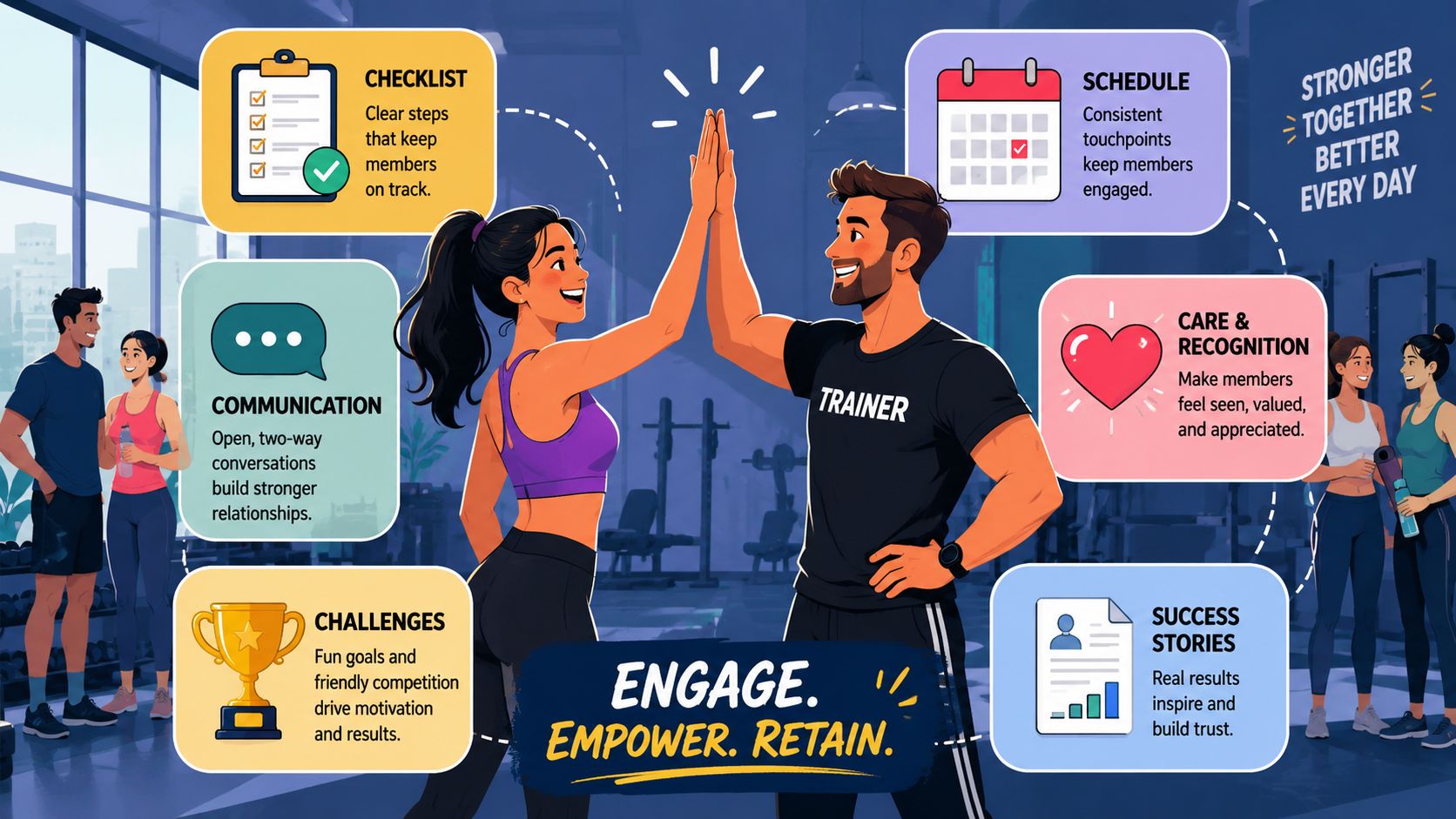
Beyond the Barbell: Winning the Member Loyalty Game
A packed gym can still have a retention problem. That's the part too many owners learn the hard way. You can run great ads, fill a challenge, and hear solid buzz around town, then still watch members drift out because they never built a real connection to your facility.
Member engagement strategies fix that. Not in a fluffy, brand-deck way. In a day-to-day operational way that gives people reasons to show up, talk to your staff, try new programs, and feel like they belong. That's what keeps a gym steady.
The usual advice gets too generic. “Build community.” “Send emails.” “Use data.” Sure. But what does that look like when you're running a real floor, managing coaches, dealing with schedule gaps, and trying to keep classes full?
This guide gets right to execution. You'll find ten practical strategies, where they work best, the trade-offs that come with them, examples from recognizable fitness brands, and the metrics I'd watch inside a gym. The goal isn't to make your operation look advanced on paper. The goal is to help members stay active long enough to become regulars, advocates, and part of your culture.
1. Personalized Communication and Segmentation

Most gyms talk to everyone the same way. That's a mistake. A new member needs orientation and reassurance. A consistent member needs progression and recognition. An at-risk member needs a timely nudge before they disappear.
The simplest useful segmentation is three buckets: new, active, and at-risk. That alone sharpens your messaging fast. ClassPass is known for surfacing options based on fitness preferences, Equinox often uses activity patterns to recommend higher-touch services, and LA Fitness-style retention outreach tends to focus on members whose attendance has cooled off.
Start simple, then refine
Use your signup flow to collect a few usable signals: preferred workout type, training goal, schedule preference, and whether they want coaching support. That gives your team enough context to send relevant emails, texts, and front-desk prompts without overbuilding the system.
If you want a practical framework, this breakdown of customer segmentation methods is a strong place to start. If you also want automation ideas, pair it with this guide to gym membership automation.
Practical rule: Don't build ten audience segments on day one. Build three segments your staff can actually remember and use.
Track response quality, not just send volume. Look at booking activity after messages, reply rates to personal outreach, and whether inactive members return after a check-in. The best personalized systems mix digital communication with human follow-up from coaches who know the member's name and goal.
2. Gamification and Challenges with Reward Systems

Gamification works when it makes training more fun, not when it turns your gym into a scoreboard factory. Members like momentum. They like streaks, badges, challenge boards, and visible milestones. They don't like feeling punished because they missed a week or don't rank near the top.
Orangetheory does this well with in-session performance displays. Apple Fitness+ bakes achievement-style progress into the experience. Strava thrives on social kudos and leaderboard behavior. F45-style monthly challenges keep members focused because there's always a fresh reason to participate.
Build two challenge tracks
Run one competitive track and one completion track. That keeps advanced members engaged without making beginners feel like background characters.
A clean setup looks like this:
- Attendance track: Reward consistency, such as class check-ins or weekly visit streaks.
- Progress track: Reward improvements in effort, mobility, strength habits, or recovery consistency.
- Community track: Reward participation in events, shoutouts, and bringing energy to the gym culture.
Use the fun gym games resource if you need formats that feel lively without becoming cheesy.
What usually fails is overcomplication. If members need an explanation every time you launch a challenge, the system is too hard. Keep the rules visible, the reward clear, and the finish line attainable. I'd monitor challenge signups, completion behavior, and whether participants keep attending after the challenge ends.
3. Community Building and Social Events

A member who has friends at your gym is harder to lose. That's been true in every facility model I've seen, from boutique studios to large-box clubs. People stay for programming, but they become loyal because of relationships.
CrossFit boxes have understood this for years. Barry's Bootcamp leans into social identity. Peloton built belonging through live classes and app-based groups. YMCA branches often win on neighborhood connection because they create reasons for members to gather beyond workouts.
Events that people actually attend
Start with one event type that fits your brand. Don't launch a packed calendar before you know what your members enjoy.
Here are formats that usually translate well:
- Low-pressure socials: Coffee meetups, post-class breakfasts, member appreciation nights.
- Purpose-driven gatherings: Charity workouts, volunteer events, local partnership pop-ups.
- Wellness add-ons: Mobility clinics, mindset sessions, recovery nights, beginner workshops.
The trade-off is staffing energy. Events don't run themselves, and weak turnout can hurt morale. Use engaged members as ambassadors and ask instructors to personally invite people instead of relying only on email.
A quiet social feed can hide a strong community. Watch who lingers after class, who introduces people, and who brings others into conversations.
Keep hygiene visible during events too. If people are hanging around longer, stock gym wipes and sanitizing wipes where they'll see use. Members notice that. It also helps to keep wipes for gym equipment available near shared stations so social energy never competes with cleanliness.
4. Data-Driven Engagement Tracking and Analytics

You don't need a fancy analytics stack to make smarter decisions. You do need a habit of checking the signals that matter. Attendance patterns, class variety, coaching touchpoints, app usage, and PT uptake tell you which members are connected and which ones are fading.
Planet Fitness-style operations often flag attendance drop-offs for follow-up. Gold's Gym operators pay attention to trainer utilization and class demand because staffing and engagement are tied together. Life Time and Anytime Fitness both show how useful broader usage data can be when personalizing recommendations.
Metrics worth watching weekly
I'd rather see a gym monitor a short list consistently than collect a mountain of ignored reports.
Focus on:
- Visit frequency: Who's coming regularly, and who has started slipping.
- Program spread: Whether members use only one offer or engage across classes, training, and digital tools.
- Intervention results: Which outreach messages bring people back.
- Schedule performance: Which instructors and time slots create repeat attendance.
Don't let data stay in the manager's office. Share simple patterns with the team. If a coach's class keeps converting first-timers into regulars, that matters. If a time slot is dying, that matters too.
The big mistake is trusting bad data. Audit check-ins, booking systems, and no-show tags often. If the information is messy, your member engagement strategies will point staff in the wrong direction.
5. Premium Content and Educational Offerings
A gym becomes stickier when members learn from you outside the workout itself. Training sessions are important, but educational value creates another layer of trust. When members feel your facility helps them understand recovery, nutrition, habit-building, or exercise technique, they're less likely to see your gym as interchangeable.
Peloton does this well by pairing workouts with broader wellness content. Beachbody built strong habits around guides and plans. Apple Fitness+ broadens the experience with mindfulness and recovery options. Many independent gyms get great results by bringing in a nutritionist or physical therapist for recurring sessions.
What to teach first
Start with the issues members ask about all the time. That usually means eating for goals, soreness management, mobility, workout structure, and what to do on non-gym days.
A practical rollout could look like this:
- Intro workshops: Cover common beginner questions in a live group format.
- Digital mini-lessons: Record short trainer videos and store them in your app or site.
- Member-only resources: Create PDFs, demo clips, or habit trackers tied to your programs.
Premium content shouldn't become homework. Keep it short, useful, and tied to real obstacles members face. If trainers are already answering the same questions on the floor, turn those answers into reusable education.
On the floor: The best educational content usually starts as a conversation your coaches keep having.
Track what members consume. If nobody opens your long nutrition guide but everyone watches the quick “how to adjust your squat setup” video, that tells you where to invest. Education works best when it removes friction from action.
6. Flexible Programming and Class Variety
Variety keeps people curious, but too much variety creates confusion. The strongest programming mix gives members dependable anchors and enough fresh options to prevent boredom. If your schedule feels stale, engagement drops. If your schedule feels chaotic, attendance gets fragmented.
Equinox built a reputation on broad format choice. Barry's mixes a signature experience with flexibility. SoulCycle keeps familiarity while using themes and instructor identity to add freshness. YMCA models succeed because they serve different life stages, not just different workout tastes.
How to expand without watering down your brand
Protect your core offers first. Then add classes that solve a real demand gap, not just something trendy your team wants to try.
Use this filter before adding a new format:
- Audience fit: Does your current member base want it?
- Operational fit: Do you have the right instructor and space for it?
- Schedule fit: Can it live in a slot where it has a fair shot?
- Retention fit: Will it deepen existing member engagement, not just create novelty?
Run trial blocks before locking anything into the permanent schedule. That gives members a chance to sample without making your timetable look unstable.
Cleanliness matters more when members try unfamiliar spaces or equipment. Keep disinfecting wipes available in studios and transition zones, especially in formats with fast equipment turnover. If you offer yoga, yoga mat wipes are a smart touch that signals professionalism without adding friction.
7. Personalized Fitness Assessments and Goal Setting
A lot of members join with vague intentions. They want to get stronger, lose weight, move better, or “get back into it.” That isn't enough to keep someone engaged for long. Clear goals and regular assessments turn intention into direction.
Life Time is known for structured assessments. Orange Theory keeps members tied to visible session feedback. Personal training-led models like Equinox often use baseline evaluations to guide recommendations. The principle is simple. People stay engaged when they can see where they started and what they're working toward.
Make assessments encouraging, not intimidating
The wrong assessment feels like a test. The right one feels like the beginning of a plan.
I'd structure it this way:
- First visit or first week: Basic movement screen, lifestyle discussion, and goal clarification.
- Program match: Recommend classes, coaching, or training paths based on the result.
- Regular review: Revisit the baseline and adjust goals before motivation fades.
Use visuals when you can. A simple progress chart, mobility note, or strength benchmark summary makes the conversation easier for both staff and member.
What doesn't work is collecting assessment data and never bringing it up again. If a coach knows a member wants to improve pull-ups or train pain-free, that should show up in future conversations. Goal setting only helps retention when your team treats it like a live document, not a signed intake form.
8. Proactive Retention and Win-Back Campaigns
Most cancellations don't come out of nowhere. Members usually signal the problem first. They stop booking. They visit less often. They skip the class they used to attend every week. If your team waits until the cancellation request lands, you're already late.
That's why proactive outreach matters. Planet Fitness-style systems often alert staff when attendance has gone cold. Peloton and Apple Fitness+ use behavior-based nudges inside digital environments. Independent gyms usually win when someone on staff makes a timely, human contact and offers a relevant solution instead of a generic discount.
Reach out with a reason
The best retention messages answer one question: why should this member re-engage now?
Try these approaches:
- Declining attendance: Suggest a simpler plan, a new class time, or a reset session with a coach.
- Lost motivation: Invite them into a short challenge or accountability group.
- Schedule conflict: Recommend lower-friction options, including app workouts or off-peak classes.
- Former members: Position a return as a fresh start, not an apology tour.
This article on proven membership retention tips is worth reading if you're tightening your process.
Ask canceled members what pushed them out. Sometimes the answer has nothing to do with price or motivation. Facility feel matters. If members raise sanitation concerns, take that seriously and review whether your team has enough gym equipment cleaning wipes in visible locations and whether wipes to disinfect gym equipment are easy to reach after busy sessions.
9. Mobile App and Digital Experience Optimization
Your digital experience is part of your gym now. Members expect to book, track, review, and communicate without friction. If your app is clunky or your digital touchpoints feel neglected, engagement drops between visits.
Peloton built an entire ecosystem around this. Orangetheory's app connects booking and session feedback. Apple Fitness+ keeps the experience polished across content and tracking. Planet Fitness and Equinox both show how digital convenience can support retention when members use it often enough to stay connected.
Prioritize utility over features
Too many gyms chase flashy app features before they nail the basics. Members care more about speed and reliability than a long feature list.
Get these right first:
- Booking and waitlists: Members should be able to reserve fast and understand what's happening.
- Check-in and schedule access: No hunting, no lag, no confusing menus.
- Progress visibility: Give members a reason to reopen the app.
- Useful notifications: Reminders, re-engagement prompts, and relevant updates only.
Don't over-notify. Push fatigue is real. A good mobile experience feels helpful, not needy.
I'd also look at app behavior alongside in-gym behavior. If members book classes but stop checking in, that's one issue. If they stop opening the app entirely, that's another. Digital engagement isn't a vanity layer. It's one of the cleanest ways to spot fading interest before you lose someone.
10. Ambassador, Influencer and Referral Programs
Your best marketers may already be on your member roster. They're the people others notice, trust, and talk to after class. A strong ambassador and referral program turns that social proof into a system without making it feel scripted.
Peloton has long benefited from instructor-driven influence. CrossFit gyms often partner with respected local athletes. Barry's and SoulCycle both understand the value of featuring recognizable members and personalities. At the local level, a well-run referral setup can outperform paid promotion because the lead arrives with built-in trust.
Build the program around authenticity
Don't choose ambassadors based only on physique or follower count. Pick people who make others feel welcome, show up consistently, and represent your culture well.
A strong setup includes:
- Clear ambassador expectations: Social sharing, event participation, referrals, and member support.
- Easy referral mechanics: A code, link, front-desk process, or app flow people can use without explanation.
- Visible recognition: Feature ambassadors and top referrers in email, signage, or member spotlights.
This roundup of client referral program ideas can help if you need simple structures that members will use.
You also need rewards people care about. Cash credits work. Premium perks work. Exclusive access works. Physical rewards can work too if they feel useful. For a hygiene-focused premium option, you could even include a case of Wipes.com disinfecting wipes alongside traditional rewards for top advocates.
Recognition matters as much as the reward. Many ambassadors care just as much about status, access, and belonging as they do about prizes.
10-Point Member Engagement Comparison
| Strategy | Implementation complexity | Resource requirements | Expected outcomes | Ideal use cases | Key advantages |
|---|---|---|---|---|---|
| Personalized Communication and Segmentation | Medium, CRM setup and segmentation rules | CRM/data infrastructure, staff time for data management | Higher open rates, targeted attendance increases, reduced churn | Gyms with member data or growing digital lists | More relevant outreach leading to better retention and upsell |
| Gamification and Challenges with Reward Systems | Medium–High, tracking, leaderboards, regular updates | App/integration, reward budget, design & maintenance | Increased motivation, consistency, social sharing | Competitive communities, boutique studios, app-led brands | Drives participation and measurable engagement |
| Community Building and Social Events | Medium, event planning and community moderation | Staff time, event budget, online community platforms | Stronger member loyalty, referrals, organic advocacy | CrossFit boxes, local gyms, studios emphasizing social bonds | Creates emotional attachment and long-term retention |
| Data-Driven Engagement Tracking and Analytics | High, analytics systems and interpretation expertise | Analytics software, data engineers/analysts, clean data sources | Proactive churn detection, program optimization, ROI insights | Larger chains or gyms seeking data-driven decisions | Objective insights for targeted interventions and resource allocation |
| Premium Content and Educational Offerings | Medium, content creation and delivery pipelines | Qualified educators, production costs, hosting/platform | Increased perceived value, better member outcomes, upsells | Gyms offering premium tiers or hybrid digital services | Positions gym as expert resource and extends engagement |
| Flexible Programming and Class Variety | Medium, scheduling complexity and staffing management | Diverse instructors, scheduling tools, space management | Broader appeal, higher attendance, reduced boredom | Full-service clubs, community gyms, YMCAs | Attracts diverse members and adapts to varied schedules |
| Personalized Fitness Assessments and Goal Setting | Medium, trained staff and assessment protocols | Assessment equipment, trainer time, tracking tools | Clear progress tracking, higher accountability, training sales | Personal-training focused facilities and premium studios | Measurable progress and tailored programming recommendations |
| Proactive Retention and Win-Back Campaigns | Medium, monitoring and outreach workflows | CRM automation, staff outreach time, targeted offers | Lower churn, recovered revenue, actionable feedback | Any gym prioritizing cost-effective retention | Retaining members is cheaper than acquiring new ones; timely re-engagement works |
| Mobile App and Digital Experience Optimization | High, development, integrations, ongoing updates | Development team, content creators, integrations with wearables | Increased touchpoints, remote engagement, rich behavior data | Brands targeting younger or remote-first members | Reduces friction, enables habit-forming experiences and data capture |
| Ambassador, Influencer and Referral Programs | Medium, partner selection and ongoing management | Incentives, tracking systems, marketing support | Higher-quality referrals, user-generated content, organic growth | Local studios, boutique brands, community-driven gyms | Authentic marketing with lower acquisition cost and strong advocacy |
Keep Your Momentum and Your Facility Clean
Strong member engagement strategies create momentum. Members show up more often, explore more services, build friendships, and stay connected to your brand. That's the upside every gym owner wants. But it only holds if the facility supports the experience you're promising.
Cleanliness is part of engagement, not a separate chore list. Members may not compliment your cleaning protocol every day, but they absolutely notice when equipment feels neglected, when wipe stations are empty, or when high-traffic areas look tired. A spotless gym tells people you care about the details, and members use that as a proxy for everything else, including coaching quality and operational standards.
That's why I treat sanitation as part of retention. Keep a gym wipe dispenser at logical touchpoints, not just wherever there was empty wall space. Put fitness wipes or workout wipes near strength areas, cardio rows, studios, and turf zones so members don't have to search. If you run a high-volume facility, stock bulk gym wipes before you need them, not after a rush wipes you out.
For larger operations, commercial disinfecting wipes make life easier because your team can move quickly during peak hours without dragging bottles and towels all over the floor. In studios and shared training spaces, gym equipment wipes help create a clean reset between users. If your members use mats or mobility tools, keep dedicated options nearby and label them clearly so nobody wonders what belongs where.
It also helps to be specific with your team. Assign wipe checks to shifts. Build refill checks into opening, mid-day, and closing routines. Train staff to wipe visible touchpoints even when members aren't asking. If you want a stronger standard, consider EPA registered disinfecting wipes for common-contact surfaces and make sure your team knows when to use them and when simple sanitizing is enough.
There's a branding upside too. Clean clubs feel premium. Members are more willing to try new classes, train during busier windows, and bring friends when the facility looks controlled and well maintained. That's especially true in shared zones where members expect quick access to antibacterial wipes, disinfectant wipes, or other gym equipment cleaning wipes.
For a broader perspective on operational standards, this piece on commercial gym cleaning insights is worth your time.
If you implement even a few of these engagement ideas well, you'll build a gym people don't just use. You'll build one they identify with. Keep the coaching personal, the systems simple, the community active, and the cleaning standards high. That combination is hard to beat.
Leave a Reply