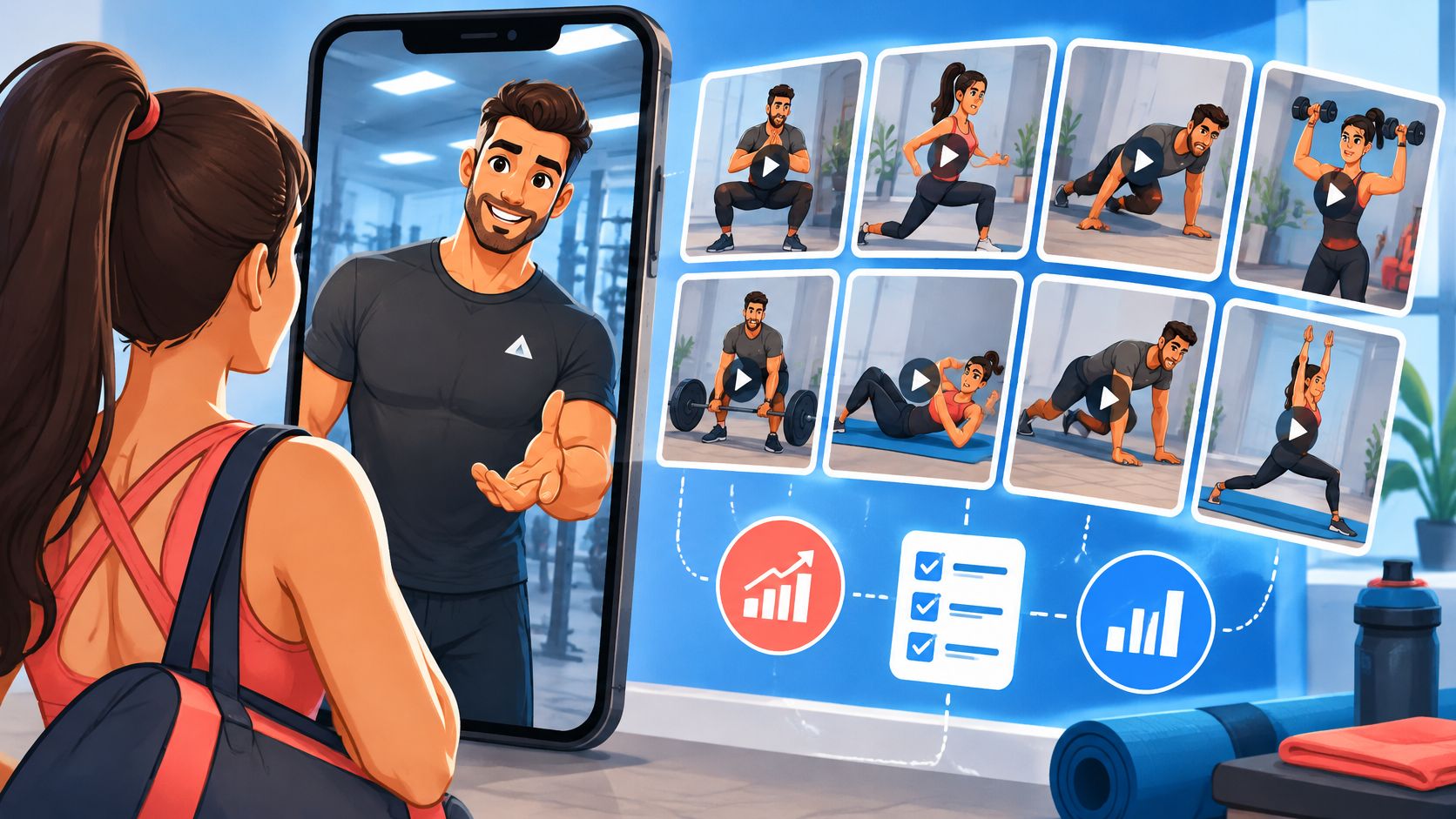
A new member pays, gets a key fob, and walks in on Monday with no idea where the lockers are or how class booking works. By day seven they still haven't trained. By day 30 the cancellation email lands, and nobody on your team can name the moment you lost them.
That quiet exit is the gap a planned set of customer onboarding videos is built to close. A welcome clip sets the tone. A software walkthrough trains the desk. A billing explainer stops the "I never agreed to that" fight before it starts. Staff playlists keep new hires from inventing their own rules.
You're not short on enthusiasm. You're short on a sequence that tells them what to do before they decide the gym isn't for them. Video handles the repeating. Your coaches keep the conversations that need a person.
In an early-2020 survey of 216 people, 74% said they had watched a video to learn how to use a new app or website, which is how most members now meet your booking app and your floor, according to Wyzowl.
The eight formats below are the ones I ship first. Each one covers what works, why it works, a length and script shape, the KPI to watch, and a storyboard you can film this month.
1. Product Walkthrough Video for Gym Management Software
A live demo your new hire can't rewind is a support ticket waiting to happen. Mindbody University already publishes recorded training for studio owners and staff, and Zen Planner's help center walks through membership setup and billing. Copy that pattern for the gym management software your desk clicks every day.
What works is one task per clip. New owners and front-desk staff follow along and finish setup on day one, instead of hunting for check-in inside a 40-minute tour.
Script shape and storyboard
Name the file after the task. "Add a member and take the first payment" is a title. "Platform overview" isn't. Keep each clip under six minutes. Open on the login, click only the path for that job, and end on the success state, such as a saved card or a green check-in.

Storyboard it in four beats. Login. Open the member record. Complete check-in or the billing step. Say the result out loud.
Put a checklist in the description so they can tick progress. Re-record whenever a major release moves a button. If your team has never cut a screen tour, a practical guide to instructional video production covers shot order and narration without a film crew.
KPI: first-week tickets about setup, billing, or check-in. If two cohorts don't cut those tickets, the click path on screen doesn't match the live product.
2. Founder or Head Coach Welcome Message
Send 60 to 90 seconds from you or your head coach the hour they join, before they ever see the lobby.
ElectroIQ's 2025 compilation reports that 68% of users are willing to watch an onboarding video when it is one minute or less. Boutique yoga and cycling studios already send a lead-instructor clip for that reason. Independent gyms use an owner-narrated hallway pass so the first face isn't a stranger at the desk.
The purchase stops feeling like a transaction when a real person names the first week.
What to say
Speak to one first-week goal. Book the induction, or show up for the intro class. Put their first name in the email subject or on the thumbnail. If you teach several disciplines, record a version per class type so a lifter isn't welcomed into a reformer room.

Storyboard. Face to camera in the lobby. Walk past the desk and point at check-in. Show the room they'll use. Close on the single next step and when you'll see them.
Practical rule: If you can't say the next step in one sentence, you've filmed a tour, not a welcome.
KPI: first-appointment show rate, compared with the prior month's text-only welcomes.
3. Chaptered Onboarding Course with Certification
HubSpot Academy built free certification out of short lessons and a finish line. Steal that shape for trainers, sales reps, and anyone who sells the floor.
People finish when the last screen gives them something to show. A badge on a trainer profile, or a small staff bonus, beats a "thanks for watching" slide. The certificate is the reason the middle lessons get watched.
Keep the first version to five or six lessons. One skill each.
- Lesson open: Title card that names the skill in plain words.
- Middle: You demonstrate it once, then name one mistake to avoid.
- Close: A short quiz, not a recap monologue.
Quiz after lesson three and again at the end. Misses tell you which section to re-record before you blame the learner.
An explainer-and-animation set covered by Vidico held 82% viewer retention and was associated with a 27% increase in customer signups. That's a vendor-published case, not a promise for your gym. Run your own before-and-after on course completion, and on whether certified staff book more intros.
Say a new closer has to learn the intro-offer conversation. Lesson one is the greeting. Lesson four is the objection. The certificate only prints if both quizzes pass.
KPI: completion rate, then quiz misses by lesson.
4. Role-Based Onboarding Series for New Staff
Asana publishes guides sorted by team and role. A multi-location gym should do the same. A new personal trainer doesn't need the closer's script, and a closer doesn't need the equipment teardown.
What works is subtraction. Each hire sees only the clips for their job, so week one isn't a junk drawer of unrelated policy. Shared rules still exist. They just don't bury the job.
Start with the three roles that turn over most. Trainer, front desk, sales. A shared core video stays under five minutes and covers safety, the greeting, and who to call. Everything else lives in a role playlist. Assign a mentor to review each finished playlist in person. Video without that check becomes background noise.
Storyboard the front-desk set like a shift. Door greeting. Scan or manual check-in. A late cancellation. A billing question handed to the right person. End on the mentor sign-off.
Blings splits measurement into opens and completion, progression and drop-off, and outcomes such as activation and time-to-first-value. For staff, activation is the first solo shift. Log the baseline days-to-solo before you publish anything.
KPI: days until a full shift without a shadow, plus greeting and script errors a manager observes.
5. Equipment Care and Facility Hygiene Orientation
New members freeze at a sweaty bench because nobody showed them the wipe station, and they don't want to look lost.
CDC gym employer guidance says exercise equipment and tools should be cleaned and disinfected between patrons, with wipes or paper towels and disinfectant available at each station. After cleaning or disinfecting, workers should wash their hands with soap and water for at least 20 seconds.
Show that, don't lecture it. Keep the clip under three minutes, and keep the cleaning step on screen. QR codes on machines that open the how-to are enough. A pre-class shot of yoga mat wipes on a mat, filmed slowly, is enough for a studio.
Storyboard the habit
Member finishes a set. Reaches for wipes to disinfect gym equipment. Wipes handles and the pad. Leaves the surface visibly wet. Drops the wipe and steps back.
Mount a gym wipe dispenser in the same sightline as the QR code. Use products the equipment maker approves on pads and screens, and point members to your notes on maintenance of gym equipment for the written routine.

KPI: "what do I clean with" questions at the desk, plus first-visit complaints about dirty stations.
6. Membership Sign-Up and Billing Walkthrough
Send this before the first charge. A clip that arrives after the angry email is already late.
What works is a plain reading of the deal. Plans, contract length, cancellation rules, and the payment calendar. Zen Planner-style help videos cover generic billing. Yours has to match your actual agreement. Members dispute what they couldn't picture, not what they watched with a date on screen.
Have a lawyer or compliance advisor read the script before it goes out. Put a one-page written summary beside the link so they can save the terms without rewatching.
A billing video after the charge is an argument. The same video before the charge is a receipt they can replay.
Storyboard. Plan names on screen. A finger on the cancellation window. The date the first charge hits. A pause where you say what a freeze does. Close with the exact reply address if a line looks wrong.
Say someone joins on a 12-month intro. The clip shows month one, the date the standard rate replaces it, and how to cancel inside the window. No montage, no music bed over the numbers.
KPI: billing disputes and chargebacks in the first 30 days.
7. Short-Form Social Onboarding Clips
Thirty to sixty seconds, vertical, one question. That's the whole format.
What to wear on day one. How to book a class. Where to park. A trainer can add one form demo and stop. Batch ten clips from the questions your desk hears every Monday. Add captions, because most of them will watch without sound. Then park the same files in a playlist inside the member app so they aren't stranded on Instagram Reels, TikTok, or YouTube Shorts.
Sogolytics' gym retention study identifies affordability, convenience, and well-maintained facilities as major retention drivers. A clip that shows the entrance, the booking tap, and a real price line serves those drivers better than a hype reel.
Storyboard. Text hook in the first second. One action in the middle. A caption that repeats the step. An end card with the booking path.
KPI isn't saves. Watch class bookings within a day of the clip, and first-class attendance among members who opened the in-app playlist.
8. 30-Day Onboarding Video Sequence with Check-Ins
A polished one-off tour loses to a sequence that shows up when behavior is about to slip.
Daxko's look at YMCA onboarding cites a YMCA study in which 63% of new members stopped exercising within six months without intervention, and a 2025 YMCA trends report in which 80% of members expect customized experiences. A generic welcome doesn't meet either fact.
Four beats are enough. Day 0 is the welcome you already filmed. Day 7 is a goal-based booking nudge. Day 14 is a friction check. Day 30 is a progress review plus a community invite. Each clip has one action. Book the induction, attend a class, meet a trainer, or log the first workout.

If the same milestone is the one members miss, rewrite that clip. Don't add a fifth email. Book a coach call at day 14 for anyone who hasn't come back. Hook the triggers to your customer onboarding workflow so a missed video becomes a staff task.
KPI: first visit, first class, and 30-day attendance, split by who finished each clip.
8 Customer Onboarding Video Formats Compared
| Format | Ideal Length | Best For | Primary KPI | Production Effort |
|---|---|---|---|---|
| Screen-recorded product walkthrough | 3–6 minutes | New gym software users | First-week support requests | Low; update after software changes |
| Founder or head coach welcome video | 60–90 seconds | New members | First-appointment attendance | Low; smartphone production |
| Chaptered course with quizzes and certification | 3–8 minutes per lesson | Staff and trainer training | Course completion | High; platform and ongoing upkeep |
| Role-based staff video series | Short videos released over two weeks | New hires in different roles | Time to competence | Medium; multiple playlists to maintain |
| Equipment care and hygiene orientation | Under 3 minutes | New gym members | Safety and cleaning compliance | Medium; film on-site and update when equipment changes |
| Membership sign-up and billing walkthrough | Short video; no specific duration given | New members reviewing plans and payment terms | Billing disputes and chargebacks | Medium; legal review and written summary |
| Short-form social onboarding clips | 30–60 seconds per clip | Members who prefer social content | Reach and engagement | Low to medium; batch production and regular posting |
| 30-day onboarding video sequence | 4–5 videos across 30 days | New members during their first month | Early member retention | High; automation and ongoing content updates |
Build Your First Video This Week and Keep the Facility Spotless
A new member may watch the welcome video, then miss the first appointment because the next step was unclear. Start with a short welcome message and a 30-day sequence; add the billing walkthrough before promoting a new offer. Build software and staff videos as those needs arise.
Track one outcome for each format, using the same measurement window each time: first-week support tickets for software and staff videos, first-appointment attendance for the welcome message, billing disputes for the sign-up walkthrough, and 30-day retention for the sequence. Log hygiene complaints alongside retention so you can distinguish a content problem from a facility concern.
Make the hygiene video a practical floor routine. Keep disinfecting wipes at machine and mat stations, and choose products whose label supports use on those surfaces. The label states the required contact time, the period the surface must remain wet. For example, EPA List N lists wipes with contact times ranging from 0.5 to 5 minutes. Don't dry the surface before that time has passed.
CDC guidance for community facilities recommends regular cleaning of high-touch surfaces, cleaning visibly dirty surfaces, and disinfecting when someone has obviously been ill. Increase cleaning frequency in high-traffic areas. Follow the disinfectant product label for whether fogging or wide-area spraying is allowed. For bulk supplies, Wipes.com offers wipes for facility routines.
Gym Membership Tips' founders learned from running their gym franchise and now teach other operators. Once your membership menu is live, the team can help with the next pass on packaging and enrollment scripts. The blog also shares ideas and plans for door-to-door “gorilla” lead tactics and soft selling in the facility. Before a discount goes live, write down its purpose, the exact number of founding spots, the intro rate's end date, and the standard rate that replaces it. If a phone camera won't capture the storyboard clearly, a video production company can handle the shoot.
Leave a Reply