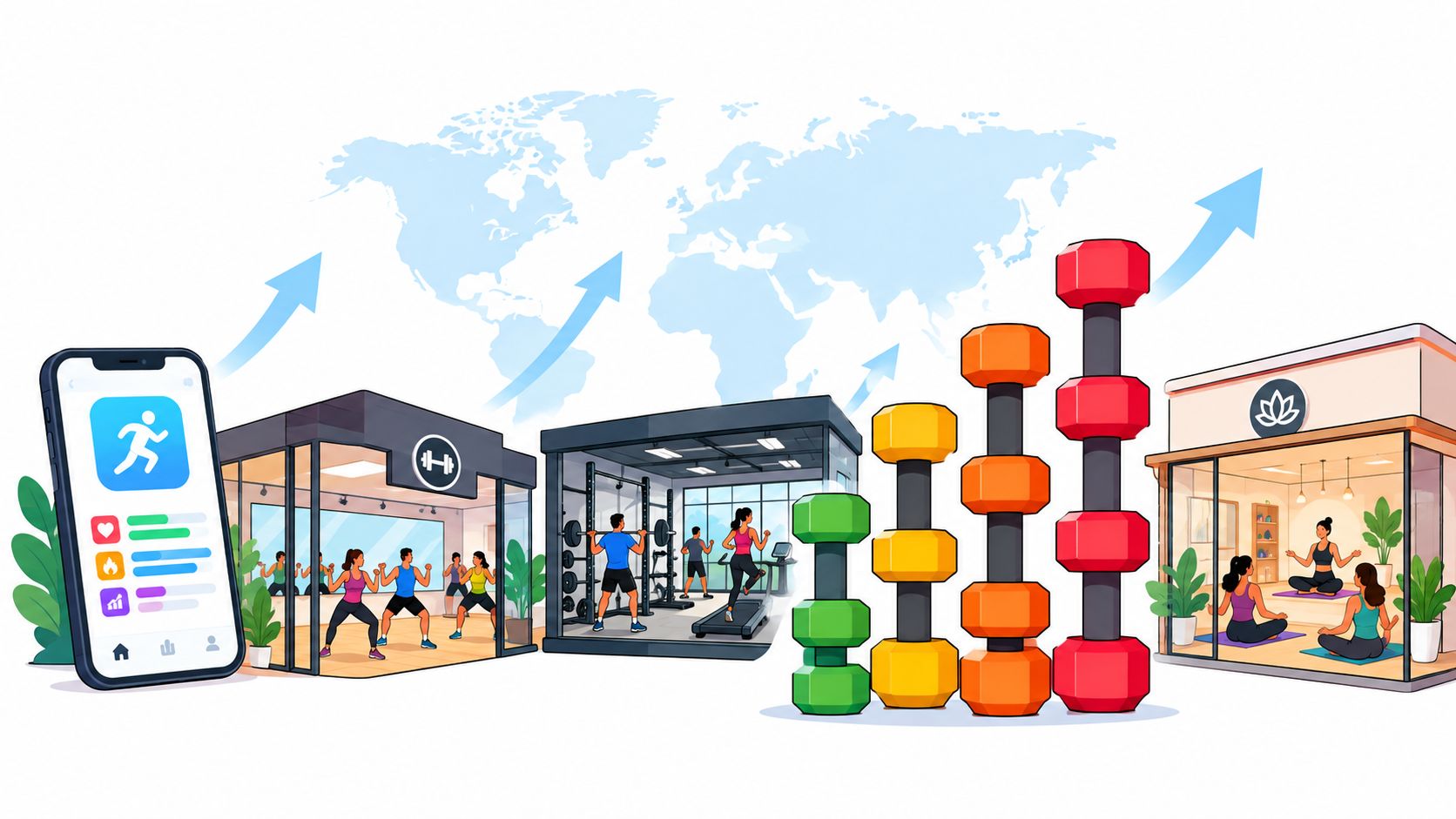
The global fitness market is projected to reach $150 billion by 2029, representing nearly 10% annual growth. That expansion creates room for ambitious gym owners, but it also raises the cost of weak retention, poor member experience, and sloppy operations.
The opportunity is already substantial. Commercial gyms and fitness studios generate approximately $83 billion in annual consumer spending, with about 190 million paying members across roughly 258,000 locations in 211 countries, according to the Global Wellness Institute's physical activity market analysis. The owners who benefit most won't just chase more joins. They'll build facilities that earn repeat visits, deliver visible value, and operate with enough discipline to keep members confident.
Market Size and Growth Projections
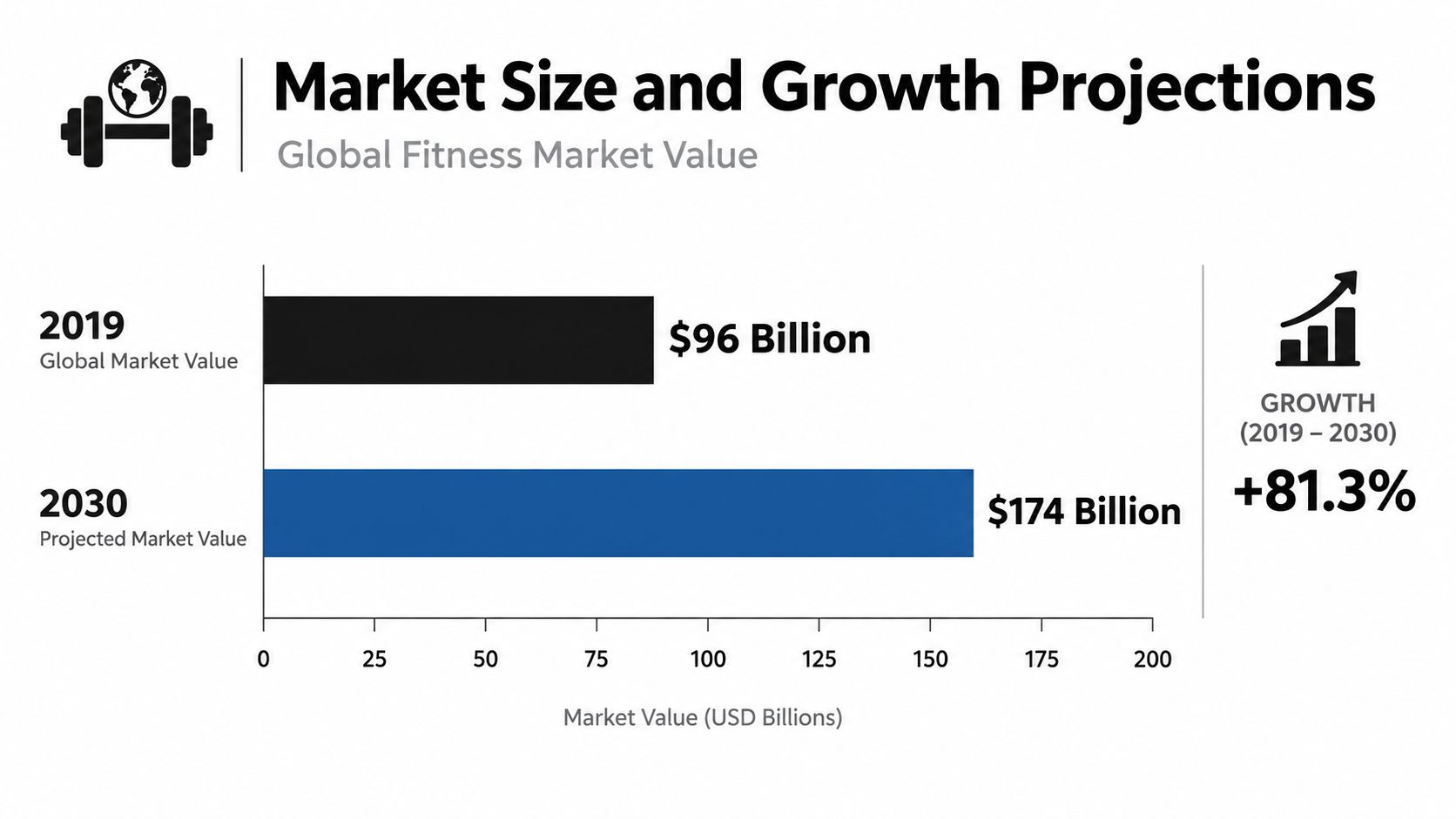
$87.12 billion in 2023, heading toward $150 billion by 2029 at a 9.92% CAGR. That is the scale of the opportunity outlined in Bonafide Research's global fitness market outlook. Treat that growth as a signal to tighten operations, not as permission to coast. More demand brings more clubs, more boutique offers, more digital substitutes, and more pressure on gyms that still rely on signups to cover weak retention.

The picture is bigger than a monthly membership. The chart above, A chart showing global fitness market growth increasing from $96 billion in 2019 to $174 billion by 2030., reflects a field where consumers spend across gyms, classes, coaching, equipment, recovery, and other active-living services. That matters because your real competition is broader than the club down the street. It includes any offer that feels easier to use, cleaner, better coached, or more consistent.
Growth also hides a common mistake. Owners chase acquisition because market headlines make front-end demand look abundant. But every new member costs more when onboarding is sloppy, cleaning standards slip, equipment stays out of order, or staff fail to create a clear training routine in the first month. In a rising market, retention discipline becomes a profit filter. The gyms that keep members do the basics better, and they do them every day.
That is why hygiene belongs in a market-size discussion. As the field expands, members get more choice and become less forgiving. Clean locker rooms, stocked supplies, working machines, and visible maintenance are not background details. They shape trust, repeat visits, reviews, and referrals. Acquisition gets attention. Retention keeps the business stable.
Owner's rule: Use market growth to justify sharper execution, cleaner operations, and stronger follow-up.
Position your gym around what members experience, then communicate it with consistency. If your differentiator is coaching, convenience, cleanliness, or beginner support, show it in the floor, the timetable, the check-in process, and the condition of the facility. If you want to turn that message into a repeatable publishing system, use guidance on how to scale your content in 2026.
Keep one eye on the wider business context as well. This review of fitness industry stocks is a useful way to track where capital and attention are moving, but your real edge still comes from local execution.
Key Drivers Fueling Expansion
A 23.7% fitness-facility membership rate in the U.S. and an all-time high of 15.9% in the United Kingdom show a market with real momentum, not just post-pandemic noise, according to Aus leisure's summary of the report.
That momentum creates pressure as much as opportunity. More people are willing to join, but more operators are chasing them, and members have more options if your gym feels disorganized, dirty, or forgettable.
Operators clearly expect growth. The same report found that 86.8% expected membership to increase during 2024, while 92.6% anticipated revenue growth. Treat that as a warning as well as encouragement. A rising market does not protect a weak operation. It rewards clubs that can turn interest into habits and habits into renewals.
The customer now buys a system
Members are not paying for access alone. They are buying a usable routine. If your offer lacks a clear first step, relevant programming, easy booking, visible staff support, and a clean, dependable environment, your marketing may still get joins, but your retention will suffer.
That is why the strongest operators package the basics well:
- Structured coaching: Beginner pathways and small-group formats reduce uncertainty and help new members use the facility with confidence.
- Flexible access: Hybrid memberships can combine in-person sessions with digital support and attendance options that fit changing schedules.
- Specialized experiences: Boutique classes and focused programs give people a clear reason to choose your gym instead of a cheaper substitute.
- Operational confidence: Clean equipment, visible cleaning routines, stocked supplies, and reliable service support repeat visits.
Technology can support that system, but it should follow an operational need, not lead it. Use tools that improve booking, onboarding, communication, or progress tracking. Skip tech that looks impressive but adds friction for staff and confusion for members.
Acquisition is visible, retention is where growth holds
Gyms often pour energy into leads, tours, and launch offers because those numbers move fast. The harder job is getting a new member through the first few weeks with enough clarity and consistency that showing up becomes normal.
Focus your acquisition process on the first successful visit. Make the first session simple. Assign a coach, program, or pathway that removes guesswork. Keep the floor clean, equipment working, and service standards obvious. Hygiene and operational discipline do more than protect standards. They give new members a reason to trust you and existing members a reason to stay.
If you want ideas for member-facing offers that connect with current demand, review this breakdown of the newest fitness trend and adapt only what fits your audience and operating model.
The operators that win this growth cycle do not separate marketing from delivery. They make the promise believable, then run a facility cleanly and consistently enough to keep it.
Regional Participation and Market Opportunities
High participation does not automatically mean easy growth. It usually means your next member is more expensive to acquire, more aware of alternatives, and quicker to leave if the experience slips. Lower participation markets offer more room to expand, but they punish operators who import the wrong format, price point, or service model.
That is the regional split. Mature markets reward retention discipline and better yield from the members you already attract. Earlier-stage markets reward access, education, and trust-building. Owners who chase signups without adjusting operations to local behavior waste demand on the front end and create churn on the back end.
Two markets, two decisions
| Market condition | Primary challenge | Better operating response |
|---|---|---|
| Higher participation | Competition and member switching | Improve retention, service consistency, programming, and revenue per member |
| Lower participation | Awareness, affordability, access, and trust | Build localized entry products and community partnerships |
In higher-participation regions, stop relying on broad discounts. They bring attention, but they also train prospects to shop price and give current members another reason to compare you with the club down the road. Use capacity and behavior data instead. Test off-peak plans, small-group onboarding, recovery add-ons, or coaching upgrades that raise value without weakening your full-access offer. If you want a quick view of how established operators position themselves, review directories of top gyms in the US, then compare that with what members in your area complain about.
In lower-participation regions, the job is different. Many prospects are not choosing between three gyms. They are deciding whether a gym fits their budget, routine, confidence level, and transport options at all. A smaller footprint, employer-sponsored trial pack, community facility arrangement, satellite program, or guided beginner pathway will often outperform a full premium model launched unchanged.
Build access without destroying economics
The underserved audience includes lower-income, rural, older, disabled, and first-time exercisers. Their barriers are practical. Getting there, knowing what to do, feeling comfortable in the space, and trusting the standard of the facility matter as much as price.
That last point gets ignored too often.
Hygiene, working equipment, clear staff presence, and consistent opening routines are competitive signals, especially for first-time users and older adults. If the club feels disorganized, prospects do not convert well and new members do not stay long enough to become profitable.
Test friction-reduction offers that still protect margin:
- Off-peak memberships
- Employer partnerships
- Community programming
- Beginner onboarding
- Flexible payments
Then measure results by access segment, not just total joins. Track who signs up, who shows up, who renews, and which offer creates durable revenue instead of short-term volume.
Strategies for Membership Retention and Acquisition
31% of adults worldwide, around 1.8 billion people, do not meet the recommended minimum of 150 minutes of moderate-intensity activity per week, and that share could reach 35% by 2030, according to the WHO physical activity fact sheet. That is your acquisition pool. It is also where many gyms waste money.
The mistake is chasing joins while ignoring what happens after day one. A growing market does not protect a weak member experience. It exposes it. If your club signs people aggressively but loses them before they build a routine, your acquisition cost rises, staff time gets burned, and revenue stays unstable.

Start by treating the first month as a product. Give beginners a clear first step, a named staff contact, and an appointment they are expected to keep. A key fob and an automated welcome email are not onboarding. They are administration.
Then watch the points where momentum usually breaks. Lead-to-trial conversion shows whether your offer feels approachable enough to visit. Trial-to-membership conversion shows whether the in-club experience matches the promise. First-30-day attendance, 90-day retention, and average weekly visits show whether people are building a habit or fading away. If joins are rising and attendance is thinning, fix onboarding before you spend another dollar on ads.
Membership design matters too, but only if it stays easy to understand. Give people a small set of useful options such as open-gym access, class-based access, off-peak access, coaching packages, or a hybrid format. Too few choices force unlike customers into the same model. Too many create confusion and stall the sale.
Retention gets stronger when members know people, know the space, and know what to do next. Introduce new members to coaches early. Use small-group sessions to reduce intimidation. Create repeat touchpoints that make attendance feel scheduled, social, and normal. For a practical outside perspective on keeping members engaged, Sprints & Sneakers retention marketing is worth reading.
Operational discipline is part of this, even before hygiene gets its own focus. Prospects notice whether the front desk is attentive, equipment is ready, and opening routines are consistent. Existing members notice too. Clean, orderly, well-run clubs convert better and retain better because they feel trustworthy.
Review retention by age, access plan, attendance pattern, and acquisition source. Keep the offers that produce durable usage. Repair the ones that fill the club with short-term volume and long-term churn.
The Critical Role of Hygiene and Cleaning Protocols
77 million people belonged to a U.S. gym, studio, or other fitness facility in 2024, and total facility users approached 96 million, according to Club Insider's coverage of the membership figures. More traffic creates more wear, more shared contact points, and more chances for members to question whether your club is run well enough to keep their business.
That is the part many operators underestimate.
Acquisition gets the headline. Hygiene decides whether the member's first month feels professional or careless. If a prospect sees smudged touchscreens, sweaty benches, full bins, or an empty wipe station, they do not separate cleaning from the rest of the operation. They assume the same standards show up in maintenance, staffing, and billing. In a growing market, that hurts retention before you notice it in cancellations.
Make cleanliness visible and easy to follow. Put gym equipment wipes or sanitizing wipes where usage actually happens, beside cardio zones, strength areas, studios, and locker room exits. Do not hide supplies in a cabinet and expect members to ask. Label each station clearly, restock during operating hours, and give staff a simple rule: if a member has to search for cleaning supplies, the setup failed.
Your protocol should be specific enough that any shift can execute it without guessing. Define high-touch surfaces such as handles, adjustment points, screens, benches, mats, and door hardware. Match products to the surface and follow label directions, especially required contact time. Train staff not to wipe too quickly just because a surface looks dry. A rushed pass may look neat while ignoring the product instructions.
Small details matter here. Keep sanitizer at entrances and other busy points so members can use it without breaking their routine. A compact option like aloe instant hand sanitizer 100ml can work well in tighter spaces, as long as it fits your facility's safety and procurement standards.
The clubs that keep members longest usually treat hygiene as an operating system, not a chore. Use written checklists. Assign replenishment and inspection to named roles, not to whoever notices the problem first. Audit completion. Spot-check locker rooms, studios, and peak-hour stations. Members do not need to watch every task happen, but they do need repeated proof that standards hold up at 6 a.m., at lunch, and late in the evening.
Clean clubs feel safer. Orderly clubs feel trustworthy. Trust keeps people coming back.
Leveraging Technology Responsibly
Technology can improve the member journey, but automation doesn't equal better coaching. Recent industry reporting indicates that 47% of consumers frequently encounter inaccurate or irrelevant information in AI fitness apps, even as AI-driven personalization becomes a major growth theme, according to Health Club Management's industry report.
The responsible approach is human governed. Use software to improve scheduling, communication, progress tracking, and administrative consistency. Keep trainers responsible for context, safety, and escalation when an automated recommendation doesn't fit a member's needs.
A practical pilot
Suppose your facility introduces an AI-supported workout planner. Don't judge it by downloads or app logins alone. Run a controlled pilot and review:
- Consultation-to-membership conversion: Does the tool help prospects understand the service?
- Attendance consistency: Do members use the plan and return regularly?
- Injury incidents: Does the system create inappropriate recommendations or confusion?
- Opt-out rates: Do members feel pressured or uncomfortable?
- Member satisfaction: Do customers report better clarity and support?
The point isn't to reject technology. It is to reject unmeasured technology. Mindbody's 2025 industry research reported that more than half of surveyed operators were investing in or evaluating new technology, including 18% actively investing and 36% reviewing their technology stack. That level of attention makes governance essential.
Protect trust as you personalize
Audit the quality of the data entering the system. Explain what information you collect, how members can opt out, and when a trainer will review a recommendation. Make digital features accessible to members who don't own compatible devices or prefer face-to-face guidance.
A trainer should be able to say, “This recommendation doesn't fit your current ability or goal,” and adjust it immediately. That human intervention protects the member and the facility's reputation.
Use technology where it removes administrative friction, improves communication, or helps staff notice disengagement. Don't use it to imitate expertise you haven't validated.
Wrapping Up and Final Recommendations
The strongest fitness industry growth trends point to a market with real demand, but demand alone won't build a durable gym. Owners need to balance acquisition with retention, expand access without losing economic control, and use technology as a support layer rather than a substitute for judgment.
Start with four actions:
- Measure the full funnel: Track trials, first visits, attendance, renewals, and revenue per active member.
- Build for access: Test beginner programs, off-peak plans, employer partnerships, and flexible formats.
- Govern technology: Pilot tools against attendance, satisfaction, safety, and opt-out outcomes.
- Operationalize hygiene: Place wipes for gym equipment and yoga mat wipes at points of use, train staff on contact times, and maintain visible cleaning stations.
Use a written checklist and audit it every shift. If you need a practical resource for membership sales and retention workflows, Gym Membership Tips publishes guidance on offers, pricing, outreach, and member follow-up.
The next phase of growth will favor gyms that make participation easier and staying worthwhile. Keep the facility clean, the onboarding human, the offer clear, and the operating numbers visible.
Review your member journey this week. Walk through the facility as a first-time visitor, test every cleaning station, inspect your first-visit process, and identify the point where new members are most likely to disengage. Then assign an owner, deadline, and measurable outcome to each fix before spending more on acquisition.
Leave a Reply