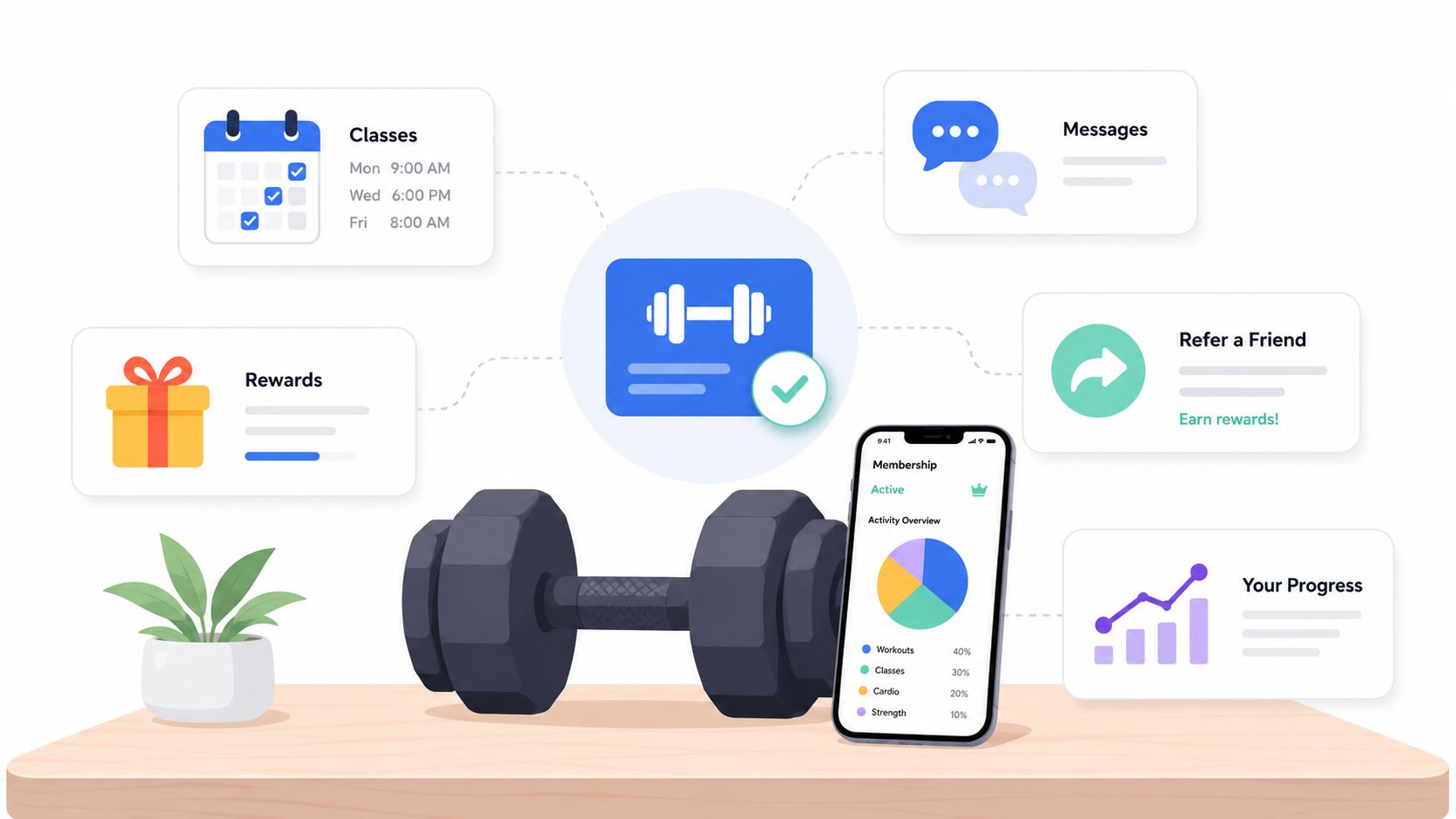
A gym rarely loses a member on the day they cancel. It usually loses them when attendance drops, messages go unopened, a class streak breaks, or a small concern never gets a reply. That's why the strongest customer retention strategies in digital marketing connect behavior signals to timely human support, then keep that support consistent across email, app, community, and in-club moments.
Retention matters because keeping an existing customer is far less costly than finding a new one, and one 2026 retention roundup says retention costs about 5 times less than acquisition, with a 60% to 70% chance of selling to an existing customer compared with 5% to 20% for a new prospect (Rivo customer retention statistics). For gyms, that's not abstract math, it's the difference between chasing every lead and protecting recurring membership revenue. The same report says 89% of marketers use email marketing for customer retention (Rivo customer retention statistics), which is a strong signal that retention has become a core digital discipline.
The practical move is simple. Start with the data and channels you already have, then build one connected member journey instead of ten disconnected campaigns. Use your gym management system, CRM, email platform, app behavior, check-ins, and feedback to watch engagement, attendance, renewal, churn, referrals, and lifetime value. SaaS customer retention tactics offers a useful parallel if you want to compare retention thinking outside fitness.
1. Email Marketing Segmentation and Personalization
Email still carries a lot of retention weight, but only if members get messages that match where they are in their journey. A generic newsletter can't do the same job as a targeted note to an inactive member, a class-lover, or someone whose renewal date is close.
Start with simple segments
A gym doesn't need twenty segments on day one. Three or four basics are usually enough, such as new joiners, active class attendees, dormant members, and renewal-risk members. Once those groups exist, a manager can tailor subject lines, offers, and content without flooding the inbox.
Practical rule: Send one clear message that matches one clear behavior. If the member hasn't visited in two weeks, don't send a marathon of promotions, send a simple re-entry path.
Personalized email is one of the few retention tactics with direct evidence behind it. A 2026 personalized email marketing source reports up to 80% lower unsubscribe rates, 50% to 80% higher engagement, and retention as much as 32% higher for personalized emails (Worldmetrics personalized email marketing statistics). That makes segmentation more than a nice-to-have. It's a practical way to reduce noise and make every send more relevant.
A useful gym workflow looks like this. The channel is email, the trigger is a missed visit or a renewal window, the owner is the retention manager or front-desk lead, and the metric is open rate, click-through, and reactivated visits. A simple template could read, “We noticed you haven't booked a class lately. Here are three sessions that fit your usual training time.”
For implementation detail, your gym's member activity data matters most. Start with dormant accounts, then layer in timezone, historical engagement, and preferred class type. If you want a deeper fitness-specific breakdown, the internal guide at email marketing for gyms fits neatly into this workflow.
2. Loyalty Programs and Rewards Systems
Loyalty programs work best when they reward behaviors that strengthen retention, not just sign-ups or random visits. In a gym, that usually means attendance consistency, class variety, referrals, and milestone behavior that signals real habit formation.
Reward the behaviors you want repeated
A point system can track visits, referrals, merch purchases, or personal training bookings, then turn those actions into something tangible. Members should understand the exchange instantly. If they need a spreadsheet to figure out the benefit, the program is too complicated.
The strongest loyalty programs keep the reward structure simple and visible. SoulCycle's Bike Points, Planet Fitness's PF+ digital perks, and boutique studios using platforms such as Maroochy or Zen Planner all show the same principle, digital tracking makes the reward feel immediate. For a smaller gym, that might be free classes, branded gear, guest passes, or a training session after a streak of consistent attendance.
A good rewards system should feel like recognition, not a coupon chase.
The retention logic is strong. One 2026 retention benchmark says loyalty program members can generate 12% to 18% more annual revenue and have 28% higher retention (Searchlab loyalty and retention statistics). That supports a high-impact gym playbook, reward commitment, not just transactions.
The workflow should be operational, not decorative. The channel is your app or member portal, the trigger is a visit threshold, a referral, or a milestone, the owner is the memberships or marketing lead, and the metric is repeat visits and reward redemption. A campaign template could say, “You've hit five class check-ins this month. Get a free guest pass or recovery session.”
One trade-off is margin. Broad discounts can train members to wait for deals, so rewards should feel useful without becoming the only reason someone stays. Review the reward mix every quarter and remove perks that don't change behavior.
3. Community Building and Social Engagement
Community is what turns a membership into a relationship. When members talk to each other, celebrate wins, and see leadership actively participating, the gym feels harder to replace.
Make belonging visible
A private Facebook group, Discord server, or member forum gives people a reason to stay involved even on rest days. That matters because churn often starts when a gym becomes a place someone visits, not a place they belong. Group challenges, shout-outs, and member spotlights help solve that problem.
Orangetheory's global community challenges, F45's local accountability groups, CrossFit's social events and leaderboards, and Peloton's ride-together features all point to the same retention principle, shared identity keeps attention longer than standalone workouts. A local gym doesn't need that scale to benefit from it. A monthly challenge, a birthday post, or a trainer-led virtual townhall can build the same emotional glue.
The channel can be social media groups, the trigger can be a first visit, a challenge signup, or a member milestone, the owner is the community manager or studio lead, and the metric is participation, comments, shares, and repeat attendance. A usable template might be, “Post one win each Friday, then invite members to reply with their own.”
A practical note from member-first communities is easy to miss. They work best when staff respond. If leadership never comments, the space starts to look like a branded bulletin board instead of a living group.
You can shape the in-club version of this same idea through online fitness community, then extend it into social engagement with boost engagement with Klap. The important part is consistency. Community builds slowly, but it decays quickly when no one tends it.
4. Personalized Content Marketing and Education
Members stay longer when they feel smarter, safer, and more confident inside the gym. That makes educational content a retention tool, not just a branding exercise.
Teach for confidence, not clicks
Workout guides, nutrition basics, form tutorials, and recovery content can reduce the anxiety that keeps people away. A beginner who understands deadlift form or recovery pacing is more likely to return, because the gym stops feeling intimidating.
Nike Training Club, Beachbody OnDemand, and Strong Fitness all show how content can keep people active between visits. For a local gym, the equivalent might be a short YouTube series, an Instagram Live Q&A, or a blog post that answers the exact questions members ask at the front desk. Use member success stories too, because real transformations feel more believable than polished slogans.
The workflow is straightforward. The channel is email, blog, video, or in-app content, the trigger is a common question or stage of membership, the owner is the trainer or content lead, and the metric is engagement plus follow-up attendance. A template could read, “Here's a beginner-friendly strength session you can try before your next class.”
Practical insight: The best education content often comes from what your staff repeats every day. Those repeated questions are your content calendar.
Keep the library updated. Form cues, safety notes, and recovery advice can age quickly if trainers change standards or equipment changes. Repurpose one strong asset into multiple formats, a blog article becomes a short email series, a social clip, and an in-app reminder. That keeps the message consistent without multiplying production work.
The trade-off is time. Content that helps members isn't always fast content, but it usually outlives short-lived promotion posts because it creates trust and reduces hesitation.
5. Predictive Analytics and At-Risk Member Identification
Retention improves when gyms identify risk before a member submits a cancellation request. Check-in frequency, class bookings, app activity, and billing status can reveal a change in routine early enough for staff to respond.
Use behavior as an early warning system
A decline in visits or bookings does not prove that a member plans to leave. It does create a useful prompt for outreach, especially when several signals change together. Review a dashboard weekly and compare each member with their own recent baseline, rather than treating every quiet week as churn risk.
Peloton, ClassPass, Mindbody reporting, and boutique studios using Maroochy analytics illustrate the same operating principle: a drop in engagement needs a timely response. The dashboard should show the signal, its date, and the next action, so staff can move from diagnosis to support without guessing.
A practical workflow begins with automated email, escalates to SMS, and ends with a manager call when the member still has not re-engaged. The trigger is a missed-visit pattern or a major booking change. The owner is the retention lead or general manager. The metric is reactivation and avoided churn. A usable message is: “We noticed your routine changed. Want help finding the right class to restart?”
Automation can support that workflow, provided the gym keeps a human decision in the process. One 2026 benchmark reports that 79% of marketers automate at least part of the customer journey, while 41% of companies run fully or mostly automated journeys. It also reports customer profiling as the highest automation adoption rate at 51.43%, ahead of report creation at 47.14% and dynamic campaign control at 42.86% (DataOpendia marketing automation statistics). For gyms, the practical lesson is to automate timely prompts while using member context to shape the response.
A risk score without follow-up is just another dashboard field. Start with one threshold, document the intervention, and compare reactivation results after a few weeks. Adjust the threshold only when the team can consistently act on the signal.
6. Omnichannel Experience Integration
Retention gets easier when the member doesn't have to repeat themselves at every touchpoint. The booking flow, reminder email, front desk check-in, and follow-up message should feel like parts of one experience, not separate systems.
Remove friction between channels
If a member sees a class on social media, books on the app, gets an email reminder, checks in at the desk, and then receives a follow-up in the community group, the gym feels organized. If each step feels disconnected, trust starts to slip.
Peloton, Equinox, and ClassPass all benefit from connected experiences across web, app, email, and in-person touchpoints. Smaller gyms can do the same with Mindbody or Zen Planner if the setup is kept clean and the staff uses the member history. That history matters because it lets the front desk say something specific instead of generic, such as, “I saw you booked yoga again this week.”
The channel is cross-platform, the trigger is any member action, the owner is operations plus marketing, and the metric is booking completion, follow-up engagement, and fewer dropped handoffs. A campaign template could be, “Book in the app, get the reminder by email, and see the class recap in the member group.”
The member should feel recognized in one system, not processed by four tools.
A good omnichannel setup also helps with retention analysis. When data from app, email, and in-club interactions lives together, it becomes easier to see where the journey breaks. That can uncover things like confusing booking steps, missed reminder timing, or front-desk inconsistency.
The trade-off is integration effort. A clean system takes more setup than a patchwork of tools, but the payoff is less friction and fewer gaps in the member experience.
7. Referral and Advocacy Programs
Referrals turn member satisfaction into a retention workflow. A member who invites a friend is publicly confirming that the gym fits their routine, which can strengthen their own commitment. The referral also creates a second relationship for staff to support, rather than treating advocacy as a one-time acquisition campaign.
Make advocacy easy to start
Remove friction at the moment members are most engaged. After a milestone, positive check-in, or class streak, send a personal referral prompt through email or the app. Give members a unique link or QR code, explain the reward in one sentence, and make sharing possible without contacting the front desk.
Planet Fitness's Bring a Friend approach, Peloton's referral bonuses, and referral tracking at boutique studios use the same basic principle: advocacy belongs inside the member journey. A local gym might offer a free month, a training session, or a branded reward after the referred person joins. Each option has a cost, so compare reward expense with the referred member's attendance and membership duration before expanding the offer.
The workflow should have clear ownership. Use email, the app, or in-gym signage as the channel. Trigger the message after a satisfied interaction or member milestone. Assign the memberships manager to review referrals and contact both people. Track completed referrals, referred-member attendance, and retention after signup. A usable template is: “Invite a friend who would enjoy your classes. If they join, you both receive a reward.”
Industry benchmarks indicate that loyalty members can generate significantly more revenue and stay longer, supporting referral loops as a retention lever rather than an acquisition tactic alone. The result depends on follow-through: if the new member struggles after joining, the referrer may question the recommendation.
For offer structure and setup steps, use the guide on how to create a referral program. Contact the referred member after signup, confirm their first booking, and give the referrer a progress update when appropriate. The owner's checkpoint is simple: review referral conversion and referred-member retention regularly, then adjust the reward or follow-up when either falls.
8. Personalized Push Notifications and Timing Optimization
Push notifications can lift attendance or annoy people fast. The difference comes down to timing, relevance, and restraint.
Send fewer notifications with more intent
A missed-workout reminder, a class spot opening, or an event prompt can help a member stay on track. But too many alerts turn into noise, and once people mute the app, that channel loses value.
Peloton, Orangetheory, and Nike Training Club all use timing and behavior to keep notifications useful. A local gym can do the same by matching alerts to the member's usual workout window. Morning exercisers don't need late-night nudges, and evening lifters don't need lunch-hour prompts every day.
The workflow is app-based, the trigger is a booking window, a missed visit, or a saved workout, the owner is the marketing or product lead, and the metric is click-through, attendance lift, and opt-out rate. A template could be, “Your Thursday yoga class still has spots. Want to reserve your usual mat?”
Practical rule: One relevant notification beats three generic ones.
Keep the cadence light. Start with one or two notification types, then expand only if members keep engaging. First names and past achievements can make a message feel personal, but they should never replace real value. If the alert doesn't help the member make a decision, don't send it.
A useful checkpoint is uninstall and opt-out behavior. If those numbers rise, the messaging is too frequent or too broad. Let members control timing and topic preferences in the app wherever possible, because retention improves when people feel in control of the contact.
9. VIP Tiering and Exclusive Access Programs
VIP tiers work because they make progress visible. Members can see what they've earned and what they could achieve next, which keeps the relationship active.
Give your best members a clear next step
A tier system can reward high attendance, class diversity, referrals, or longevity. The benefits don't have to be flashy, but they do need to feel real. Priority booking, exclusive classes, premium amenities, or training discounts all send the message that commitment is recognized.
Peloton, Equinox, and Planet Fitness all use tiered structures in different ways, and boutique studios often apply premium tiers through unlimited access or class packs. The common thread is visibility. If the next tier is hard to understand, motivation drops.
The channel is your app or member portal, the trigger is engagement level, the owner is memberships or operations, and the metric is tier upgrades, retention among top members, and use of exclusive benefits. A campaign template might say, “You're one class away from your next tier. Gain early booking and a guest pass.”
A good tier system also gives lower-tier members a believable path forward. If the upgrade looks impossible, the program stops motivating and starts feeling fixed. Annual or quarterly resets can help keep momentum alive, especially when members need a fresh reason to re-engage.
Tiering should also inform service decisions. If your best members consistently ask for quieter training times, more strength equipment, or different class schedules, that feedback should shape operational choices. The tier isn't only a reward layer, it's a signal layer.
10. Feedback Loops and Continuous Improvement Culture
Feedback becomes retention when members can see their input change something. A survey with no action is just friction. A survey followed by a visible fix builds trust.
Close the loop quickly
Short surveys, app reviews, and member focus groups help uncover pain points before they become cancellations. The important part is responding visibly, then telling members what changed. That turns feedback into proof that the gym listens.
Peloton's quarterly surveys, Orangetheory's focus groups, and local gyms that use member appreciation events to gather ideas all show the same principle. People don't need every request approved, but they do need to see that someone read it and made a thoughtful decision. If a suggestion can't be implemented, explain why. That matters more than silence.
The workflow is simple. The channel is survey, review site, or in-app feedback, the trigger is a class experience or membership milestone, the owner is the GM or studio manager, and the metric is satisfaction trend, review sentiment, and resolved issues. A campaign template could say, “You told us the evening class schedule needed work. We adjusted it starting this month.”
Practical insight: Ask fewer questions, then act faster. A short survey that leads to a real change beats a long survey that disappears into a folder.
One operational advantage of this approach is that it helps you spot patterns. If the same complaint repeats about cleaning, class timing, or equipment access, the problem is bigger than a single member's opinion. That's when the member journey and the physical facility need to line up.
Top 10 Customer Retention Strategies Comparison
| Item | Implementation complexity | Resource requirements | Expected outcomes | Ideal use cases | Key advantages |
|---|---|---|---|---|---|
| Email Marketing Segmentation and Personalization | Moderate–High (data integration & automation) | Email platform, CRM/gym management integration, content time | Improved open/CTR, better renewals and engagement | Re-engagement, renewals, targeted campaigns | Cost-effective, highly targeted messaging |
| Loyalty Programs and Rewards Systems | High (platform + rules + upkeep) | Loyalty platform or app, rewards budget, ongoing maintenance | Increased visit frequency and member LTV | Driving repeat visits, referrals, gamification | Strong behavioral incentives, measurable ROI |
| Community Building and Social Engagement | Moderate (continuous moderation) | Community manager, social platforms or apps, content cadence | Higher emotional loyalty, organic advocacy, lower churn | Brand-building, peer support, challenge-driven engagement | Authentic member advocacy, low direct cost |
| Personalized Content Marketing and Education | Moderate–High (content creation at scale) | Content creators, video/production, distribution channels | Increased perceived value, member retention, SEO lift | Onboarding, skill development, offsite engagement | Positions gym as expert, repurposable content |
| Predictive Analytics and At-Risk Member Identification | High (ML models and integrations) | Analytics tools, clean historical data, analyst/data scientist | Reduced churn via proactive interventions, efficient spend | Flagging churners, prioritizing retention actions | Proactive, data-driven retention targeting |
| Omnichannel Experience Integration | Very High (cross-platform integrations) | Unified platform/APIs, dev/integration, staff training | Seamless member journey, higher platform stickiness | Mature operations with multiple touchpoints | Consistent experience, holistic engagement data |
| Referral and Advocacy Programs | Low–Moderate (tracking + rewards) | Referral tracking tool, simple integrations, referral incentives | Low-cost acquisition, higher LTV for referred members | Growth-focused acquisition, word-of-mouth scaling | High ROI, viral growth potential |
| Personalized Push Notifications and Timing Optimization | Moderate (segmentation + timing logic) | Mobile app, push provider, behavioral data | Increased attendance and timely engagement | Habit formation, class reminders, prompt re-engagement | Immediate, context-aware nudges with high engagement |
| VIP Tiering and Exclusive Access Programs | Moderate (tier rules and benefits) | Membership system support, exclusive perks, communications | Higher spend and retention among top members | Monetizing high-value members, premium positioning | Drives revenue, creates aspirational loyalty |
| Feedback Loops and Continuous Improvement Culture | Low–Moderate (process + follow-through) | Survey tools, analytics, staff to act on feedback | Identifies pain points, increases satisfaction and trust | Ongoing service improvement, NPS tracking | Actionable insights, demonstrates responsiveness |
Build a Retention System Members Can Feel
The best way to use these ideas is to roll them out in a 30-day sequence, not all at once. Start by cleaning your member data and setting a baseline for engagement, attendance, renewal, churn, referrals, and feedback. Then choose one at-risk trigger, launch one personalized campaign, add one simple engagement or referral mechanism, and review what members say before adding the next channel.
The digital side matters, but the in-club experience still closes the loop. If your emails and app messages promise consistency, your facility has to match that with visible upkeep, including regular cleaning and sanitizing routines for shared spaces and equipment. Choose gym wipes, disinfecting wipes, or wipes for gym equipment based on your setup, and consider a gym wipe dispenser where traffic is heavy. For high-touch equipment and workout areas, products such as Wipes.com Disinfecting Wipes can fit into the same retention mindset, because members notice when machines, mats, and touchpoints are ready for use.
That physical detail matters more than many teams admit. Clean stations, stocked wipe stations, and consistent sanitizing habits support trust just as much as a polished email flow. If you also use commercial disinfecting wipes or fitness center wipes, make sure staff know exactly when and where they're used so the routine stays visible and consistent.
Set a weekly cadence for engagement checks, then review renewal, churn, referral, and satisfaction trends on a regular schedule. That rhythm keeps small issues from becoming member losses. If you want a retention lens that already connects marketing to operational follow-through, stop member churn with these tips is a useful companion read.
Pick one member journey, improve it, and measure the result before you add another channel. That's how retention becomes a system, not a pile of tactics.
Leave a Reply