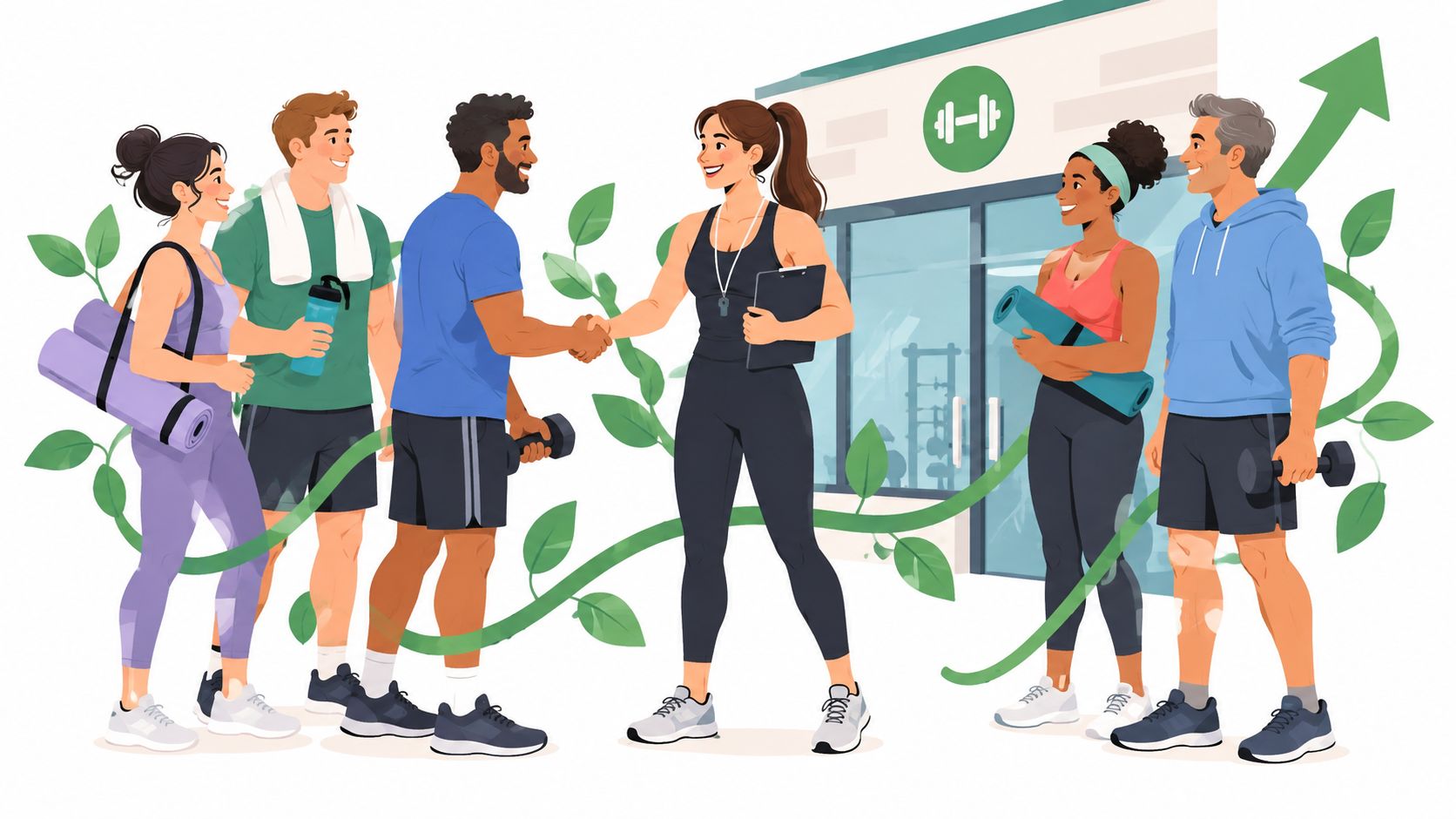
Most gym owners are told that community outreach means sponsoring an event, posting about it, and hoping local people remember the logo. That advice misses the point. Outreach isn't a public-relations accessory. It's a trust and participation system that can influence who discovers your gym, who feels comfortable trying it, and who stays engaged afterward.
Paid advertising can create fast awareness, but awareness doesn't remove every barrier between a resident and a membership. A person may still feel intimidated, question whether the gym welcomes beginners, worry about cost, or lack reliable transport. A trusted school, employer, clinician, neighborhood group, or existing member can make the first step feel practical instead of risky.

The same mechanism appears in public health. In countries with available data, community health workers and volunteers accounted for 16% of reported tuberculosis case notifications, while treatment success reached 91% among people receiving community support, according to the World Health Organization's 2024 tuberculosis reporting. A gym isn't a healthcare provider, but the transferable lesson is clear: trusted local contact helps people find a service and follow through.
Outreach distributes participation, not just information
The strongest gym outreach doesn't stop at telling residents that your facility exists. It gives them a low-pressure way to experience the space, ask questions, meet a coach, and see people like themselves participating. That sequence builds confidence before a salesperson asks for a commitment.
This is also why audience development deserves a place beside advertising in your growth plan. Practical guidance on building an audience can help you connect local relationships with repeat communication, while how EmailScout approaches outreach offers a useful reminder that organized, relevant follow-up matters after the first contact.
If you want to understand why is community outreach important, start with this distinction: marketing creates exposure, while meaningful outreach helps create belonging. The latter can turn an unfamiliar gym into a place residents already recognize, trust, and recommend.
Four Measurable Benefits of Gym Community Outreach
Community outreach matters financially when it improves the quality of the member journey. The useful question isn't whether an event looked busy. Ask what happened after attendance, which partner introduced each person, and whether those members activated and remained engaged.

1. Better member acquisition
A partner referral arrives with context. A school may introduce your beginner class to parents. A physiotherapist may recommend a controlled strength session. An employer may invite staff to a mobility workshop. Each introduction reduces the amount of explanation your sales team must provide.
Track qualified leads, trial-start rate, source partner, and conversion to membership. Compare those results with paid and organic sources, but don't judge the channel only by lead volume. A smaller stream of well-matched prospects can be more useful than a large list of people who never attend.
2. Stronger retention
Outreach can improve retention when it helps members form relationships and see the gym as part of their routine. A person who meets neighbors at a community class has more reasons to return than someone who only purchased access through a discount.
A systematic review found positive outcomes from community participation, including improved exercise behaviors and quality of life, with stronger results associated with structured approaches such as health camps, community fairs, and school partnerships. The systematic review of community participation supports measuring the journey beyond signup, including first-month visit frequency, cancellation rate, and 90-day retention.
3. A referral network with local credibility
Every reliable partner can become a source of introductions, feedback, and social proof. Build a simple partner record that captures referrals, attendance, membership starts, and member comments. Review it regularly with the partner instead of treating the relationship as a one-time promotion.
4. Stronger staff engagement
Coaches often understand local barriers faster than a marketing team does. Involving them in outreach can reveal whether class language feels intimidating, whether the schedule fits working families, and whether the welcome process works for beginners.
Practical rule: Count the behavior that follows the event. Attendance is an activity metric, not a growth result.
When Outreach Fails and How to Avoid Common Pitfalls
A gym can fill a town square with banners and still fail to build trust. The common mistake is treating reluctance as a messaging problem. If residents avoid the facility because they expect judgment, poor cultural fit, inconvenient hours, or hidden costs, louder promotion won't solve the underlying issue.
Consider two neighborhood programs. The first gym announces a free fitness day through its own social accounts, staffs the event with sales representatives, and offers the same class it already sells to experienced members. The turnout is visible, but beginners leave without asking questions. The gym records attendance and calls the campaign successful.
The second gym starts by meeting a local community group. Members explain that some residents want women-only sessions, others need language support, and many don't know what to expect inside a commercial fitness space. The gym adjusts the format, trains a coach to welcome first-time participants, and asks the partner to help shape the follow-up. The event may look less polished, but the conversation continues afterward.
Diagnose the barrier before choosing the message
Structural and institutional barriers can include transportation, childcare, confidentiality concerns, cultural insensitivity, affordability, and fear of being judged. They affect immigrants, older adults, people with disabilities, lower-income residents, and racial or ethnic minorities in different ways.
A 2025 rural-community study reported that 75% of community leaders considered researchers unprepared to engage communities, while 87% reported insufficient resources for meaningful involvement. Those figures, reported in the Frontiers study on rural community engagement, highlight a gap that gym owners recognize quickly: good intentions don't compensate for weak preparation.
Before launching, ask:
- Who isn't participating: Which neighborhood or audience is missing from your member base?
- What stops them: Is the barrier price, transport, schedule, confidence, privacy, language, or cultural comfort?
- Who do they trust: Which organization or individual already has a relationship with that group?
- What will change: Can you show residents exactly how their feedback altered the program?
If your answer is “we need more posts,” pause. Effective outreach begins with listening and visible follow-through.
Building a Practical Outreach Program Step by Step
A repeatable program needs an owner, a partner, a defined audience, and a measurement process. It doesn't need a large campaign budget to begin. Start with one audience whose barrier you understand and one experience your team can deliver well.

1. Identify partners
List nearby schools, employers, clinicians, sports clubs, cultural organizations, local government contacts, and neighborhood groups. Prioritize partners that already serve the people you want to reach. Give each relationship a clear purpose, such as a beginner workshop, walking group, mobility session, or family activity.
For event-based partnerships, resources on how to find the right charity team building program can help you assess alignment, participation, and practical delivery before committing.
2. Remove barriers
Map the full participation cost. Consider transport, childcare, language, privacy, appointment flexibility, and fear of entering a gym for the first time. Possible responses include multilingual information, flexible trial appointments, a low-commitment introduction, transport assistance, or a family-friendly session.
3. Co-design the experience
Don't just place your existing sales event in a new location. Ask residents what format feels comfortable, what time works, and what they want to learn. The CDC identifies community-wide campaigns and improved access to physical-activity places as high-priority strategies, especially when partners such as schools, employers, and local governments help promote access and participation, as described in its physical-activity strategy guidance.
4. Train staff
Prepare coaches and front-desk staff to explain the session without jargon, welcome questions, and avoid assumptions about ability or experience. Assign one person to record partner source, attendance, trial status, and follow-up.
5. Measure the cohort
Use a dashboard that separates each partner channel. Track qualified leads, trial-start rate, first-month visit frequency, cancellation rate, referrals, and 90-day retention. Then compare outreach-acquired members with other cohorts. Guidance on creating a referral program can help connect partner introductions with a structured referral process.
Integrating Outreach Into Your Sales and Marketing Workflows
Outreach fails commercially when the event team and sales team keep separate records. A resident attends a community class, receives a friendly welcome, and then disappears into an unassigned spreadsheet. The gym loses the context that made the introduction valuable.
Give every partner a tracking code, landing page, or source field in your CRM. At registration, record who introduced the person, what session they attended, their stated goal, and the barrier they mentioned. That information should appear in the salesperson's follow-up view, not remain in an event manager's notebook.
Turn trust into a consistent handoff
The first follow-up should continue the conversation rather than restart the pitch. If a partner introduced a beginner mobility session, reference that experience and recommend the next appropriate step. Don't push a premium package before the prospect understands the facility, the coach, and the schedule.
A CRM built for gyms can support source attribution, trial reminders, onboarding questions, visit tracking, and retention comparisons. Your CRM software for gyms workflow should make it easy for staff to see the difference between a cold inquiry and a warm community introduction.
The evidence supports this operational approach. A meta-analysis of over 130 public-health studies found statistically significant improvements in health behaviors and participant self-efficacy when interventions included community engagement. Programs involving community members in delivery generally outperformed programs that involved them only in design, according to the community-engagement evidence synthesis.
That finding has a direct sales implication. Let partners and community representatives participate in delivery, not just promotion. Their presence can reassure prospects, answer practical questions, and show that the program belongs in the local environment.
Review performance by cohort each month. If outreach members attend consistently but cancel early, improve onboarding. If trials never start, fix scheduling or transport. If one partner produces strong retention, study the experience and adapt it elsewhere.
Comparing Traditional Marketing Against Community Outreach
Traditional marketing and community outreach solve different problems. Paid ads and social media can put an offer in front of people quickly. Outreach takes longer to establish, but it can reduce uncertainty through repeated contact and trusted relationships.
The right decision isn't to eliminate digital marketing. Use each channel where it performs best.

| Decision factor | Traditional marketing | Community outreach |
|---|---|---|
| Speed | Can generate immediate awareness and inquiries | Builds recognition through repeated local contact |
| Trust | Relies on the gym's own message and creative | Gains credibility through familiar partners and participants |
| Targeting | Uses audience settings and campaign segmentation | Uses local knowledge of barriers, schedules, and needs |
| Conversion quality | Can produce volume, but intent varies | Often provides context before the sales conversation |
| Retention insight | Measures clicks, leads, and conversion events | Connects participation with activation and ongoing attendance |
| Relationship value | Campaign ends when spending or posting stops | A strong partnership can generate feedback and referrals over time |
The World Bank's community-development portfolio illustrates the scale that organized local participation can reach. As of June 2025, it reported 341 active projects across 95 countries, with $48.7 billion in total project value, benefits reaching 17.4 million households, and nearly 2.5 million volunteers participating since 2014, as detailed in the World Bank community and local development overview.
A gym won't replicate that institutional model, but the operating principle transfers: local ownership makes programs more responsive. Use ads to invite residents, then use outreach to learn what they need and give them a reason to return.
Small physical reminders can also support recall after an event. If you use branded materials, review the design and ROI of fridge magnets alongside digital follow-up, but judge any item by whether it prompts a useful next action rather than merely displaying your logo.
Cleaning and Sanitizing Tips to Support Community Trust
A polished outreach event cannot cover equipment that looks neglected. Members judge respect through operational details: clean machines, dry benches, cared-for mats, and supplies that are easy to find. Those signals affect whether a visitor feels comfortable returning.
The CDC guidance for coaches and athletic directors advises cleaning shared equipment after each use and allowing it to dry. It also recommends EPA-registered detergents and disinfectants for addressing pathogens such as MRSA, provided staff follow the manufacturer's instructions.
Build cleaning into the member experience
Place equipment wipes near high-contact machines, and check that the product suits the surface. Staff should show the correct process during tours and introductory sessions, rather than leaving new members to guess. Use yoga mat wipes only when they are appropriate for the mat material.
A reliable routine includes:
- Clean before disinfecting: Follow the product label and the correct cleaning sequence.
- Let surfaces dry: Keep equipment out of use until it is dry enough for the next member.
- Place supplies visibly: A clear dispenser makes cleaning part of the normal member journey.
- Train consistently: Show staff and members how to wipe equipment without damaging finishes, padding, or screens.
- Document checks: Record high-touch cleaning and restocking so managers can spot missed areas and supply gaps.
Product selection affects whether the routine survives a busy shift. Compare bulk formats by surface compatibility, storage needs, dispenser design, and the time required for staff to restock them. Stock disinfectant where contact is highest, and position waste bins close enough that used materials do not collect on benches or floors.
The goal is a routine people can see and repeat without slowing the facility down. A clean, dry station supports trust more effectively than a dramatic cleaning display that disappears once the event ends.
Outreach earns credibility when the facility matches the promise made outside it. Invite one local partner to an introductory session, record attendance and follow-up actions, and inspect the route guests will take before they arrive. This week, choose one underserved audience, one trusted partner, and one measurable pilot, then walk through the facility before guests arrive.
Leave a Reply