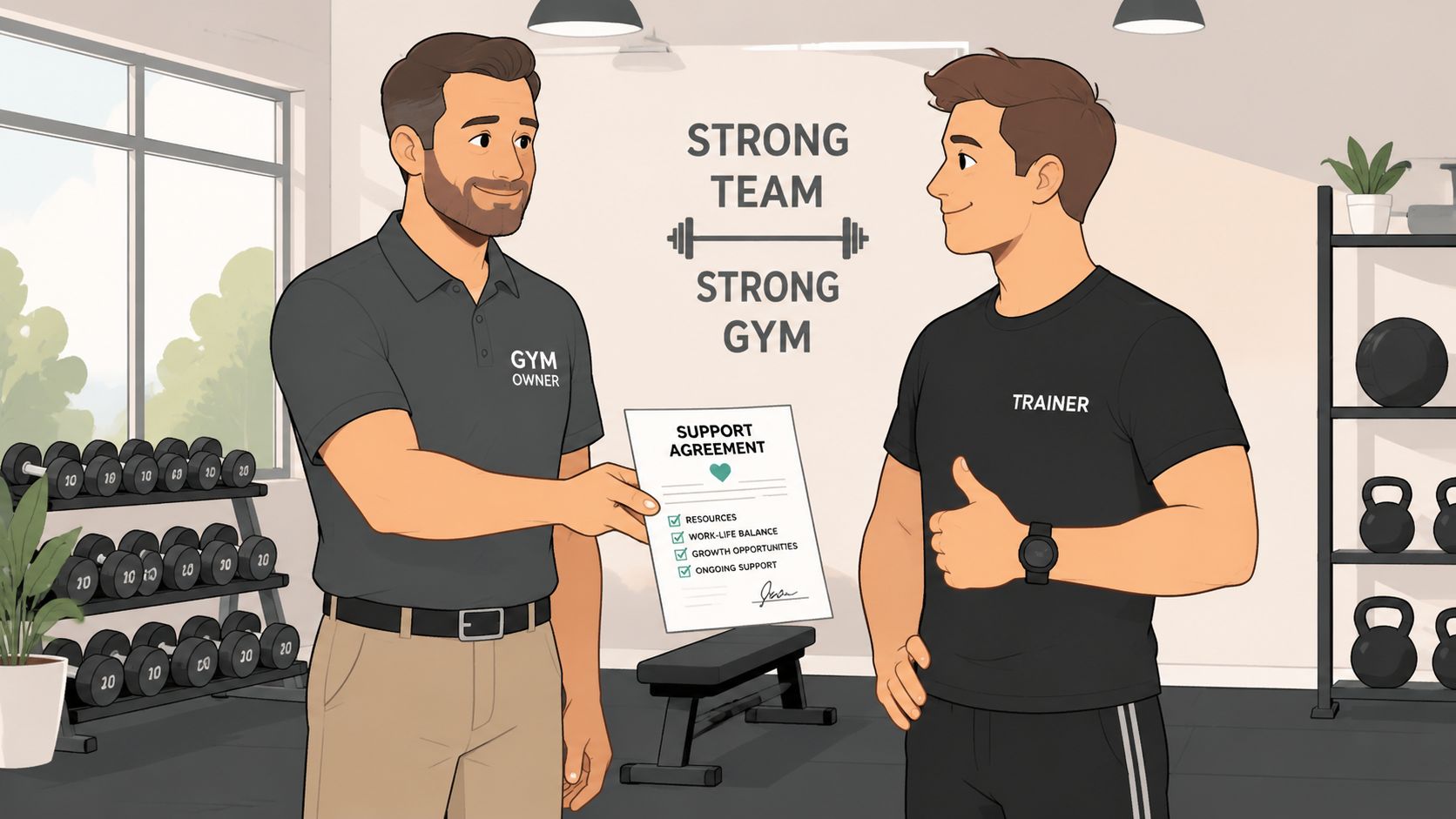
You're standing in the hallway after class, staring at a name on the whiteboard and dreading the conversation you know has to happen. The trainer's numbers are soft, members have noticed, and the front desk team already feels the friction. You don't want drama, you want the right outcome, and in a gym that means protecting the floor, the schedule, and the people who still have to show up tomorrow.
How to fire someone nicely isn't about being gentle to the point of uselessness. It's about being clear, brief, and dignified, because managers who over-explain usually just stretch out the pain. Management guidance consistently points the same way, give a factual reason, move straight to logistics, and keep the conversation tight, often just 2–3 minutes for the manager's core statement (My Shortlister on how to fire someone nicely). That's not cold. That's respectful.
If you own a gym, this gets messier fast. You're not just ending a job, you're covering classes, protecting key fobs, keeping members calm, and making sure payroll doesn't turn into a last-minute scramble. The hard part isn't finding softer words. The hard part is having the nerve to stay direct while still treating someone like a person.
Practical rule: if you're hoping the employee will “get the hint,” you're not ready to fire them yet. Nice only works when the decision is already final.
The Hardest Conversation in Your Gym
The worst terminations usually happen in a place that feels familiar. A longtime trainer starts missing sessions, a front desk lead gets sloppy with member check-ins, or a coach's attitude starts bleeding into the rest of the team. You've coached, nudged, and waited, and now you're walking toward a conversation you've been avoiding for weeks.
The mistake most gym owners make is treating the firing itself like the hard part. It isn't. The hard part is everything that comes before it, the documented warnings, the written follow-ups, the attendance records, the notes that show this wasn't a mood swing. That historical shift in HR practice matters because procedural fairness protects both sides, you're not deciding from emotion, you're closing a file built on facts (My Shortlister). If the file is thin, the meeting will turn into a debate. If the file is solid, the meeting can stay short.
Build the paper trail before you say a word
A defensible termination starts days earlier, not in the room. Pull together performance summaries, dated incidents, written warnings, attendance issues, and objective notes. Keep the file clean enough that HR, ownership, or counsel can review it without hunting through texts and half-remembered conversations.
That discipline pays off when the employee asks, “When did I get warned about this?” If you can't point to written records, you're not holding a termination meeting, you're entering an argument you'll probably lose. Good managers don't fire from frustration. They fire from documentation.
The operational mindset matters here too. Before you schedule the meeting, check whether the person controls a class roster, a front-door fob system, or a software login that affects the whole club. In a gym, one loose end can become a member experience problem before lunch. The safer approach is simple, prepare the file, decide, then move.
Know what niceness actually means
Niceness is not softness for its own sake. It's clarity, dignity, and speed. A respectful firing gives the person enough information to understand what happened, then gets them to the next step without letting the room turn into a courtroom.
If you're a gym owner, you already understand this on the floor. You don't let a bad spotter wander through ten excuses while a member's safety is at risk. You correct, you move, and you protect the room. Employment decisions work the same way.
Here's the test I'd use before I ever sit down with someone:
- Written record exists. The issues are documented, not floating around in memory.
- Decision is final. You're not meeting to explore possibilities.
- Logistics are ready. Final pay, benefits, property, and access changes are already lined up.
- Coverage is planned. Classes, clients, and duties have a handoff.
- HR or counsel has seen the file. Someone besides you has pressure-tested the decision.
That's the difference between a hard but clean conversation and a messy one that keeps leaking into the week. The more preparation you do, the less you'll feel tempted to improvise. And improvisation is where people accidentally say too much.

Legal and Compliance Checks You Shouldn't Skip
Before you book the room, check the rules that govern the exit. A gym owner doesn't need to become an employment lawyer, but you do need to know which questions can't be ignored. Start with the employee handbook, because an at-will acknowledgment is only helpful if your policies support the way you're acting. Then look at any contract, notice clause, or separation language tied to that role.
The next issue is timing. Final pay rules vary by location, and that matters because the employee will ask when money is arriving and how benefits continue. If you're not clear on those mechanics, don't wing it. Get HR or counsel to confirm the timing, the paperwork, and whether a separation agreement is being used. If the legal review isn't done, postpone the meeting.
For a practical checklist on worker-side protections, the worker rights termination steps resource from Nick Norris, P.A. is worth keeping nearby when you're verifying your own process. It's not about making the gym more bureaucratic, it's about avoiding preventable mistakes.
The same caution applies to staffing structure. If a coach's contract governs notice, class assignments, or personal training obligations, review the paperwork before you speak. A gym's scheduling system can look casual from the outside, but the legal exposure isn't casual at all.
One more thing. If the person has access to member records, payroll systems, or class software, bring IT into the loop before the meeting is on the calendar. A lot of owners wait until after the conversation and then scramble while the employee still has active access. That's sloppy. It's also avoidable.
For contract-heavy roles, I'd keep a current personal training contract template on hand so you can compare what was promised with what was documented.
The cleanest terminations are rarely spontaneous. They're the result of policies, records, and timing working together before anyone walks into the room.
The Script for the Meeting Itself
Keep the meeting short and scripted. Not stiff, scripted. Controlled. The best approach is to say the decision first, give one factual reason, acknowledge the difficulty, then move straight to logistics. That sequence lines up with guidance that says the conversation should start directly, use only formal documented incidents, and immediately cover final pay, benefits, property, and next steps (GetJobber's firing script guidance).
Say the decision in the first 30 seconds
Open with the news, not the small talk.
You can say, “I need to let you know that we've decided to end your employment effective today.” Or, “This is a termination meeting, and your employment is ending today.” That first sentence should not leave room for confusion. If you bury it under pleasantries, you're making the employee sit through a false lead-in just to get hit with the decision anyway.
Then give a brief factual reason, tied to the file. Keep it to one or two sentences. “We've documented ongoing performance issues and attendance problems, and despite prior feedback, the situation hasn't improved.” That's enough. You do not need a speech.
Don't debate the file in the room
Silence is normal. Tears are normal. Anger is normal. What's not useful is turning the meeting into a negotiation. If the employee tries to argue, keep your voice calm and repeat the boundary. “I hear you, but the decision is final.” That's the line.
A short human acknowledgment helps. “I know this is hard to hear.” Then move on. That part matters because the goal is not to humiliate anyone. It's to preserve dignity while keeping the decision intact. One source recommends the manager's main statement stay within 2–3 minutes, and that's the right instinct in a gym too, where every extra minute increases the chance of confusion or conflict (My Shortlister).
After that, shift to logistics. Final paycheck timing, benefits packet, property return, and next steps are the next topics, not an afterthought.
If you want a simple closing line, use this: “I'm sorry we're here, and I appreciate your time. I'll walk you through the transition details now.” It's direct without being theatrical.
Handling Remote and Hybrid Terminations
Remote terminations need tighter choreography than in-person ones. The script doesn't change much, but the risk does. You're managing screens, recording settings, access removal, and the possibility that a video call can feel public if you're careless. Recent guidance points out that termination content still assumes an in-person or video conversation, but the harder operational questions are how to coordinate the call, shut off access, and avoid humiliation on a recorded platform (BetterUp on how to fire someone nicely).

Keep the call tight and private
Use video, not chat. Keep the participant list minimal, usually the manager and HR, with IT standing by off-call. Don't surprise the employee by screen-sharing documents before you've delivered the decision. Start with the message, then move into the written logistics.
A good remote opening sounds like this. “Thanks for joining. I need to let you know that we've ended your employment effective today, and I'm going to walk you through the next steps.” Then stop. Give the same brief factual reason you'd give in person, and keep your tone level.
Screen recording needs to be settled before the meeting. If your company doesn't allow recording, don't improvise. If it does, disclose it clearly. You don't want the terminations process to become a side issue about hidden recordings or a messy privacy dispute.
Coordinate access shutoff with IT
If the employee has cloud access, member software, scheduling tools, or shared files, time the shutdown for the meeting window. Not before, so they don't get locked out mid-conversation. Not hours later, so they have unnecessary access after the decision is delivered.
That same timing matters for work laptops and files. If the person is remote, make the return process immediate and explicit. If you need a shipping label, a pickup window, or a device-return checklist, prepare it ahead of time. The idea is simple, preserve dignity on the call and protect the business right after it ends.
For a gym owner, remote termination is often about a trainer, marketer, or admin who never touches the floor but still touches systems members depend on. Don't treat that as an afterthought. Treat it like access control with a human face.
The Cleanup Right After They Leave
The meeting is over, and now the work starts. In a gym, the hour after the conversation is when you either contain the disruption or create three new problems. Collect the keys, deactivate the fob, remove software access, and make sure nobody is guessing who is covering tomorrow's classes. The transition stops being emotional and becomes operational.
Handle access, property, and payroll fast
The first cleanup pass should cover keys, uniforms, fobs, laptops, POS access, scheduling tools, email, and the member database. A separate guide specifically recommends telling IT so digital permissions can be removed during the meeting, then following up with payroll and HR so the final paycheck is processed correctly (Your Leadership Map). That's not a back-office nicety. It's damage control.
If the person handled personal training or group classes, reassign those sessions immediately. A popular coach can leave a hole in the schedule fast, and the clients attached to that coach will notice if nobody reaches out. If you wait until the next day, you're already behind.
For rate planning and staffing replacement context, it helps to keep an eye on fitness trainer hourly rate so you know what kind of coverage or backup hire makes sense after the exit.
Reassign people before rumors spread
The follow-up communication to staff should be simple. Say the employee is no longer with the gym, thank the team for stepping up, and clarify who owns the open work. Don't talk about the performance file. Don't vent. The team doesn't need the full story, and if you overshare, you'll spend the next month cleaning up gossip.
Here's the same-day checklist I'd use:
- Revoke access: Disable all systems, badges, fobs, and shared logins.
- Collect property: Get keys, uniforms, devices, and any paperwork back.
- Confirm payroll: Make sure final pay is being processed correctly.
- Reassign work: Move classes, clients, and recurring tasks.
- Notify support teams: Tell HR, IT, and payroll what happened.
- Stabilize the schedule: Make sure tomorrow's floor isn't exposed.
A gym owner who does this well keeps the brand calm. A gym owner who doesn't ends up answering member questions, staff rumors, and access issues all at once.
When Niceness Backfires
The biggest mistake I see is owners apologizing until the message stops sounding final. That's not kindness, that's confusion. The employee starts to think there's room to negotiate, and then the meeting drifts into “what if I do X” territory that should have been shut down from the start. Excessive reassurance creates exactly the problem you were trying to avoid.
There's also a legal side to this. If you over-explain, you can accidentally introduce reasons that aren't in the file, which is a bad trade. A strong reminder on employer risk comes from the broader workplace safety and responsibility discussion in Overton Security's piece on the general duty clause for employers, especially the idea that managers carry real duty around how they handle harmful situations. You don't want a sloppy conversation creating new issues on top of the original one.
The right move is colder than many owners expect, but it's also more humane. State the decision. Give the documented reason. Acknowledge the moment. Then stop talking about the merits of the choice.
If the employee asks for a deeper explanation, you can say, “I'm not going to debate the decision, but I can confirm what's in the record and walk you through the next steps.” If they ask for something you're not sure about, defer it to HR or follow up in writing. Do not freestyle.
A nice firing is not the same thing as a soft firing. The first protects dignity. The second often protects nobody.
Telling the Rest of Your Team and Closing the Loop
The part that comes next matters almost as much as the termination itself. Your remaining staff will fill in the blanks whether you speak or not, so say enough to stop rumors and nothing that violates privacy. A quick, calm statement beats a long explanation every time. Keep it factual, thank people for their flexibility, and make clear how the work gets covered.
Tell staff what they need and nothing more
To your internal team, the message can be short. “X is no longer with the gym. We're handling coverage for classes and client appointments, and I appreciate everyone helping with the transition.” That's enough. You're not obligated to share the reasons, and sharing them often creates more problems than it solves.
If members need to know, keep that communication narrow. Only people with a real relationship to the departing employee need a message, and even then, it should stay professional. No diagnosis, no drama, no details. Just a handoff and a reassurance that service continues.
For staffing and hiring context after a coach departure, the interview questions for coach page is a useful place to revisit before you refill the role.
Close the file and the day
Send a short follow-up email to the terminated employee the next day with the logistics in writing. Include final pay timing, benefits information, property return instructions, and any contact point for questions. Keep it neutral and factual. That email is not for emotional processing, it's for clarity.
Then finish your own checklist. Documentation updated. Payroll confirmed. Access revoked. Clients reassigned. Team notified. If you want one personal habit that helps, write down what went well and what didn't while it's still fresh. That makes the next hard conversation cleaner.
If you want the floor ready for the next shift, stock the front desk and training area with commercial disinfecting wipes and gym equipment cleaning wipes so benches, mats, and shared touchpoints stay clean between sessions. I'd keep wipes.com in your back pocket as a practical source for bulk gym wipes, fitness center wipes, and wipes for gym equipment that can help the club reset fast after a staffing change.
You don't need to enjoy firing someone to do it well. You need a clean file, a short script, a tight offboarding plan, and a floor that's ready for the next person who steps in. If your gym's next hard conversation is already on the horizon, bring the file up to date today, check your access list, and make the room private before you say a word.
Leave a Reply