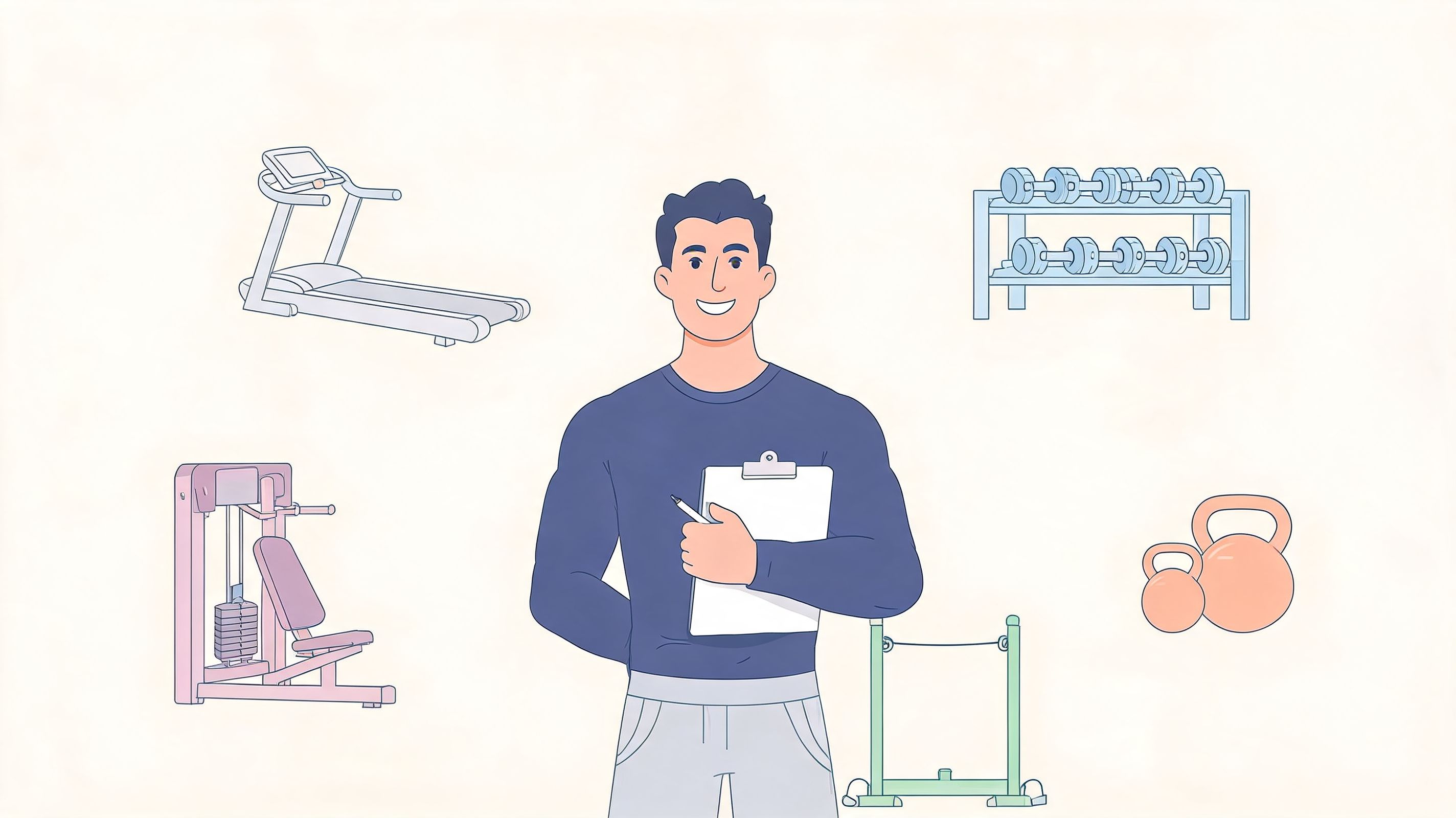
A new LA Fitness opening nearby can rattle even experienced operators. You see the signage, hear the pre-sale buzz, and start picturing a huge floor packed with treadmills, cable stations, racks, courts, and a pool your members will ask about by the end of the week.
That reaction is normal. It’s also incomplete.
The useful question isn’t whether LA Fitness has a lot of equipment. It’s why they choose that mix, what message that sends to prospects, and where that strategy creates openings for everyone else. When you study equipment at la fitness as a business system, not a machine list, the playbook gets clearer. They sell accessibility, breadth, and enough training variety to keep a broad member base from drifting out.
An LA Fitness Opened Nearby Now What
The first mistake independent gyms make is trying to out-LA-Fitness LA Fitness. That usually turns into reactive buying, rushed promotions, and a floor filled with equipment nobody had a real plan for.

A better response starts with diagnosis. LA Fitness was founded in Southern California in 1984 and built its identity around broad amenity coverage, including full-sized basketball courts, racquetball courts, Junior Olympic-size swimming pools, and dedicated functional training areas maintained at 80°F to 84°F, according to the University of Nebraska at Omaha analysis of LA Fitness’s amenity strategy. That tells you they aren’t just competing for lifters. They’re competing for families, casual users, swimmers, hoopers, and people who want one membership to cover many habits.
What local operators usually miss
When a large chain enters the market, owners often obsess over equipment count. Members don’t shop that way. They compare outcomes and comfort.
They ask questions like:
- Will I feel intimidated there
- Can I get my workout done without waiting
- Does this gym fit my routine
- Will staff know me
- Is the price difference worth it
That’s where smaller operators can win. If your tour, sales follow-up, and website still sound generic, fix that first. Good positioning beats anxious discounting. Teams that need help tightening messaging and lead flow can learn from broader digital solutions for the fitness industry that connect local search, offers, and member conversion.
Practical rule: Don’t respond to a new chain by buying random machines. Respond by making your value easier to understand in the first five minutes of a tour.
Price pressure will come up, but don’t let it dominate the conversation. If prospects are comparing options, your staff should be prepared with a simple side-by-side value discussion, not a defensive apology. A useful starting point is this breakdown on how members compare gym prices when they’re deciding between budget, full-service, and specialized clubs.
Your first move this month
Do three things before the grand opening:
- Walk your own floor like a prospect. Note bottlenecks, clutter, dead zones, and machines people avoid.
- Rewrite your tour path. Lead with your strongest difference, not your front desk script.
- Decide who you won’t chase. If LA Fitness is better for broad, all-purpose traffic, narrow your message toward the members who value coaching, culture, speed, or specialization.
Panic creates copycat gyms. Clarity creates defensible ones.
Decoding the Cardio and Selectorized Machine Floor
The cardio and selectorized machine area is where LA Fitness does some of its smartest work. This part of the floor doesn’t exist to impress advanced lifters. It exists to remove fear.

Rows of treadmills, bikes, ellipticals, chest presses, lat pulldowns, and leg machines send a simple signal. A new member can walk in, recognize what to do, and start without a coaching session. That matters because the mass market usually buys confidence before it buys programming sophistication.
Why this equipment mix works
Selectorized strength machines are efficient sales tools because they make exercise feel manageable. Pin-loaded resistance, fixed movement paths, and familiar labels lower the chance that a beginner feels lost. Cardio does the same job. People may not know how to structure a full strength plan, but they know how to step on a treadmill.
That’s part of the larger commercial context. The home fitness category remains strong. The global home fitness equipment market was valued at $12.88 billion in 2025 and is projected to reach $22.99 billion by 2034, while North America held 37.46% of that market in 2025, according to Fortune Business Insights on home fitness equipment. If consumers can do simple cardio at home, clubs have to make in-gym training feel easier, broader, and more complete from day one.
The glute machine decision says a lot
LA Fitness hasn’t stayed frozen in old-school selectorized layouts. It has retrofitted updated facilities with dedicated glute-drive machines, including Matrix Glute Drive or plate-loaded Nautilus variants, according to this review of the LA Fitness hip thrust machine rollout. The business logic is strong.
These machines give members a lower-friction path to a popular movement pattern without the setup headaches of barbell hip thrusts. Belt systems reduce instability and keep tension through the movement. For the operator, that means easier coaching, faster turnover, and less intimidation on the floor.
A trendy machine only earns its footprint if members can use it quickly and repeatedly.
That’s the part many owners miss. Buying specialized equipment isn’t enough. The right specialty piece fits mainstream behavior.
What gym owners should copy and what they shouldn’t
A useful filter is accessibility first, novelty second.
- Copy the low-barrier core. Keep enough cardio and easy-to-understand strength machines for deconditioned adults, older users, and beginners.
- Add specialization selectively. One or two well-chosen machines tied to current demand can freshen the floor without confusing the brand.
- Don’t overcrowd the room. If equipment creates visual noise or traffic jams, prospects feel stress instead of possibility.
Maintenance also matters more on this side of the floor because downtime is visible and beginners notice broken equipment fast. If your team needs a tighter system to reduce OPEX with preventive maintenance, treat that as a retention tool, not a back-office task.
For operators reevaluating their machine mix, this guide to the best gym machines is a useful internal benchmark for deciding what deserves space and what should leave.
The Powerhouse Free Weights and Functional Zones
If the machine floor casts the wide net, the free weight area anchors credibility. Serious lifters, personal trainers, and high-frequency members judge a gym fast in this zone.

LA Fitness weight rooms are built with over 20,000 pounds of free weight capacity, including dumbbell sets from 5 pounds to 100 pounds, according to the company’s overview of what to expect when joining LA Fitness. That’s more than a brag line. It solves a very practical problem. Members stick around when they can train progressively without constant compromises.
Why this matters for retention
Advanced and intermediate members don’t cancel because your logo looks weak. They cancel because the room stops working for them.
Free weight depth affects all of these:
| Training need | What adequate inventory does | What poor inventory causes |
|---|---|---|
| Progressive overload | Supports long-term strength progression | Forces stalled jumps in load |
| Peak-hour flow | Reduces waiting and equipment hoarding | Creates frustration and shortened sessions |
| Trainer programming | Gives coaches flexibility | Makes programs repetitive and limited |
| Member perception | Signals seriousness and competence | Signals compromise |
That’s why the functional zone matters too. LA Fitness facilities include dedicated areas with racking systems, kettlebells, dumbbells, and cushioned turf, as covered earlier in the amenity discussion. This setup broadens use cases. Trainers can run movement prep, circuits, core work, sled-style patterns, and small-group sessions without fighting over the same bench stations.
What works on a competitive floor
Independent gyms don’t need to match LA Fitness pound for pound. They do need to avoid the mistakes that make their strength area feel second-rate.
A better standard looks like this:
- Range before rarity. Complete dumbbell runs and enough plate access matter more than obscure niche bars.
- Space to move. Lifters remember cramped aisles and awkward deadlift spacing.
- Trainer usability. If coaches can’t build varied programs, training revenue suffers.
- Functional equipment with purpose. Kettlebells, turf, ropes, and racks should support actual programming, not decorate a corner.
Operator lens: Your strongest members don’t need luxury. They need availability, progression, and room to work.
There’s also a positioning choice here. If your facility can’t justify a large free weight footprint, don’t fake it. Build a cleaner promise around coached small-group strength, recovery, sport-specific work, or a women-focused training environment. If you are investing in iron, be disciplined about acquisition. This guide on buying used exercise equipment can help owners stretch capital without creating a mismatched floor.
The takeaway is simple. Free weights aren’t just equipment. They are retention insurance for your most vocal and influential members.
Building a Community Hub with Courts and Pools
A new LA Fitness opens across town, and the first thing many owners do is count treadmills and racks. That misses the bigger threat. Courts and pools change the sales story because they turn the club into a weekly destination for more than one reason.
As noted earlier, LA Fitness uses basketball courts, racquetball courts, and large pool areas to widen its appeal beyond straight fitness use. From an operator standpoint, that matters because replacement gets harder once a member uses the club for training, recreation, family time, and social habits instead of a single workout.
Equipment-heavy competitors can win the initial tour. Multi-use amenities help them keep the membership.
Why these amenities hold members longer
Cardio can be replicated at home. A standing basketball run, lap swim routine, or kids-related pool visit usually cannot. Those activities create recurring visit patterns that survive motivation dips better than solo workouts do.
They also pull in different decision-makers within the same household. One person may join for strength training. Another values the pool. A teenager wants basketball. That mix lowers churn because cancellation becomes a family decision, not an individual one.
For gym owners, the lesson is strategic, not architectural. Courts and pools do four jobs well when they are managed correctly:
- Expand the buyer pool. You are no longer selling only to people who compare benches and ellipticals.
- Create extra visit reasons. Members show up for leagues, swim time, pickup games, and group activity.
- Support programming revenue. Aquatics, youth offerings, and organized court use can add paid services.
- Build local habit. Members start referring to the club as the place they go, not just the gym they joined.
That last point carries more weight than many operators realize. A room full of machines is easy to compare on price. A club that functions as part of a member's routine and social calendar is harder to price-shop.
Should smaller gyms try to match this
Usually, they should not.
Pools are expensive to maintain, staff, clean, heat, insure, and schedule well. Courts consume square footage that might produce more revenue if it were used for training floor, group coaching, recovery services, or leased specialty programs. LA Fitness can absorb those trade-offs because its model is built around broad appeal at scale. A focused independent gym often gets a better return by being sharper, not bigger.
I have seen owners chase this category halfway. They add one underused court, offer limited recreation hours, then wonder why the space underperforms. The problem is rarely the amenity itself. The problem is weak programming and a business model that cannot support the operating cost.
A better decision framework is simple. Choose whether your brand is built around breadth or depth.
If you want breadth, commit to family use, scheduling systems, staffing, and programming that keep those spaces active. If you want depth, invest in a stronger core promise and sell it hard. That could mean coached strength, women-focused training, athletic development, adult small-group conditioning, or a cleaner and less chaotic experience than a big-box club can deliver.
Members accept fewer amenities when the experience is specific, consistent, and clearly better for their goal.
That is the true competitive read on LA Fitness here. Their courts and pools are not side features. They are retention tools, household acquisition tools, and a hedge against at-home fitness. Independent gyms do not need to copy that formula. They need to decide, with discipline, whether they are building a community recreation asset or a focused training business.
Selling Against LA Fitness Equipment-Focused Templates
Most gyms lose equipment comparisons in the sales office, not on the floor. Staff hear “They have more stuff” and immediately retreat to price. That’s the wrong move.

Your team needs language that reframes the comparison. Equipment at la fitness is broad by design. Your sale happens when prospects realize broad isn’t always better for them.
A member tour script that actually works
Use a conversation like this during walk-throughs:
“LA Fitness offers a lot of variety. What matters more is whether you’ll use what’s here consistently. Let me show you the areas that match your goal, and I’ll explain how members typically build a routine around them.”
That line does three things. It acknowledges the competitor without sounding insecure. It shifts from quantity to relevance. It invites coaching.
Then tailor the rest of the tour:
If the prospect is a beginner
Start with your easiest on-ramp. Show simple cardio, guided strength machines, and any orientation process you offer.If the prospect wants strength results
Walk them straight to racks, dumbbells, plate storage, and your busiest coaching zone. Explain how your setup supports uninterrupted sessions.If they’ve had a bad big-box experience
Focus on navigation, cleanliness, staff visibility, and how quickly they can get help.
A marketing email for fence-sitters
You don’t need chest-beating copy. You need contrast.
Subject: Looking at LA Fitness and other gyms nearby?
Body:
If you’re comparing gyms right now, don’t just count machines. Look at how easy it is to train consistently.
Some clubs win on size. We win by helping members use the right equipment for their goals without feeling lost, waiting too long, or building their own plan from scratch.
If you want, reply with your main goal and we’ll tell you exactly which equipment and training options in our gym fit best.
That email works because it’s calm. It doesn’t attack the competitor. It lowers decision fatigue.
Train staff to sell meaning, not inventory
Here’s the rule I give sales teams. Every equipment mention should answer one of these:
- How does this help the member start
- How does this help them progress
- How does this save them time
- How does this make the gym feel less frustrating
If a team member says, “We have a lot of equipment,” that isn’t a selling point. It’s filler. If they say, “You won’t need to wait around to complete your strength workout after work,” that’s useful.
Gym Equipment Competitive Comparison Checklist
| Equipment/Amenity Category | Typical LA Fitness Offering | Your Gym's Offering | Competitive Angle (Your Advantage) |
|---|---|---|---|
| Cardio floor | Broad cardio selection aimed at accessibility | Fill in with your actual mix | Easier onboarding, shorter wait times, or better coaching support |
| Selectorized machines | Beginner-friendly guided strength options | Fill in with your actual mix | Better layout, cleaner flow, or more staff guidance |
| Free weights | Deep inventory built for broad usage | Fill in with your actual mix | Less crowding, more focused strength culture, or stronger trainer support |
| Functional area | Turf, kettlebells, racks, open-use training space | Fill in with your actual mix | More intentional programming or small-group coaching |
| Specialty machines | Trend-aware additions where demand is clear | Fill in with your actual mix | Better niche positioning for your core audience |
| Courts and pool | Lifestyle-club amenities in many locations | Fill in with your actual mix | More specialized experience without unused overhead |
| Cleanliness messaging | Public messaging may be less specific than members want | Fill in with your actual system | Visible sanitizing routines and stronger trust signals |
A checklist like this forces honest selling. It also exposes where your website and tour script are too vague.
Finding Your Edge Where LA Fitness Falls Short
A new LA Fitness opens three miles from your club. Tours get quieter for two weeks. A few prospects say the same thing: "They have everything."
That is the moment a lot of independent operators make the wrong move. They start chasing equipment count instead of sharpening position. LA Fitness wins with breadth. A smaller gym wins by giving a specific member a better reason to stay, buy training, and talk about the club to friends.
The gap is usually personalization, not inventory. Big-box equipment floors are built to serve a wide range of members with minimal friction. That model is efficient, but it also creates a generic training experience. If your club can prescribe, coach, and track better, you can compete without matching square footage or machine volume.
Prospects who compare you to LA Fitness are usually asking four business questions, even if they phrase them like equipment questions:
- Will I get a plan, or am I on my own?
- Will staff correct me before I waste three months?
- Will this place fit my age, injury history, or training goal?
- Will I feel progress fast enough to keep paying?
Answer those clearly and LA Fitness's scale starts to matter less.
I see three positions work well against chains like this.
The first is smart tracking. That does not require a showroom full of connected strength machines. It can be as simple as a training app, QR-based programs, body-composition reviews, or a coached onboarding sequence tied to equipment usage. The selling point is not the tech itself. The selling point is proof of progress.
The second is specialization. A club built for adults over 50, women new to strength training, athletes, or post-rehab members can outconvert a generalist if the equipment mix, staff language, and marketing all point to the same outcome. LA Fitness has to speak to everyone. You do not.
The third is accountability. It allows smaller gyms to produce better economics. If a member knows a coach will notice missed sessions, review load progress, and adjust programming, retention improves and personal training close rates usually improve with it. That is hard for a large chain to deliver consistently across a broad membership base.
Use that difference in your sales process. Do not argue that you have more machines. Show how your equipment gets used better. During tours, tie every area of the gym to a result, a member type, and a coaching system. On your website, replace generic claims about "state-of-the-art equipment" with specifics about who each zone serves and how members progress through it.
If you want help tightening that market position, Bruce & Eddy's keyword insights are useful for spotting how competitors frame broad offers and where a niche gym can claim more specific demand.
The mistake is trying to answer every chain advantage one by one. A better strategy is simpler. Be easier to choose for the member LA Fitness serves adequately, but not exceptionally well.
Your Action Plan for Cleaning and Retention
A prospect tours your club at 6:15 p.m. The cardio deck is busy, dumbbells are out, and one bench still has sweat marks from the last set. You can lose the sale right there, even if your equipment mix is better for that member than LA Fitness.
Cleaning is operations, but it is also positioning.
Large chains often win on square footage and equipment count. Smaller operators can win the moment members start asking a simpler question: will this place feel cared for every time I walk in? LA Fitness does not always make sanitation standards visible in its public-facing amenities content, and that creates an opening for independent clubs that run tighter floors and communicate better.
Use that advantage in ways members can see without asking. Post cleaning checklists at the front desk and in training zones. Have staff wipe cardio screens, pins, handles, benches, dumbbells, and attachments during peak hours, in plain view. Keep wipe stations full and easy to reach. If a dispenser is empty, members read that as a management problem, not a supply issue.
Then tie cleanliness to retention systems, not just janitorial tasks. Add a cleaning walkthrough to every shift lead checklist. Include locker rooms, bottle fillers, turf edges, and high-touch recovery tools. Mention your cleaning standards during tours, in day-one onboarding, and in win-back emails to inactive members. Prospects rarely remember the exact treadmill brand. They do remember whether the club felt orderly and monitored.
If you want a straightforward product recommendation, stock Wipes.com Disinfectant Wipes and make them part of the member experience, not just a janitorial supply.
Clean clubs keep members longer because the floor feels supervised, standards feel real, and the business looks disciplined. That is the message gym owners should take from LA Fitness. Do not just compete on equipment. Show members your club is managed better.
If you want more practical breakdowns like this one, along with sales templates and gym growth tactics, visit Gym Membership Tips.
Leave a Reply