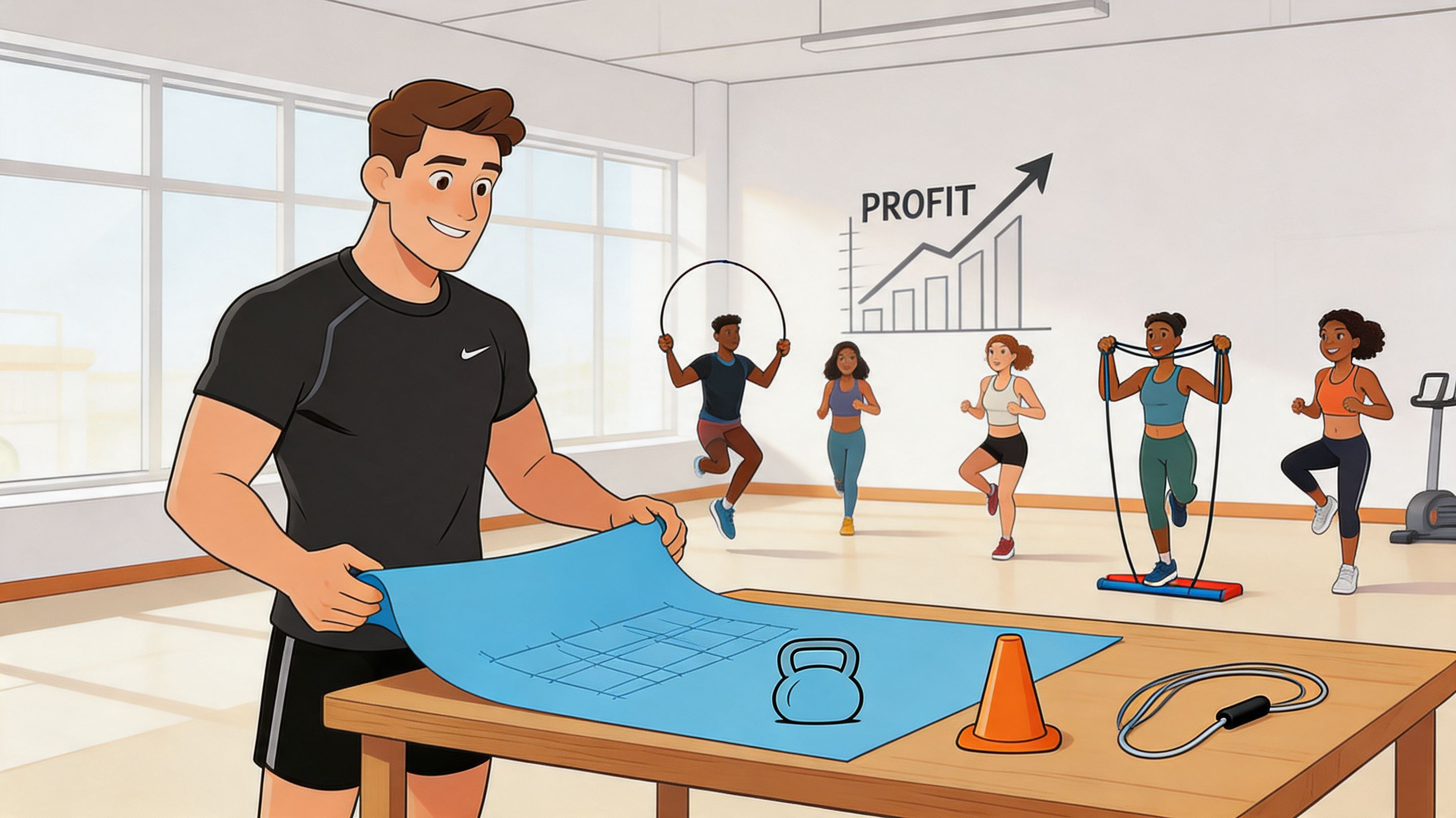
You can usually tell when a gym is ready for a cardio boot camp before the owner says it out loud. The cycle looks familiar. Treadmills are busy at one hour and empty the next. Group fitness has a few loyal regulars but not much momentum. New leads ask for fat loss, accountability, and something “that keeps me going,” while long-time members drift into low-usage behavior that eventually turns into cancellations.
A well-built cardio boot camp solves several of those problems at once.
Done poorly, it becomes another exhausting class on the schedule. Done well, it becomes a repeatable profit center with strong perceived value, a clear sales story, and a community effect that standard floor access rarely creates on its own. The difference is rarely the workout alone. It comes from operations, packaging, instructor control, and a launch plan that treats the program like a product, not a side activity.
The Business Case for Cardio Boot Camps
Gym owners often frame cardio boot camp as a programming choice. I treat it as a business decision.
The reason is simple. Most gyms don't need more random classes. They need offers that fill underused hours, give sales staff a sharper conversation, and help members feel progress quickly enough that they stay engaged. Cardio boot camp checks those boxes because it bundles effort, structure, coaching, and community into one offer that feels more valuable than open-gym access alone.
The market gap is real. In 2020, only 24.2% of U.S. adults aged 18+ met federal Physical Activity Guidelines for both aerobic and muscle-strengthening activities, according to the CDC physical activity data brief. That leaves a very large group of people who don't need more information. They need a format that makes exercise easier to start and easier to stick with.

Why owners get traction with this format
A cardio boot camp gives your team a clearer promise than “come use the gym.” You can sell energy, coaching, progression, and accountability in one sentence. That matters at the front desk, in paid ads, and in follow-up calls with leads who don't want to build their own workouts.
Three business benefits show up fast:
- Better use of slow hours: Early morning, late evening, and mid-morning windows often underperform. Boot camp lets you turn those low-energy blocks into scheduled demand.
- Higher perceived coaching value: Members understand the value of being guided through a structured session more easily than they understand the value of access alone.
- Stronger social glue: People are more likely to return when others expect to see them.
Practical rule: If your gym has empty floor space at predictable times, you already have raw material for a cardio boot camp business.
Why this offer sells better than generic fitness
A cardio boot camp doesn't ask the prospect to design anything. That's one of its biggest commercial strengths. The customer doesn't need to decide what cardio machine to use, how long to train, what strength work to pair with it, or whether they're doing enough. Your program makes those decisions for them.
That convenience changes the sales conversation. Instead of selling square footage, you sell an outcome-oriented routine.
It also gives your staff a simple way to segment leads:
- Busy professionals want efficient sessions and scheduling certainty.
- Beginners want guidance and a non-intimidating entry point.
- Former members often want accountability more than access.
- Social exercisers want community and momentum.
What works and what doesn't
What works is positioning cardio boot camp as a flagship solution with a defined identity. Give it a name, a schedule, a result-focused promise, and a visible coach.
What doesn't work is dropping “boot camp” onto the timetable with no product design behind it. When owners do that, the class feels interchangeable with every other circuit session the market has already seen.
A profitable cardio boot camp isn't just a workout. It's a sales asset, a retention tool, and an efficient way to make your gym feel alive at hours that used to drag.
Designing Your Signature Boot Camp Program
Most cardio boot camps fail because they feel assembled from leftover exercises. Members notice that immediately. They may still sweat, but they won't remember the experience, and they definitely won't describe it to friends in a compelling way.
Your program needs a backbone. The best starting point is session architecture.
Cardio boot camp programming typically centers on HIIT structured to maintain about 80% of maximum heart rate, and that format can deliver up to 600 calories burned per 30 to 60 minute session, with a 94% adherence rate in group settings compared to solo workouts, as described in this beginner boot camp guide. That tells you two important things. The training must feel purposeful, and the group experience matters as much as exercise selection.

Build the session before you choose the exercises
Start with a repeatable skeleton. Members don't need chaos. They need variety inside a recognizable structure.
Sample 60-minute cardio boot camp
Arrival and briefing: coach sets intent, checks injuries, explains stations
Dynamic warm-up: mobility, activation, light locomotion
Skill block: one movement pattern coached carefully
Main conditioning circuit: intervals with clear work and recovery windows
Finisher: short, high-energy team or individual challenge
Cool-down: breathing, mobility, reset, next-class reminder
That framework works because it balances safety, coaching, and intensity. It also gives your instructors room to express personality without compromising consistency.
Use formats members can understand quickly
You don't need endless complexity. You need a few dependable formats that can rotate without becoming stale.
HIIT circuit days
These are the backbone of most cardio boot camp schedules. Use stations like jump rope, dumbbell thrusters, row intervals, kettlebell swings, step-ups, and med ball slams. Keep transitions crisp and coaching cues short.
Best use case: broad appeal and easy onboarding.
AMRAP days
AMRAPs create a different energy because members track rounds and see clear effort. Choose movements that are easy to judge and scale, such as squats, push-ups, carries, bike calories, and sit-ups.
Best use case: member engagement and visible progress.
Team relay days
These are underrated from a business angle. Team relays create laughter, accountability, and social connection. They also make newer members feel part of something fast.
Best use case: community building and referral momentum.
Give the class your brand, not just your logo
A generic boot camp is easy to copy. A signature boot camp isn't.
That signature can come from several places:
- Your coaching voice: Some brands are military-sharp. Others are upbeat and welcoming. Pick one and stay consistent.
- Your movement bias: You may lean athletic, low-impact, strength-forward, or fat-loss focused.
- Your finishers: Signature closing challenges become memorable and shareable.
- Your language: Name blocks, themes, and milestone days in a way members remember.
If you want a useful primer on why interval structure resonates with so many members, MedEq Fitness has a solid overview of HIIT for fat loss and heart health. It helps coaches explain the appeal in plain language.
Program for freshness without randomness
Owners often confuse novelty with quality. Constantly changing every exercise creates confusion and weakens progression. Smart variation works better.
Rotate through movement categories instead:
- Lower-body power
- Upper-body push and pull
- Core and carry patterns
- Short cardio bursts
- Mobility-driven recovery work
A simple way to keep control is to build training in blocks. Hold onto key movements long enough for members to improve, then swap the surrounding pieces. That gives people the feeling of progress and the feeling of variety.
For operators expanding beyond large-group classes, this guide to small group training offers and structure is useful because the same design logic carries over into premium formats.
A weekly rhythm that usually works
Instead of loading every day with the same flavor of exhaustion, alternate emphasis.
- Day one: conditioning and lower body
- Day two: upper body and core
- Day three: relay or partner format
- Day four: low-impact conditioning
- Day five: benchmark or challenge day
That mix protects the member experience. It also helps your coaches cue better because they aren't forcing max intensity into every session.
Members come back for hard workouts. They stay for recognizable progress, a coach who sees them, and a format that doesn't feel recycled.
Equipping and Staffing for Success
A strong cardio boot camp doesn't require a warehouse full of gear. It requires the right tools, enough duplicates to avoid bottlenecks, and instructors who can coach a room without losing control of tempo or safety.
Too many owners overspend on flashy equipment before they've proven demand. Others go too lean and create sessions that feel improvised. The right answer sits in the middle. Buy for flow first.

Essential equipment
These are the pieces I’d secure before launch because they support broad programming and easy scaling.
- Kettlebells: Useful for swings, goblet squats, carries, deadlifts, and regressions.
- Dumbbells: More approachable than barbells for mixed-level groups.
- Exercise mats: Important for floor work, stretching, and member comfort.
- Resistance bands: Cheap, portable, and excellent for activation or low-impact resistance.
- Cones or floor markers: They improve station flow more than owners expect.
- Timers and visible interval displays: Members move better when they know where they are in the set.
- Jump ropes: Compact and effective, assuming you also provide alternatives.
- Benches or sturdy step platforms: Useful for step-ups, incline push-ups, and regressions.
If you're balancing a broader training floor with class programming, this rundown of best gym machines for member experience and programming mix can help you decide what belongs in shared space versus dedicated boot camp inventory.
Budget-friendly alternatives
You can run an impressive cardio boot camp before you buy premium toys.
- Sandbags instead of specialty strongman tools: Durable, versatile, and easier on the budget.
- Bands plus tempo work instead of large cable stations: Slower eccentrics and pauses can create plenty of challenge.
- Bodyweight station cards instead of extra hardware: Good coaching plus smart sequencing beats expensive clutter.
- Outdoor sprints, stairs, or parking-lot lanes: If your location allows it, these add variety at almost no equipment cost.
Instructor hiring must-haves
A great boot camp coach isn't just fit. They need room command.
Look for these traits first:
- Clear group communication: They can explain a drill fast and get the room moving.
- Sharp eye for form: They spot trouble before it turns into pain or embarrassment.
- Energy without theatrics: Members want motivation, not a performance.
- Confidence with modifications: This is absolutely necessary in mixed-level classes.
- Reliable tempo control: They know when to push and when to pull the room back.
One of the most overlooked commercial opportunities in cardio boot camp is low-impact programming. The need is obvious. As noted in this low-impact boot camp discussion, low-impact versions can burn comparably to high-impact work when full range of motion is used, and gyms can market “recovery boot camps” to retain 85% of novice members. That matters because a coach who can scale well doesn't just reduce risk. They widen your addressable market.
Safety systems that actually hold up
Most safety problems in group fitness come from speed, poor setup, and weak coaching transitions.
Use a simple operational checklist before every class:
- Floor clear: no loose gear in movement lanes
- Station spacing set: enough room for lateral movement and regressions
- Regression options visible: incline push-up station, lower-impact cardio option, lighter loads
- Instructor briefing complete: injuries, limitations, first-timers identified
- Cooldown planned: not improvised at the last minute
A scalable cardio boot camp is built around coaching discipline. If your instructor can't regress a movement in two seconds, the class is too complicated.
Pricing and Packaging for Profitability
Pricing a cardio boot camp is where many good ideas get diluted. Owners either undercharge because they compare it to open access, or they overcomplicate the offer and confuse buyers.
The cleaner approach is to price according to delivery model, commitment level, and the degree of support built into the package. Future Fit notes that launching a cardio boot camp for gym growth can follow a structured model, and that 10-week programs boost cardio-respiratory factors, cutting churn by 20-30% via 94% group adherence, while operators can also benchmark against 600 calories per session for pricing premium packages, according to their boot camp class guide.
That doesn't mean every gym should use the same number on the sales sheet. It means the market will often support stronger pricing when the offer feels coached, measured, and premium.
Three pricing models that work
Different buyers want different levels of flexibility. Build around that reality.
| Tier | Model | Price Point (Example) | Best For |
|---|---|---|---|
| Starter | Drop-in | Single class trial price | Curious prospects, travelers, former members testing the waters |
| Core | Punch card | Multi-class pack | Members who want structure without committing to a recurring add-on |
| Premium | Add-on or unlimited tier | Monthly upgrade attached to membership | High-frequency users who value accountability and routine |
How to choose the right model
Add-on membership
This is usually the strongest long-term play. It raises recurring revenue and positions cardio boot camp as part of the member’s lifestyle, not a one-off class purchase.
Best for gyms with an established membership base and front-desk staff who can explain upgrades confidently.
Potential downside: if your recurring billing systems are sloppy, disputes and missed payments eat into the upside. For operators tightening collections and subscription processes, this guide on managing club fees effectively is a practical reference.
Punch card package
This works well when your market values flexibility. It also helps if you're still validating schedule demand because members aren't forced into unlimited attendance.
Potential downside: punch cards create uneven attendance patterns. Great for cash flow today, less ideal for forecasting class fullness.
Drop-in rate
A drop-in option lowers friction for first-timers and gives your sales team a low-risk invitation. It should be an entry product, not your core model.
Potential downside: if too many members stay at drop-in level, you train a bargain-hunting audience rather than building recurring value.
A simple profitability lens
When I review cardio boot camp pricing, I ask four questions:
- Does the price reflect coaching, not floor access?
- Does the offer reward commitment?
- Can the front desk explain it in one sentence?
- Does the class feel premium enough to justify the package?
If the answer to the last question is no, pricing isn't your first problem. Delivery is.
Packaging ideas that improve margin
Try these combinations rather than selling the class in isolation:
- Membership plus boot camp upgrade
- Intro challenge package with assessment and milestone tracking
- Off-peak boot camp bundle for members who train outside prime time
- Recovery boot camp add-on for lower-impact participants
- Priority booking tier for high-demand class slots
The best pricing structure doesn't just collect money. It nudges members toward the attendance pattern that makes them more likely to stay.
Your Launch and Marketing Playbook
A cardio boot camp launch should feel like opening night, not a quiet timetable update. Momentum matters because group fitness sells better when people see demand forming in real time.
Your message also needs to be simple. Boot camp classes can burn approximately 600 calories per hour while sustaining an average heart rate of 80% of maximum in 45 to 60 minute sessions, according to this boot camp overview. For marketing, that means you can credibly position the offer around efficient, full-body conditioning for people who don't have time to waste.

A 30-day launch rhythm
I like to split the launch into four phases because each one has a different job.
Days 1 through 7
Name the program, lock the schedule, and brief the team. Your staff should know who it's for, how it differs from other classes, and what objection usually comes up.
Use in-gym signage, Instagram stories, email teasers, and front-desk scripts. Keep the message tight: coached, energetic, scalable, and time-efficient.
Days 8 through 14
Open a priority list before full registration. This does two things. It gauges demand and creates social proof before the first class.
Ask staff to invite:
- low-usage members
- new joins who need accountability
- prospects who said they wanted weight-loss support
- members who already enjoy classes
For extra promotion ideas that connect well with local gym audiences, this list of gym membership marketing ideas pairs nicely with a boot camp launch.
Days 15 through 21
Run a preview week. That might be one free taster class, one coach demo on the floor, and one behind-the-scenes content push showing setup, music, stations, and modifications.
This is the point where many operators hide behind polished graphics. Don't. Real faces beat polished design. Show the coach. Show first-timer options. Show the energy.
Days 22 through 30
Launch with urgency and visibility. Post class clips, celebrate founding members, and follow up quickly with every trial attendee. The first week after launch is where many conversions are won or lost.
Copy that works in real gyms
Promotional copy needs to sound like a real invitation, not ad agency filler.
“New cardio boot camp starts this month. Expect coached intervals, full-body training, scalable options for every level, and a class format that keeps you moving with purpose. If you want accountability and results without figuring it out alone, this is your slot.”
Here’s an email version you can adapt:
Subject: Our new cardio boot camp is open
We’re launching a new coached cardio boot camp built for busy members who want structure, energy, and a serious workout in a focused group setting.
Each session delivers full-body conditioning in a format that’s challenging, scalable, and easy to follow. If you’ve been looking for more accountability or a better reason to stay consistent, reply to this email and we’ll save you a spot in the first wave.
And a social caption:
Cardio boot camp is here. Fast-moving intervals, coached strength work, strong community, and no guesswork. First sessions open now. Message us to claim your place.
What makes launch day convert
Launch day isn't about max attendance alone. It's about making the room feel successful.
Use this checklist:
- Tight check-in process: no confusion at arrival
- First-timer briefing: every beginner knows where to stand and what to expect
- Visible modifications: nobody feels left behind
- Coach-led welcome: energy starts before the warm-up
- Post-class offer: every attendee gets a next step before leaving
After class, have staff ready with two options. One for commitment-minded buyers. One for hesitant buyers who need a lower-friction entry. Don't ask, “So, what did you think?” Ask, “Which option fits your schedule best?”
Driving Long-Term Retention and Referrals
A member joins cardio boot camp for one reason and stays for another. The join reason is often fat loss, accountability, or convenience. The stay reason is usually identity. They stop thinking of themselves as someone who should work out and start acting like someone who belongs there.
I’ve watched this happen repeatedly with members who arrive quiet, unsure, and half-convinced they'll disappear after a week. The turning point usually isn't a dramatic body transformation. It's smaller. The coach remembers their name. Their station partner notices they're improving. They finish a class they once would've quit.
That sequence matters because group fitness retention isn't built on novelty alone. There’s a business gap here too. As discussed in this boot camp retention and add-on pricing video reference, group fitness classes like boot camps can increase retention by 20-30% when bundled in memberships. The retention lift comes from the structure around the workout as much as the workout itself.
The member journey that creates advocates
A practical retention path looks like this:
- First class: staff welcome, low-friction onboarding, clear regressions
- Week one: coach follows up and confirms the next booking
- Early wins: simple progress markers, attendance streaks, encouragement in public and private
- Community attachment: partner drills, challenge weeks, shared milestones
- Advocacy: referral invite after the member feels successful, not before
The timing is critical. Many gyms ask for referrals too early. A member who is still anxious won't advocate confidently. A member who feels proud will.
Retention systems that outperform random enthusiasm
You don't need a complicated app stack to keep members engaged. You need rituals.
Use a few consistently:
- Benchmark days: repeat a familiar challenge so members can feel progress
- Attendance recognition: celebrate consistency, not just performance
- Coach check-ins: brief, personal, and specific
- Monthly themes: keep the calendar feeling fresh without scrambling programming
- Referral moments: ask after visible wins, not during uncertainty
If you want ideas for structuring referral incentives without turning them into awkward asks, LinkJolt has a helpful roundup of effective customer advocacy programs for small businesses.
The most referable cardio boot camp is the one members can describe in one breath: “It pushes me, the coach actually helps me, and I don't want to miss it.”
Keep the room clean and trust stays high
Cleanliness isn't a side note in retention. It's part of the product.
After each class, make staff responsible for wiping down kettlebells, dumbbells, mats, benches, and any shared touchpoints before the next session starts. Keep spray bottles, microfiber cloths, and disposal bins visible so members can see that hygiene is standard practice, not an afterthought.
For a simple, gym-friendly option, consider Wipes.com Disinfectant Wipes for fast post-class equipment sanitizing. They fit well in high-turnover training areas where speed matters and members notice the details.
A cardio boot camp that feels clean, organized, and professionally run tells members something important. This place cares whether they come back.
If you want more practical sales and retention ideas for programs like this, visit Gym Membership Tips.
Leave a Reply