The boutique gym franchise market isn’t a niche play anymore. It expanded from USD 47.94 billion in 2023 to a projected USD 85.90 billion by 2030, a projection tied to demand for personalized workouts and community engagement, according to Business Ownership Coach’s boutique franchise market overview.
That number matters for one reason. It changes the question from “Is boutique fitness viable?” to “Which path gives you the best shot at building a durable business?”
I’ve seen two very different owners win in this space. One buys into a proven system, follows the playbook, and focuses on execution. The other starts with one strong studio, turns that local success into systems, then franchises the concept. Both can work. Both can also fail for predictable reasons.
The deciding factor isn’t passion for fitness. It’s whether the operator understands the financial model, the operational discipline, and the level of control they want.
The Unstoppable Rise of Boutique Fitness
Boutique fitness has moved from trend to category leader. Consumers aren’t only paying for access to equipment anymore. They’re paying for identity, coaching, accountability, and a room full of people who make them want to come back.
That shift is visible in the way the market has grown, but also in how owners are structuring their businesses. Boutique studios work with tighter footprints, narrower offers, and sharper positioning than a traditional gym. That focus is what makes the model attractive. It can be simpler to sell, easier to market, and more memorable when the experience is strong.
Why this model keeps pulling capital
Boutique concepts win when they solve a specific member problem. Strength with coaching. HIIT with energy. Pilates with precision. Recovery with lifestyle appeal. The member knows what they’re buying before they walk in.
That clarity changes everything:
- Sales gets easier: Staff can explain the offer in a sentence.
- Marketing gets cleaner: Creative doesn’t need to appeal to everyone.
- Retention improves: Members build habits around a format, not just a facility.
- Community forms faster: People identify with the class style and the instructor team.
A lot of operators underestimate how powerful that last point is. In a boutique setting, the member experience starts before the workout begins and continues after class ends. The front desk greeting, the instructor’s ability to remember names, the post-class conversation, the app flow, and the feel of the studio all carry weight.
For owners studying the category more broadly, this boutique fitness studio resource is a useful next step because it shows how the studio model differs from the old volume-based gym approach.
Opportunity behind the headlines
The biggest mistake I see is treating boutique fitness growth as automatic. It isn’t. Demand is there, but the winners still earn it through disciplined operations.
Boutique doesn’t give you permission to be loose. It punishes sloppy staffing, vague positioning, and inconsistent member experience faster than a broad-market gym.
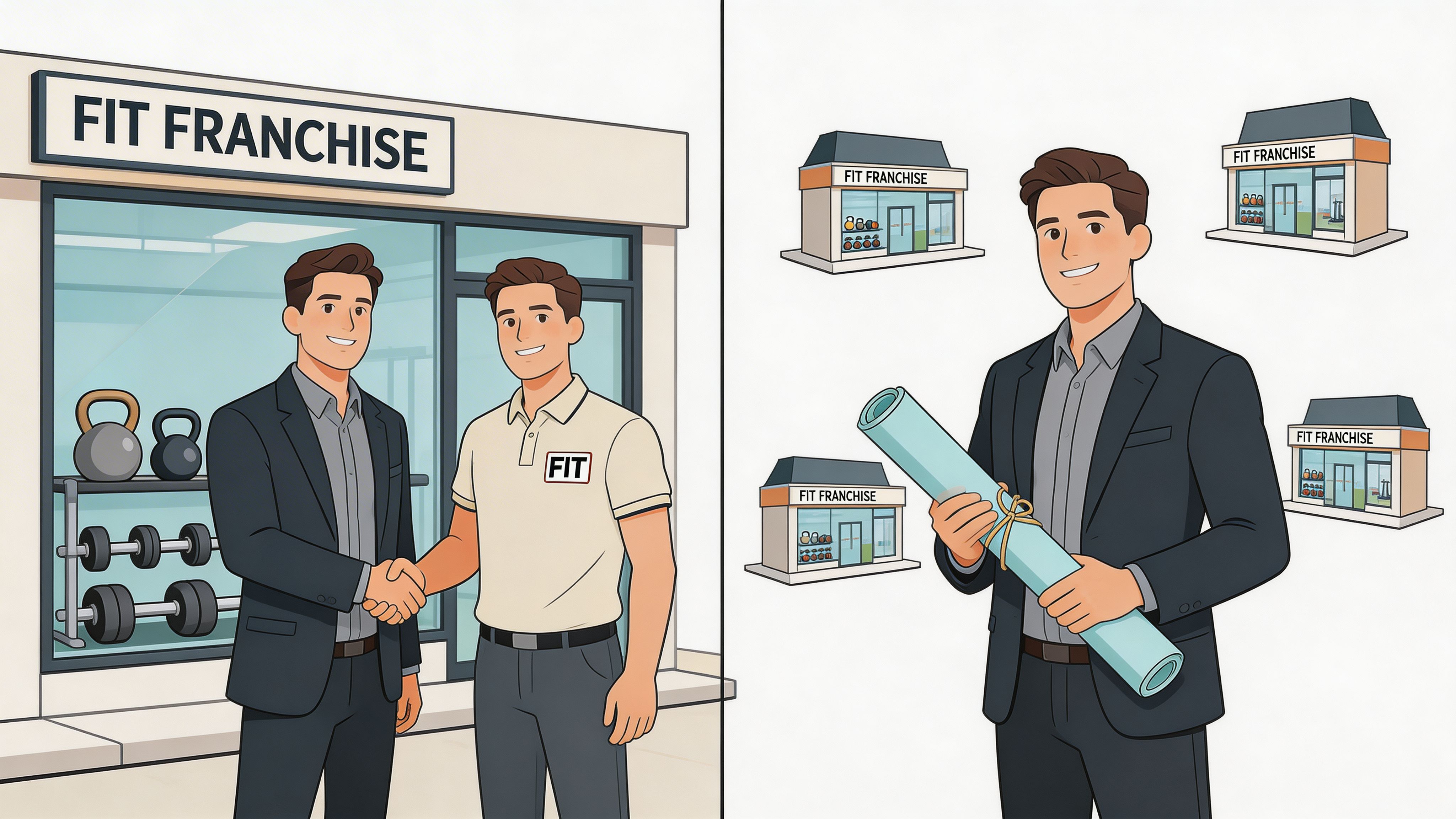
That’s why the buy-versus-build decision matters so much. If you want speed, support, and a proven operating structure, buying into a franchise may fit. If you already have a standout studio and want to scale your own brand DNA, building a franchise system may be the better play.
Those are not cosmetic differences. They affect your capital needs, your legal workload, your hiring model, and your tolerance for operational complexity.
Choosing Your Path Buy or Build a Franchise
Boutique fitness studios now command over 40% of all gym memberships globally, reflecting demand for immersive environments built around personalization, recovery, and lifestyle integration, as noted by Growth Factor’s boutique fitness franchise analysis. That creates room for both investors and founders, but the path you choose has to match your operating style.

Buy for built-in advantages
Buying a boutique gym franchise gives you speed. The brand has already solved major problems that kill independent concepts early: naming, positioning, programming structure, visual identity, launch process, and usually some level of training and marketing support.
That doesn’t mean it’s easy. It means you’re solving a narrower set of problems.
This path fits people who:
- Value a tested model: They’d rather improve execution than invent the system.
- Prefer defined standards: Brand rules feel helpful, not limiting.
- Want a faster route to opening: They don’t want to spend years refining one concept.
- See fitness as an operating business: They’re comfortable running within a framework.
The trade-off is obvious. You don’t control everything. If the franchisor changes brand direction, adjusts standards, or introduces initiatives you didn’t ask for, you still have to work inside that structure.
Build if you want ownership of the concept
Franchising your own studio is a founder move, not just a growth move. It only works when your current business is systemized, not when you have a popular local studio with a charismatic lead coach.
This path fits operators who:
- Have a differentiated brand: Their concept stands out clearly.
- Can document operations well: They know how to turn instinct into process.
- Want long-term brand control: They don’t want outside rules defining the offer.
- Can handle legal and structural complexity: They understand that scale requires infrastructure.
The trade-off here is weight. You carry the burden of building the franchise engine yourself. Legal setup, franchise sales, operations manuals, onboarding systems, compliance, and support all become your responsibility.
Buy vs Build A Head-to-Head Comparison
| Factor | Buying a Franchise (Investor Path) | Building Your Own Franchise (Founder Path) |
|—|—|
| Brand | You inherit an established identity and market position | You create and defend the brand yourself |
| Control | You operate within franchisor rules | You decide the standards and evolution |
| Speed to market | Usually faster because systems already exist | Slower because you must build the systems first |
| Support | Training, launch help, and operating guidance are typically available | You must create support infrastructure for future franchisees |
| Risk type | Less concept risk, more dependence on franchisor quality | More concept risk, more upside if your model scales |
| Creativity | Limited by brand standards | High, but only useful if paired with discipline |
| Scalability | Easier for the single-unit or multi-unit investor | Better for founders building long-term enterprise value |
| Best fit | Operators who want a proven business model | Studio owners with a concept worth replicating |
What usually doesn’t work
Some buyers want franchise support but resist franchise discipline. That’s a bad combination. If you’re going to challenge every standard, you probably shouldn’t buy.
Some founders want to franchise because one location feels successful. That’s also dangerous. A strong studio is not the same as a franchisable model. If your results depend on your own classes, your personal sales ability, or local relationships only you can maintain, you don’t have a franchise yet. You have a founder-led business.
Decision test: If removing you from daily operations would break the model, don’t franchise it yet.
A boutique gym franchise works best when the owner is honest about what they’re buying. If you’re buying certainty, accept the rules. If you’re building legacy, accept the complexity.
Your Guide to Buying a Boutique Gym Franchise
Buying into a boutique gym franchise is less about finding the hottest brand and more about finding a model you can operate well for years. Good buyers ask hard questions early. Bad buyers fall in love with the concept before they understand the agreement.

Boutique gym franchises achieve retention rates of 75.9% compared to 71.4% for traditional gyms, driven largely by community-focused group classes and hybrid in-person and digital offerings, according to Athletech News on fitness franchising by the numbers. That’s encouraging, but you still need to verify whether a specific brand executes that promise consistently across locations.
For a broader cost lens before you start evaluating specific brands, this guide on the cost of gym franchise can help frame the questions you need to ask.
Start with the operator, not the logo
A franchise can give you a strong system. It can’t make you a strong operator. Before you review brands, get clear on a few practical points:
- Your role: Are you owner-operator, semi-absentee, or building a small portfolio?
- Your strengths: Sales, staffing, finance, community building, or none of the above?
- Your tolerance for process: Can you follow standards consistently?
- Your local market reality: Does the audience match the concept?
A premium boutique concept can underperform if the operator expects the brand to carry every sale. Brand awareness helps. Daily execution closes.
Read the FDD like a buyer, not a fan
The Franchise Disclosure Document is where the romance should end and the analysis should begin. Too many buyers skim it, then rely on sales conversations to fill in the gaps.
Focus on what affects your real operating life:
Fee structure
Understand the initial fee, the ongoing royalty obligations, and any required contributions to marketing or technology. What matters isn’t whether fees exist. It’s whether the economics still work after them.Territory terms
Ask how protected your area is. If another unit can open too close to you, your growth ceiling may be lower than you think.Training and support
Find out what happens before opening and what continues after launch. Some franchisors are excellent at opening support and weak at ongoing field guidance.Approved vendors and equipment rules
Required suppliers can protect quality, but they can also create cost pressure and delays.Renewal, transfer, and exit terms
A lot of owners ignore the back half of the agreement. Don’t. Know what happens if you want to sell, renew, or walk away.
Ask yourself one simple question while reading the agreement: “If things go sideways, how boxed in am I?”
Talk to franchisees who aren’t on the happy list
You need conversations with owners at different stages. New. Mature. High-performing. Average. Struggling.
Ask practical questions:
What did the franchisor promise during discovery, and what happened after opening?
Where do you spend more time than expected: sales, staffing, community events, follow-up, or admin?
If you were starting over, what would you negotiate more?
Those conversations tell you more than polished discovery day presentations.
Underwrite the business with caution
The biggest financial mistake in franchise buying is assuming best-case ramp-up. Conservative underwriting protects you from false confidence.
Use your own model. Build scenarios. Pressure-test occupancy assumptions, labor needs, opening delays, and slower-than-expected member conversion. If the business only works when everything goes right, it doesn’t work.
A few points matter more than founders expect:
- Pre-sale discipline: Opening with weak lead flow creates months of catch-up.
- Labor design: Boutique service quality depends on the right instructor and front desk structure.
- Class schedule logic: Too many classes too early can burn payroll before demand is there.
- Local marketing capacity: National branding rarely replaces neighborhood-level hustle.
Site selection can rescue or ruin the model
A boutique gym franchise doesn’t need the same real estate as a large-format club, but it does need the right local pattern of movement and convenience. I’d rather have a simpler space in the right trade area than a beautiful studio in the wrong one.
Look hard at:
- Member convenience: Can people get in and out easily before work, at lunch, and after work?
- Co-tenancy: Are you near businesses and services your target member already uses?
- Parking and visibility: Friction kills trial.
- Neighborhood fit: A concept has to match the area’s habits and expectations.
Financing is part strategy, part discipline
Most buyers spend too much time asking where the money will come from and not enough time asking whether the deal deserves the money. Lenders care about the model, but they also care about your plan.
Bring order to the process:
- Build a use-of-funds worksheet: Separate one-time launch costs from working capital.
- Prepare your personal financial documents early: Delays here are common and avoidable.
- Get legal review before final commitment: A franchise attorney is not optional.
- Keep a cushion: Openings rarely unfold on schedule.
If you buy right, the franchise can shorten your learning curve dramatically. If you buy based on hype, the same franchise agreement can turn into an expensive lesson.
How to Franchise Your Own Boutique Gym
Franchising your own studio is where a lot of talented operators get humbled. Running one excellent location and building a franchise organization are different jobs. The first is about delivery. The second is about replication.

If your studio works because you teach the best classes, know every member, and personally solve every issue, you’re not ready yet. A franchise system has to work in the hands of someone who didn’t build the original magic.
Prove the concept before you package it
The first test is simple. Can another manager operate the business to your standards without you touching every decision?
You need evidence that your offer is transferable. That means your class format, pricing logic, sales process, staff training, member onboarding, and service standards can be repeated by someone else. If they can’t, document first and franchise later.
I look for three signs of readiness:
- The brand is clear: People understand what the studio does and who it serves.
- The operation is teachable: New staff can learn the system without founder interpretation.
- The economics are coherent: The business can support both the operator and the franchise structure.
Turn instincts into systems
Most founders operate with hidden knowledge. They know when to add a class, how to save a member at risk, which instructor can anchor a launch week, and how to spot a weak lead before the consult even starts. None of that scales until it’s written down.
Build an operations manual to cover the work that drives outcomes:
| Area | What needs to be documented |
|---|---|
| Sales | Lead handling, consultation flow, trial conversion, follow-up timing |
| Coaching | Class standards, cueing expectations, member interaction rules |
| Front desk | Opening tasks, closeout process, guest check-in, service recovery |
| Management | Schedule planning, payroll review, staff meetings, issue escalation |
| Brand | Tone, visuals, experience standards, community expectations |
This manual can’t read like a motivational speech. It needs checklists, scripts, standards, and decision rules.
A franchisee doesn’t buy your passion. They buy your ability to make the business executable.
Get the legal structure right
Founders need specialized help with legal structure. Franchising isn’t a casual expansion strategy. You need a franchise attorney to prepare the legal documents and make sure your structure aligns with the jurisdictions where you plan to offer franchises.
The legal package is only part of the issue. You also need to decide what you’re promising franchisees. Training. launch support. software stack. marketing assets. field coaching. brand governance. All of that has to be resourced.
Common founder mistakes include:
- Selling early: They recruit before support systems are built.
- Overpromising access: Every franchisee expects founder-level attention forever.
- Underbuilding the back office: Support becomes reactive and chaotic.
- Ignoring franchisee fit: They sell to buyers with money but no operating discipline.
Build the support model before the sales model
A lot of founders focus on franchise lead generation first. That’s backward. Your sales process matters, but your support model is what protects the brand.
Think through the franchisee journey:
Discovery and qualification
Define who the right franchisee is. Don’t just say “passionate about fitness.” Decide what skills, time commitment, and management style fit your concept.Onboarding and training
New franchisees need a defined path. Brand immersion, operations, sales training, hiring guidance, launch readiness, and post-opening coaching all need structure.Field support and accountability
Decide how you’ll review performance, identify issues, and intervene when a location drifts from standard.Brand consistency
Protecting the concept doesn’t mean becoming rigid for the sake of it. It means preserving the elements that make the member experience work.
Recruit partners, not purchasers
The best franchisees ask tougher questions. That’s a good sign. They want to understand the model, the support, and the practical realities. Weak buyers often focus only on surface-level excitement.
Use a qualification process that screens for:
- operational maturity
- financial discipline
- coachability
- hiring judgment
- willingness to follow standards
- local market understanding
A bad franchisee damages more than one unit. They weaken the brand for every other operator in the system.
Don’t scale culture by accident
The strongest boutique concepts scale culture intentionally. They define how instructors greet members, how staff follow up after absence, how community events are run, and how member wins are celebrated. Culture can be taught if you stop treating it like a vibe and start treating it like a standard.
If you want to franchise your boutique gym, build the machine before you sell the dream.
Fueling Growth for Your Franchise Location
Opening is a milestone. Retention, referral energy, and stable local demand are what make a boutique gym franchise worth owning over time.

One of the most overlooked drivers of performance is instructor stability. Growth Factor’s discussion of boutique franchise blind spots notes that a 2026 report found 57% of consumers join for social connection, and it also highlights industry-average instructor turnover of 30-40% as a serious risk to profitability and community stability. That tracks with what operators feel on the ground. Lose the wrong instructor, and member confidence can wobble fast.
For owners working on local demand generation, this guide on marketing a gym pairs well with the retention principles below.
Community is not the soft side of the business
Community gets talked about like a nice extra. It isn’t. In boutique fitness, it’s part of the product.
A member may say they joined for the workout. Many stay because the staff knows them, the room feels familiar, and missing class means missing people. That’s why instructor turnover hurts more in boutique than many owners expect. You’re not just replacing labor. You’re disrupting relationship equity.
Protect that asset with deliberate management:
- Hire for presence, not just certification: Technical competence matters, but connection matters too.
- Shadow before solo coaching: Let new instructors learn the room standard.
- Standardize member interaction: Greeting, corrections, encouragement, and post-class touchpoints should not be random.
- Create instructor career paths: People stay longer when they can see progression.
If your top instructor disappeared tomorrow, would members trust the next person on the mic? Build the answer to that question before you need it.
Growth tactics that support retention
Many operators chase volume and then wonder why the room feels unstable. Better growth starts with offers and communication that fit the boutique model.
Membership design
Avoid overcomplicating the menu. A boutique offer works best when members can understand it quickly and choose with confidence.
Good packaging usually includes:
- A clear entry point: Trial or intro offer with defined next steps
- A core recurring option: The offer most members should land on
- A premium tier: Extra access, perks, or accountability for higher-intent members
The goal isn’t to build a clever pricing sheet. It’s to reduce hesitation.
Local partnerships
Boutique brands grow faster when they show up in the same ecosystem as their ideal members. Think physical therapists, healthy food concepts, beauty and wellness businesses, apartment communities, and employer wellness contacts.
The right partnerships do three things:
- create trust by association
- put the brand in front of qualified prospects
- make the studio feel embedded in the neighborhood
Content and search visibility
Studios that rely only on social posting leave too much demand untapped. You need search visibility for branded, local, and intent-driven terms. If your team needs a stronger foundation, Outrank’s guide to gym SEO best practices is a solid tactical resource because it focuses on the practical elements owners can apply at the location level.
Use systems that keep people engaged
Retention starts before someone misses class. It lives in the small systems:
| System | What it should accomplish |
|---|---|
| First-week onboarding | Build confidence, reduce uncertainty, create early habit |
| Attendance review | Catch drop-off before cancellation becomes likely |
| Instructor feedback loop | Surface member concerns while they’re still fixable |
| Win recognition | Reinforce progress and belonging |
| Reactivation outreach | Bring back drifting members with a personal touch |
Many franchisees become too passive here. The CRM can automate reminders, but it can’t replace a smart personal message from a coach or manager who noticed someone disappear.
What doesn’t work long term
Some patterns look productive and erode the business:
- Overstuffed launch schedules: Empty or half-full classes weaken social proof.
- Promo addiction: Constant discounting trains members to wait.
- Founder-centered community: If only one personality carries the culture, scale gets fragile.
- Ignoring service recovery: Small frustrations become cancellations when no one owns follow-up.
A profitable boutique gym franchise location feels personal, but it runs on systems. That’s the balance that keeps growth from becoming chaos.
Building Your Legacy in the Fitness World
A boutique gym franchise can be a smart investment or a serious expansion vehicle. The difference comes down to fit and discipline.
If you buy, win through due diligence, site selection, staffing, and daily execution. If you build, win through systemization, legal readiness, franchisee quality, and support infrastructure. In both cases, the flashy part is the launch. The durable part is the operating model.
The owners who last don’t confuse brand energy with business strength. They track the member experience closely, protect instructor quality, and keep the studio environment consistent. That consistency becomes your reputation. Over time, it becomes your legacy.
Cleanliness is part of the premium experience
Boutique members notice cleanliness fast. They notice sweat marks on benches, smudged mirrors, dusty corners, sticky floors, and cluttered bathrooms. They also notice when everything feels fresh, reset, and cared for.
Use simple, essential practices:
- Wipe high-touch surfaces regularly: Dumbbells, mats, bikes, rowers, door handles, and front desk counters need frequent attention.
- Reset after every class block: Don’t let the room carry visible residue into the next session.
- Give staff ownership by zone: Assign responsibilities so nothing becomes “someone else’s job.”
- Stock sanitation visibly: Members should never have to search for cleaning supplies.
- Audit locker rooms and restrooms often: Premium studios lose credibility fast when these areas slip.
For day-to-day convenience, I recommend keeping Wipes.com Disinfectant Wipes on hand for fast cleaning of equipment touchpoints and front-of-house surfaces. They make it easier for staff to maintain a polished environment between classes without slowing down the operation.
A clean studio supports retention because it reinforces trust. People come for the workout, but they renew when the whole experience feels well run.
If you want more practical guidance on selling memberships, improving retention, and tightening your gym’s growth systems, visit Gym Membership Tips.
Leave a Reply