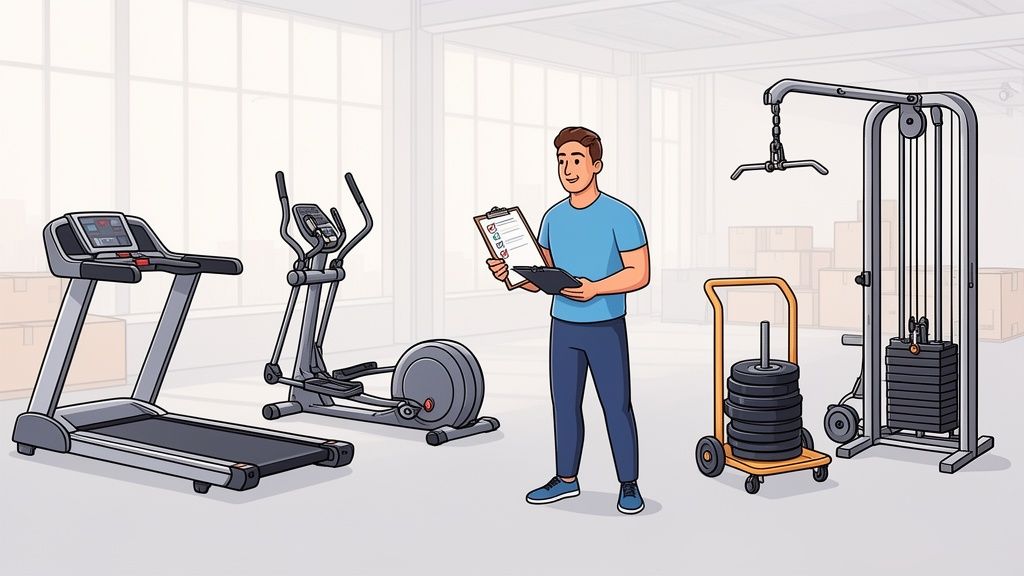
Ready to build a world-class gym without that heart-stopping price tag? Let's talk about one of the smartest moves you can make as a gym owner: buying commercial gym equipment used. This isn't about cutting corners; it's about getting premium, bomb-proof machines for a fraction of the price—we're talking 50-70% off retail! It’s a brilliant financial play that lets you pack your floor with top-tier brands and make every single dollar work harder.
Why Buying Used Commercial Gym Equipment Is a Genius Move

First, let's bust a huge myth. Opting for used commercial gear isn't a sign that you're on a shoestring budget. It's a strategic, savvy decision made by experienced operators who know where to find incredible value. You can outfit your entire facility with the exact same high-performance brands your members already know and love—think Life Fitness, Precor, and Cybex—without completely draining your capital.
Just picture it: a new member walks in and sees a floor full of equipment they'd expect to find at a major national chain. That first impression is golden. It instantly elevates your gym's status and shows you’ve invested in genuine quality, not just shiny new objects.
Maximize Your Budget and Impress Your Members
The number one reason to go this route is, without a doubt, the mind-blowing cost savings. A single brand-new commercial treadmill can easily set you back over $10,000. Find a gently used or professionally refurbished model, though, and you could snag it for half that price. That’s real money you can put to work elsewhere.
Instead of agonizing over whether to get a full cardio lineup or a complete strength circuit, you can suddenly afford both. This smart spending directly fuels your ability to offer a diverse, exciting workout experience that keeps members coming back for more.
Pro Tip: Buying used isn’t just about saving money—it's about maximizing value. You get more high-end equipment for your budget, which creates a better member experience and rockets you toward a faster return on investment.
These savings free up your cash for other things that are just as crucial, like a killer marketing campaign, top-notch staff, or those facility upgrades you've been dreaming of. For a deeper look at budgeting, check out our guide on the real cost of starting up a gym.
Gain Access to Superior Durability and Performance
Let's be clear: commercial-grade equipment is built like a tank. It’s engineered from the ground up to withstand constant, punishing use in busy gyms. Unlike the stuff made for home use, these machines feature:
- Superior, heavy-gauge steel frames
- More powerful motors and internal components
- Designs tested for thousands of hours of non-stop operation
This built-in durability means that even a piece of commercial gym equipment used for a few years has way more life left in it than a brand-new residential machine ever will. You're investing in true workhorses, which means less downtime, fewer repair calls, and a lot more peace of mind.
The market backs this up. The global commercial fitness equipment space is on track to hit a massive USD 9.25 billion by 2025. Here in the U.S., it’s projected to reach USD 2.7 billion, showing that high-quality gear is what truly drives a gym's success. You can see more details in recent commercial fitness equipment market research. This isn't just an expense; it's an investment in your gym's future revenue.
Where to Find High-Quality Used Fitness Gear
Finding incredible deals on commercial gym equipment used is an absolute thrill—it's like a treasure hunt for fitness pros. And guess what? I'm handing you the map. Forget wasting hours sifting through junk on generic marketplaces. We're going straight to the gold mines where seasoned gym owners find the best deals on high-performance gear.
The real secret isn't just knowing what to look for, but where. Sourcing from the right place can mean the difference between landing a full circuit of pristine machines and accidentally buying someone else's expensive, out-of-order headaches. Let's get into the top spots to uncover those hidden gems.
Tap Into the Gym Closure and Upgrade Cycle
Honestly, some of the best opportunities come from other gyms. This usually happens for two reasons: a facility is unfortunately closing down, or, more often, a successful gym is doing a full floor refresh and upgrading its inventory. Both scenarios are a massive win for you.
Think about it. When a high-end studio or a big-box gym decides to swap out its equipment, it needs to get rid of dozens of machines all at once. They aren't in the business of selling gear piece by piece on Facebook Marketplace; they want it all gone, and they want it gone fast. This is your chance to snag well-maintained equipment, often from premium brands, at an incredible discount.
To get a jump on these opportunities, you need to be the first to know. Setting up automated Gym Equipment Alerts can be a game-changer. You'll get notified the second a big lot of equipment hits the market in your area, giving you a massive head start on the competition.
Explore Professional Equipment Liquidators and Resellers
Another fantastic route to take is working with the dedicated pros: equipment liquidators and certified resellers. These companies are the essential middlemen of the used fitness world. They specialize in buying huge lots of equipment from closing or upgrading gyms, universities, and corporate wellness centers.
You’ll generally run into two types of sellers here:
- "As-Is" Liquidators: These guys move serious volume. The prices are often rock-bottom, but the gear comes with zero refurbishment or warranty. It's a high-risk, high-reward play that’s perfect if you’re confident in your ability to inspect and repair equipment yourself.
- Certified Refurbished Resellers: This is a different ballgame. These companies take used equipment and give it a full spa day—restoring it to "like-new" condition. They’ll replace worn parts, give it a fresh coat of paint, and reupholster pads. It costs more, but you almost always get a warranty (typically 30-90 days), which offers priceless peace of mind.
The biggest plus of working with a certified reseller is their deep-seated knowledge. They know which brands hold up, often have service histories, and can usually handle the logistics of delivery and installation for you. It takes a lot of the headache out of the process.
This secondary market is an absolute goldmine, especially in North America. The continent is a powerhouse, projected to hold 42.3% of the global market revenue in 2025. With over 41,000 health clubs in the U.S. alone, the constant turnover means a steady stream of high-quality, lightly used equipment is always flowing into the market. You can see just how massive this opportunity is by checking out these global commercial fitness equipment market trends.
Before we dive into the next source, let's quickly compare the pros and cons of the different places you might be looking.
Comparing Used Equipment Sources
This table breaks down the good, the bad, and the ugly for each common source, helping you decide which path is right for your budget and risk tolerance.
| Source | Pros | Cons | Best For |
|---|---|---|---|
| Gym Closures/Upgrades | Huge discounts, potential for entire matching sets, often well-maintained equipment. | Competitive, requires quick action, you handle all logistics and transport. | Buyers looking to outfit a large space quickly and save a significant amount. |
| "As-Is" Liquidators | Rock-bottom prices, massive inventory selection, great for finding specific or rare pieces. | High-risk (no warranty), equipment condition varies wildly, requires expert inspection skills. | Experienced buyers who can perform their own repairs and refurbishments. |
| Certified Refurbished Resellers | "Like-new" condition, often includes a warranty, professional service, delivery/installation options. | Higher price point than "as-is," selection might be limited to popular brands. | Gym owners who want peace of mind and are willing to pay for reliability. |
| Manufacturer Off-Lease Programs | Safest option, factory-certified, often includes a solid warranty, pristine condition. | Highest price in the used market, limited to that one brand's equipment. | Buyers prioritizing reliability for mission-critical machines like treadmills. |
As you can see, there's a tradeoff between price and peace of mind. Your best bet is to use a mix-and-match approach based on what you're buying.
Uncover Off-Lease and Manufacturer Programs
Don't forget to go straight to the source! Major brands like Life Fitness, Precor, and Matrix often run "off-lease" or certified pre-owned programs. When a gym's three- or five-year equipment lease is up, the manufacturer takes all the gear back.
Since they can't sell it as new, they have their own technicians professionally inspect, service, and certify it for resale. This is, hands down, the safest way to buy commercial gym equipment used. You’re getting a machine directly from the people who built it, and it usually comes with a solid factory warranty.
Sure, the price will be a bit higher than what you’d pay a liquidator, but it's still a world away from the cost of a brand-new machine. For your mission-critical cardio pieces where reliability is non-negotiable, this route offers a level of confidence you just can't get anywhere else. Whenever you’re about to pull the trigger, make sure you ask the seller for the machine’s story—its service records, how much it was used, and where it lived. Knowing it came from a climate-controlled boutique studio versus a humid, dusty warehouse makes a world of difference.
Your Ultimate Pre-Purchase Inspection Checklist
This is where the rubber meets the road. You’ve pinpointed a promising batch of commercial gym equipment used, and now it's time to get your hands dirty. Forget the fresh paint job or the seller’s silver tongue—a rigorous, hands-on inspection is your only real defense against buying a lemon that’ll bleed you dry in repair costs.
We’re not just talking about kicking the tires here. It’s about knowing precisely what to look, listen, and feel for to get the true story of a machine’s life. With this checklist in your back pocket, you’ll have the confidence to spot a money pit from a mile away and snag a genuinely fantastic deal.
The whole game plan is pretty straightforward: find your sources, inspect every inch, and then negotiate a price you're happy with.

Stick to this process, and you’ll turn what can be a risky gamble into a smart, calculated investment for your facility.
Inspecting Cardio Equipment Like a Pro
Cardio pieces are the workhorses of any gym, which means they have the most moving parts—and the most opportunities for things to go wrong. When you’re looking at a treadmill, elliptical, or bike, you need to use all your senses.
For Treadmills:
- The Belt and Deck: Fire it up at a low speed. Are the edges of the belt fraying? More importantly, get on and walk. It should feel smooth and consistent. Any slipping or hesitation is a major red flag that the belt is shot or needs serious adjustment.
- The Motor: With the treadmill running, lean in close to the motor housing. Listen for loud humming, grinding, or high-pitched whines. A healthy motor has a steady, relatively quiet hum. Anything else signals trouble.
- The Incline Function: Run that incline all the way to the top and back down again. It needs to be a smooth, steady journey. If it stutters, jerks, or groans, you’re likely looking at a failing—and expensive—incline motor.
Here's a pro tip: Get into the machine’s diagnostic menu. A quick Google search of the model number will usually tell you the button combination to access it. This menu reveals error codes and, most critically, the total hours and miles on the machine. It’s like reading a car’s odometer—an absolute must-do.
Uncovering Issues in Strength Machines
Strength equipment might look simpler, but don't be fooled. The core components are under incredible, constant stress, and a small problem can quickly escalate into a massive safety hazard for your members.
Key Takeaway: Looks can be deceiving. I once inspected a leg press that looked like it just came off the showroom floor. But when I got up close, I spotted microscopic metal shavings near the bushings. The guide rods had tiny pitting that was literally grinding the internal components to dust—it was a ticking time bomb waiting to fail catastrophically.
This is what you need to zero in on:
- Cables and Belts: Inspect the entire length of every cable, paying extra attention to where they meet pulleys and connection points. Bend the cable and search for any sign of fraying, cracking, or rust. Even one broken strand means the whole cable is compromised and must be replaced.
- Upholstery: Check every single pad. Don't just glance at the top; run your hand along the seams and underneath to find hidden rips or cracked vinyl. Reupholstering is pricier than you’d think, especially if you’re trying to match your gym’s existing color scheme.
- Frames and Welds: Scan for rust, especially at the base where sweat and cleaning chemicals collect. Then, meticulously examine every single weld for stress fractures. Any cracks in the frame or welds are an absolute deal-breaker. The piece is unsafe, period.
We're also seeing a huge wave of connected fitness equipment, with the global market for it projected to soar to USD 3.03 billion by 2025. If the piece you’re eyeing has smart features, you absolutely have to confirm its software is up-to-date and find out about any ongoing subscription fees. You can read the full research on the connected gym equipment market to get ahead of this trend.
Assessing Free Weights and Benches
Even the "simple" stuff like dumbbells, barbells, and benches deserves a thorough look.
- Dumbbells: Check the rubber or urethane heads for any cracks. Grab the head and the handle and try to twist. If it spins or wobbles, put it down. A loose dumbbell head is a lawsuit waiting to happen.
- Barbells: Find a flat patch of floor and give the bar a roll. If it wobbles, it’s bent. A bent bar is useless. Also, feel the knurling (the textured grip); if it's worn smooth, its best days are behind it.
- Benches: Work the adjustment mechanism through every single position. It must lock securely with zero wiggle. An unstable bench is a serious accident risk.
Nailing the inspection is half the battle. Once that gear is yours, you have to protect it. A rock-solid cleaning and maintenance routine is non-negotiable. To get started, check out our guide on the maintenance of gym equipment—it’ll help you keep your new investments running smoothly for years to come.
Alright, you’ve done the hard work and inspected the gear. Now for the fun part: turning what you found into serious savings. That detailed inspection report you've built? It's not just a list of problems—it’s your secret weapon for negotiation. The scuffs, the worn-out upholstery, and that slightly frayed cable are all about to become your best friends at the bargaining table.
This isn’t about being a shark or lowballing someone into oblivion. The real goal is to land on a price that’s genuinely fair for everyone, one that accurately reflects the equipment's current condition and market value. When you walk in with knowledge, confidence, and a fair number in mind, you’re setting the stage for a fantastic deal on commercial gym equipment used.
Nail Down the Fair Market Value
Before you even think about throwing out a number, you need to know what that piece of equipment is really worth. Forget the asking price for a moment; that’s just the seller's opening shot. Your job is to figure out its true value in the here and now.
A fantastic starting point is 50% of the original Manufacturer’s Suggested Retail Price (MSRP). Most sellers, especially those closing a gym or upgrading, know they won’t get anywhere near what they paid. A quick Google search of the model number will usually pull up the original MSRP.
From that 50% baseline, it’s time to start adjusting based on what you know:
- Age: Time is not a friend to gym equipment's value. I like to knock off an additional 5-10% for every year it’s been in service. A machine from two years ago is worlds apart from one that’s five years old.
- Condition: This is where your inspection notes turn into cash. Get real quotes for repairs and subtract them directly. A new cable? That might be a $100 deduction. A worn treadmill belt is a much bigger deal—that’s an easy $300-$500 you can argue off the price.
- Brand Reputation: Let's be honest, a Life Fitness or Precor machine holds its value far better than a no-name import. You might start your offer at 45% of MSRP for a top-tier brand but be much more aggressive, maybe 30%, for a generic one.
Let’s run the numbers. Say you're looking at a Life Fitness treadmill that originally retailed for $12,000. It's four years old, and you noticed the running belt is showing its age (a replacement costs about $400).
- Starting Point: $12,000 x 50% = $6,000
- Age Hit: We'll use 7% per year. That's a 28% deduction for four years. So, $6,000 x 28% = $1,680. Your price just dropped to $4,320.
- Repair Cost: Now, subtract the $400 for that new belt. Your target offer is now right around $3,920.
See? You've gone from a vague guess to a concrete, justifiable number backed by cold, hard facts. That’s how you build a powerful case.
Tactics for a Winning Negotiation
Your inspection checklist is now your talking-points memo. Instead of saying, "This looks a bit old," you can say, "I noticed play in the right-side bearings on the leg press, and the upholstery has a 4-inch tear." Being specific demonstrates you're a serious buyer who has done their homework.
One of my favorite moves, especially with larger sellers, is bundling. If they have a whole circuit or a row of cardio machines you’re interested in, make a single offer for the whole lot. You're solving a massive headache for them by clearing out their inventory in one fell swoop. This gives you massive leverage to ask for a package discount, often an extra 10-20% off the total. It’s a win-win.
If you find yourself in a more competitive buying situation, like an online auction, the rules change slightly. Knowing the nuances of bidding strategy can make all the difference. Investing a little time in mastering online estate sale bidding can prevent you from getting caught up in the excitement and overpaying, ensuring you stick to your budget and still get the equipment you need.
Watch Out for the Hidden Costs
Nothing torpedoes a great deal faster than surprise expenses. That "steal" on a leg press can quickly become a money pit if you haven't budgeted for the total cost of getting it into your gym and operational.
Before you shake hands, always, always account for these extras:
- Transportation: How are you moving a 500-pound machine? The cost of renting a proper truck, hiring a specialized moving crew, or arranging freight shipping can be substantial, sometimes adding hundreds or even thousands to your final cost.
- Installation: Don't assume you can just plug it in. Complex machines might require professional assembly or calibration. Get a quote for this before you buy.
- Refurbishment: Beyond the essential repairs, think about aesthetics. Powder coating a frame to match your gym's branding, reupholstering pads, and applying new decals all come with a price tag.
My advice? Get firm quotes for these "hidden" costs before you agree on a final price. Then, use them as one last negotiation tool. A simple, "Look, I'm ready to buy this today for $4,000, but I've been quoted $500 for delivery. Can we meet at $3,500 to split that cost?" is a perfectly fair request. It shows you're serious and have done your homework, which sellers always respect.
From Purchase to Placement: Logistics and Refurbishment

You did it! After all that searching, inspecting, and haggling, you’ve just scored some fantastic commercial gym equipment used. But now comes the real-world puzzle: how do you get that 500-pound leg press from the seller's floor to yours without breaking your back or your budget?
Getting the logistics and any needed touch-ups right is what turns a great deal into a brilliant, long-term asset for your gym. Let's get into the nitty-gritty of getting your new gear home and ready for your members.
Mastering the Move: Transporting Your New Gear
First things first: you need a rock-solid plan for transport. The sheer weight and awkward size of commercial machines mean you can't just toss them in the back of a pickup. Your game plan will really depend on how far you're moving the equipment and the size of your haul.
For a local pickup, your best bet is usually renting a box truck with a liftgate. Don't forget to grab some heavy-duty dollies, plenty of straps, and maybe bribe a few strong friends with pizza. Trust me, these machines are often top-heavy and a nightmare to maneuver, so take it slow and plan every single step.
If the equipment is coming from further away, you've got two main routes:
- Standard Freight: This can be a great way to save money on cross-country moves, but there's a catch. Freight is almost always "curbside" delivery. That means the driver will drop the pallet at the curb, and it's on you to get it off the truck and into your facility.
- Specialized Fitness Movers: If you want a totally hands-off experience, this is the way to go. These pros handle everything—disassembly, careful transport, and reassembly right where you want it. It's more expensive, but the peace of mind can be priceless.
Always get insurance for the shipment! It doesn't matter if you're moving it yourself or hiring pros—accidents happen. A few extra dollars for insurance is a small price to pay to protect your new investment from damage in transit.
The Art of Refurbishment: From Deep Clean to Full Overhaul
Once the equipment has safely landed in your gym, it’s time for the glow-up. The amount of work needed will obviously depend on the condition you bought it in. Sometimes, all a machine needs is a deep, thorough cleaning to look incredible.
For smaller cosmetic fixes, a DIY approach can save you a ton of cash. You’ll be shocked at what a little elbow grease can do.
DIY Refurbishment Checklist:
- Repaint Scuffs and Chips: Grab a wire brush to knock off any rust, then use a quality, color-matched industrial paint to touch up the frame. It makes a world of difference.
- Reupholster Worn Pads: You can buy commercial-grade vinyl and a heavy-duty staple gun online. Learning to reupholster torn or cracked pads is a skill that will pay for itself over and over.
- Replace Worn Grips: New grips for handlebars and pull-up stations are cheap and instantly make a machine feel cleaner and more premium for your members.
But let's be realistic—some jobs are best left to the experts. If you're looking at serious mechanical problems, tricky electronic repairs, or you want that flawless "like-new" powder-coated finish, it's time to bring in a professional refurbishment company.
Vetting a Professional Refurbishment Service
When a big overhaul is needed, finding the right partner is crucial. Look for a service that has a proven history of working with the specific brands you just bought. Always, always ask for references and look up their online reviews.
Before you agree to anything, get a detailed, itemized quote that clearly separates the cost of parts and labor. A trustworthy company will be completely transparent about their pricing. Turning a great find into a show-stopping centerpiece for your gym floor might take a little investment, but it's one that pays off big time in member satisfaction. For ideas on what equipment members are most excited about, check out our guide on the best gym machines.
Frequently Asked Questions
Alright, let's tackle some of the biggest questions that pop up when you're hunting for used equipment. It's smart to have questions—doing your homework is what separates a good deal from a great, long-term investment for your gym.
Here are the straight-up answers to what we get asked most often.
Refurbished vs. "As-Is": Which Is the Right Call?
This is the classic debate, and honestly, it all boils down to your wallet, your wrenching skills, and your stomach for risk.
"As-is" gear is always going to have that tempting, lower price tag. If your budget is stretched to the absolute max, it might seem like the only way to go. Just remember, it's a roll of the dice; every single squeak, rattle, or breakdown is 100% on you to fix.
On the other hand, professionally refurbished equipment has been torn down, rebuilt, and beautified by pros to get it as close to "like-new" as possible. It costs more upfront, no doubt, but that extra cost buys you something invaluable: peace of mind, usually in the form of a warranty. For most gym owners who'd rather be coaching clients than tinkering with a motor, refurbished is almost always the smarter, safer bet.
What’s a Fair Price for Used Commercial Gear?
A great rule of thumb is to aim for a price that's somewhere between 50-70% off the original sticker price (MSRP). But that's just a starting point, not a hard-and-fast rule.
The final number can swing quite a bit depending on a few key things:
- The Brand's Reputation: A legendary name like Precor or Cybex will naturally hold its value far better than a budget or off-brand machine.
- Age and Battle Scars: The older and more beat-up a piece is, the bigger the discount you should be pushing for. Common sense, right?
- Its Past Life: A treadmill from a quiet corporate wellness center has lived a much easier life (and is worth more) than the exact same model from a bustling 24/7 commercial gym.
Can I Actually Get a Warranty on Used Equipment?
You absolutely can, but it all hinges on who you're buying from.
If you're dealing with a private seller on Facebook Marketplace or buying from a liquidator selling "as-is," the answer is a hard no. You're buying it, warts and all.
But reputable resellers and professional refurbishment companies? They stand behind their work. It's common for them to offer a limited warranty, often covering 30 to 90 days on parts and labor. Spending a little extra for a machine that comes with that kind of safety net is one of the wisest moves you can make.
Keeping Your New Gear Sanitary and Safe
After you’ve successfully brought your used commercial equipment into your facility, the final and most crucial step is ensuring it's not just functional but also impeccably clean. A clean gym is a sign of a professional, trustworthy establishment that prioritizes member health. Before letting anyone use the equipment, give it a thorough top-to-bottom sanitization.
Your cleaning routine should address all high-touch surfaces, including handles, grips, touchscreens, pins, and pads. Since you've purchased used equipment, it's essential to start with a clean slate. A deep initial clean will remove any residual grime and prepare the equipment for daily use. For ongoing sanitation, we highly recommend using products specifically designed for fitness environments. This is where Wipes.com Disinfectant Wipes come in. They are formulated to be tough on germs but safe for your equipment's surfaces, preventing damage to upholstery and electronics.
Making these wipes easily accessible by placing dispensers throughout your gym empowers both your staff and members to maintain a hygienic space. This simple but visible step demonstrates your commitment to cleanliness and safety, protecting your investment and building lasting trust with your clientele.
Leave a Reply